As I mentioned in my last post, Aruba has three switch lineups.
- ComwareOS : A lineup that continues from the existing 3Com switches
- ArubaOS : A lineup that continues from the existing HP ProCurve switches.
- ArubaOS-CX : A new lineup of edge network-centric wired switches launched after the merger of Aruba and HPE.
Aruba will continue to maintain and sell all three lineups, but Aruba is focusing on the Edge and continuing to invest and develop technologies for the Intelligent Edge.
This means that Aruba's next-generation switch lineup will be ArubaOS-CX (hereinafter referred to as AOS-CX), and the development and application of new technologies will be prioritized for AOS-CX.
So, instead of explaining all three lineups of products, I will focus on the AOS-CX product.
ComwareOS
ComwareOS is FlexNetworks' campus switch lineup과 A lineup of data center switches called FlexFabricI have it.
ComwareOS is equipped with all the features required for legacy network environments, making it ideal for customers looking to upgrade their existing network environment to high performance.
Chassis switches include the FlexFabric 12900E, a data center core switch, and the 10500/7500 series switches from FlexNetworks.
Box-type switches include the FlexFabric 59xx series and the FlexNetworks 5510/5130 series. FlexNetworks switches support PoE, while FlexFabric, designed for data centers, offers features necessary for a variety of data center networking needs, including leaf-spine architectures.
ArubaOS-Switch
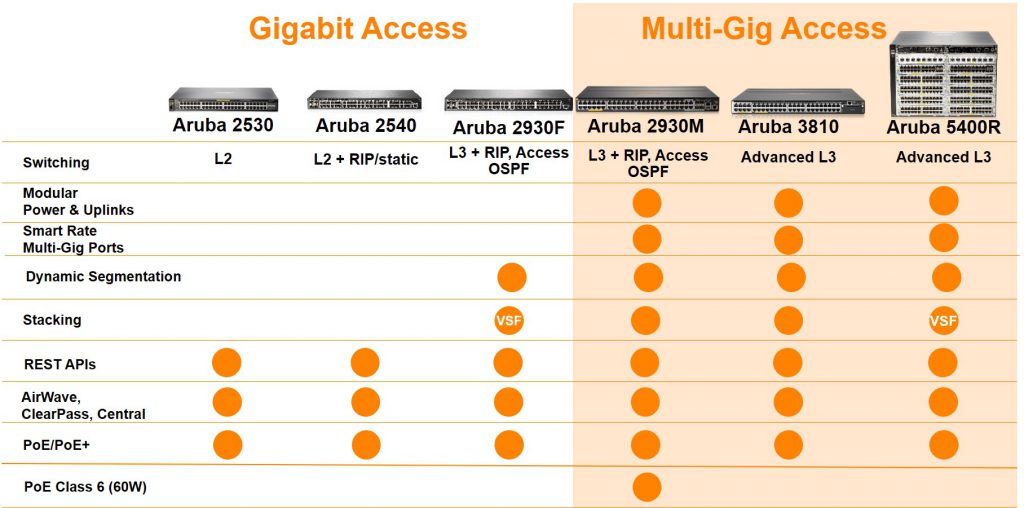
ArubaOS is a renamed version of ProVision OS, the NOS for existing HP ProCurve switches.
Our product lineup is centered around campus networks, and as a network switch connecting to the edge, such as on campus or for business use, we offer amazing performance for the price.
It also provides several features for interoperability with Aruba wireless LANs.
By providing Smart Rate technology, a multi-gigabit Ethernet (802.3bz) technology, it is possible to provide bandwidth of 1G or more using existing Ethernet cables.
In addition, PoE power can be provided in a wide range from 15W (802.3af) to 60W (802.3bt), enabling connection of not only high-performance APs (Access Points) but also various types of IoT terminals.
We have a lineup that can cover L2/L3 areas in campus areas, from the chassis-type 5400 switch series to the box-type 3810M/2930M/2930F/2540/2530.
ArubaOS-CX Switch
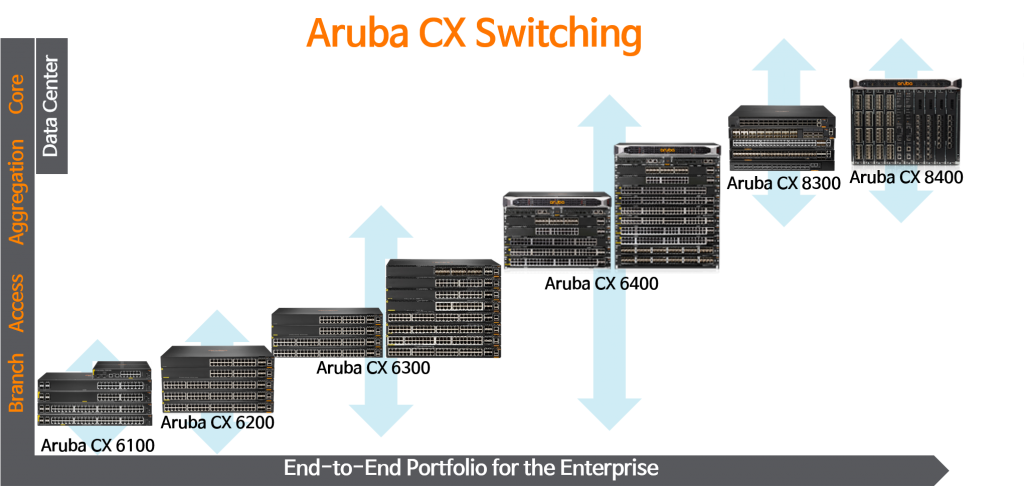
ArubaOS-CX (hereinafter referred to as AOS-CX) is the operating system for the latest switches developed by Aruba as a next-generation network operating system.
AOS-CX, called a cloud-native operating system, uses a microservices architecture.
All processes are designed as microservices that can operate independently, making it easy to update, add, and delete features, and making them more stable and reliable.
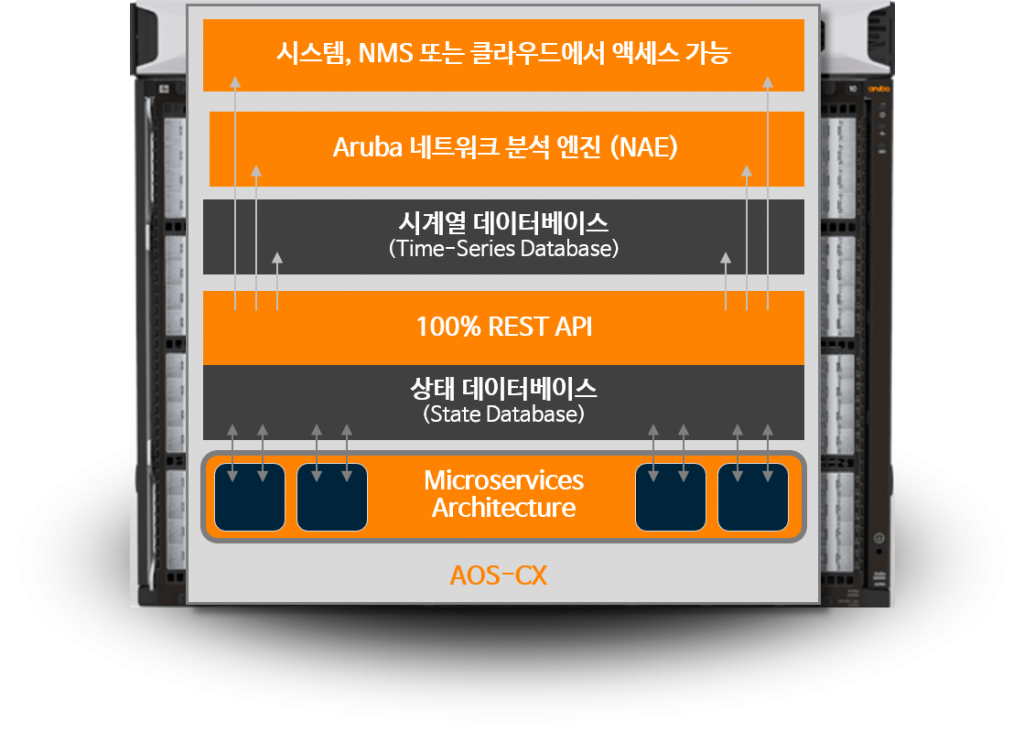
If you look at the picture above, you can see that it has an engine called Aruba NAE.
All switches running the AOS-CX operating system have NAE built-in.
It provides real-time visibility into events occurring on the switch using two databases: a Time-Series Database and a State Database.
NAE is different from the CLI commands and SNMP trap methods that network administrators have been using.
If the existing method was to collect and display data generated from the switch remotely,
Because NAE operates on switches, it provides fast and accurate data without time delays or bandwidth overhead.
Rather than simply displaying data generated from the switch, it provides various visualization screens depending on the purpose.
You can also have your Python script execute commands based on event conditions.
If you use NAE, instead of having an administrator intervene after a problem occurs to find the cause and repair it,
It can provide insights that can be acted on or acted on before managers are aware of them and take action.
As AOS-CX is a cloud-native operating system, it is also very tolerant of programming.
In addition to providing a 100% REST API for all commands, it also supports automation tools such as Python, ANSIBLE, and NAPALM. Instead of managing and configuring via the CLI, you can manage and operate multiple switches simultaneously using scripts.
Designed to address these latest trends, AOS-CX switches are an operating system suitable for both data center and campus environments. AOS-CX-based switches offer a diverse portfolio, ranging from basic L2 switches to data center core switches, offering a variety of choices to suit user needs, budgets, and utilization needs.
Because it uses a single operating system, it has the advantage of being able to use the same configuration, commands, and functions.
It also protects your investment in time and money for administrator training to operate different operating systems for different purposes.
So today we briefly looked at the switch lineup that Aruba has.
For detailed product features, photos, specifications, etc. Aruba homepageYou can check it out here.