Veteran network administrators likely remember the simpler days of networks, when few devices needed Internet access and connections were fixed. As the number of network devices increased, Internet Protocol v4 (IPv4) was created to tag them with unique identifiers (i.e., addresses) and facilitate management, routing, and security.
IPv4 provides 32 bits of storage and is designed for scalability, allowing for a significant number of destinations (addresses)—up to 4.3 billion.
Examples of IPv4 addresses:
192.168.1.0
The subsequent proliferation of Internet-connected devices, from IP phones and network printers to PoE cameras, represented a significant yet manageable first wave of digital transformation. Soon after, BYOD (Bring Your Own Device) iPhones, tablets, and other smart user devices began disrupting traditional network architectures, creating the need for cloud-dependent Internet of Things (IoT) client devices (such as sensors).
These changes and needs ultimately lead to an exponential increase in the demand for IP addresses.
IPv4 is a technically robust and reliable network engineering.
But today, it's not enough to handle the countless clients competing for Internet connections.
So how can we improve IP capacity?
We need to add more address space right away!
What is IPv6?
Introducing IPv6, the new successor to IPv4!
It's not really that new, as it dates back to the late 1990s.
But what's different is that IPv6 is a hexadecimal addressing solution that can store up to 128 bits of information.
This is the total number of addresses About 2128Dogs (or more than 34 billion)This means that it completely surpasses IPv4's 4.3 billion addresses!
Examples of IPv6 addresses:
2025:0ck6:0000:0000:0000:ee00:0088:2520
What are the reasons for introducing IPv6?
The most obvious reason is IPv4 address exhaustion, but there are other reasons as well.
- Improved routing and security
- Auto-configuration feature
- IPv6 deployment adjacent to business applications
- government regulations
- Infrastructure evolution
- Operating System Support
For more details HPE Aruba Networking WLAN IPv6 Deployment GuideYou can check it out at .
What are the benefits of IPv6?
The biggest and most direct advantage is that there are far more IP addresses available than with IPv4.
But there are many other IPv6 benefits, from scalability to security:.
- Larger address consolidation
- Simplified host addressing
- Easier address reassignment
- Improved multicast routing scalability
- Simplified header
- Better mobility support
- Performance improvements
HPE Aruba Networking CX switches now support IPv6!
So what else is new about IPv6?
To help enterprises accelerate their own IPv6 adoption across campus and data center networks, HPE Aruba Networking CX switches have now been tested and validated by the IPv6 Readiness Logo Program Committee to support IPv6!
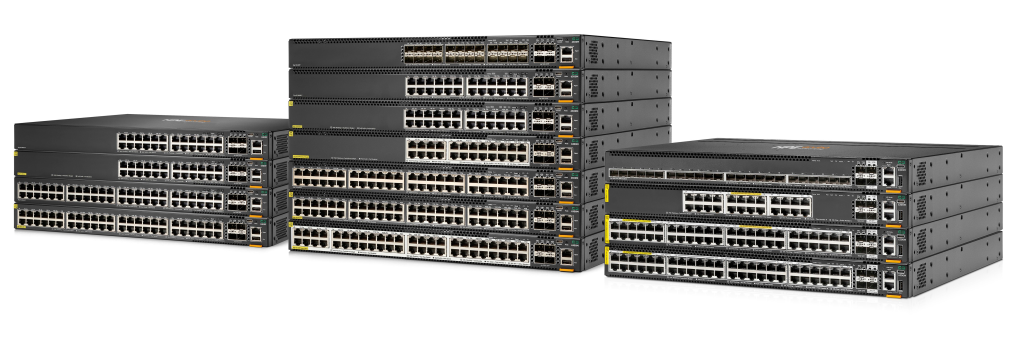
The following HPE Aruba Networking CX switches support IPv6:
- HPE Aruba Networking CX 6200F
- HPE Aruba Networking CX 6300F
- HPE Aruba Networking CX 6300M
- HPE Aruba Networking CX 6405 V1/V2
- HPE Aruba Networking CX 6410 V1/V2
- HPE Aruba Networking CX 8100
- HPE Aruba Networking CX 8325
- HPE Aruba Networking CX 8360 V1/V2
- HPE Aruba Networking CX 9300
- HPE Aruba Networking CX 10000
For more information about these certifications, IPv6Ready.org websiteYou can check it out at .
When should I transition to IPv6?
You probably know best when that will be.
However, there are several resources available to help you get started.
It would be a good idea to first check out HPE Aruba Networking's UXI solution, which is convenient for measuring IPv4 and IPv6 performance.
Additionally, you may find the PDF guide document below helpful for getting started with IPv6 on your CX switch.