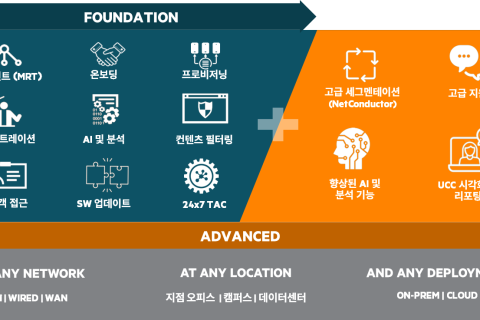
Aruba Central is a cloud-based system that allows you to upload Aruba network devices to the cloud.
Manage, view, and add all your devices from Aruba Central to better oversee your network.
This training is Aruba Central Certification (APSC) It also provides knowledge for operating Aruba Central.
In this post, we will discuss some of the challenges that organizations face in their network environment. Edge Service Platform (ESP) from HPE ArubaAfter explaining how to address these challenges, we'll explore Aruba Central management options and the benefits of cloud management.
Network issues encountered at the edge
Advances in computing power and the emergence of intelligent edges present many challenges for networks.
The core of this problem is that networks are still tied to human scale.
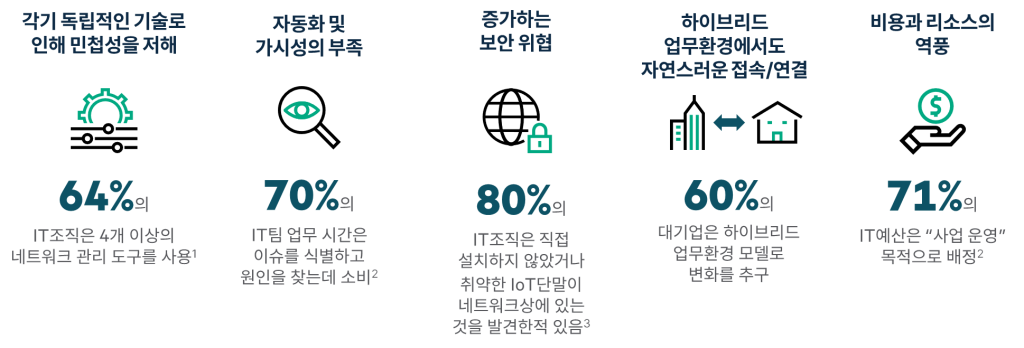
Disjointed and disparate technologies are of no use to operators. Most of our networks are managed using too many tools. In reality, The 64% in the IT organization uses more than four network management tools.I am doing it.
These silos reduce agility and hinder IT departments' ability to support continuously evolving business requirements.
This is because network operations are highly fragmented and management tools are distributed, resulting in a hamster wheel of coordination.
This means that most network configuration tasks are performed manually, and because most manual changes are unplanned and undocumented, they change constantly. Similarly, information must be manually correlated, and identifying the root cause of an outage takes too long.
for example, IT team's working hours are spent troubleshooting and resolving 70% issues.This prevents you from focusing on the tasks that really matter.
This lack of visibility and automation can escalate into security threats, especially for IoT devices that are difficult to identify or measure with traditional monitoring agents.
in result, An IT organization's 80% discovered an IoT device on its network that it did not install.Moreover, these teams rely heavily on manual, static configurations to segment traffic from users, legacy devices, and IoT devices.
Moreover, the number of employees working remotely has increased at an unprecedented rate due to COVID-19. A significant number of companies continue to support remote work even after the COVID-19 pandemic ends, and this trend is unlikely to abate.no see.
How are you troubleshooting connectivity or performance issues for remote users? Is your IT team identifying the cause?
Network security has always been and will continue to be a major concern when employees access corporate resources. This becomes even more critical as network perimeters expand beyond the company walls.
Finally, the global pandemic has created unprecedented economic and resource headwinds.
now 71% of IT budget is invested in corporate business operations.It is happening.
So, as a result, legacy networks can't keep up:
- Business agility and operational efficiency are key elements of business success.
If your network is too complex and time-consuming to maintain and deploy the services that power the intelligent edge, your business will become less competitive and your future success will be jeopardized. - Networks can and should do more.
- Your network needs to be smart enough to identify problems before they impact your business.
Networks must be easy to deploy and manage to become a driving force for business innovation.
The growth of cloud networks

After years of lagging behind other IT areas like compute and storage, networks are starting to catch up in cloud adoption.
Enterprises are realizing that maximizing the benefits of the cloud requires networks with the same agility. The right kind of connectivity is needed, from cloud data centers to home offices and other remote locations.
Accordingly, spending on cloud-based networking platforms is increasing. According to IDC, by 2022 Total spending on cloud networking will reach $10 billion., and will now cloud-manage and deliver 50% and above for all new network deployments.
This figure is being supported to some extent by technologies such as SD-WAN. 42% companies are using SD-WAN to increase IT agility, improve user experience, and reduce costs.This is in the process of being distributed.
Additionally, COVID-19 has increased demand for cloud networking.
HPE Aruba conducted a survey of 2,400 IT decision makers. A significant number of respondents said that despite some economic challenges, Not only are we maintaining investments in areas like cloud networking and artificial intelligence (AI), we are also increasing spending in the near term.He replied, "Yes.".
This is thanks to the automation, scalability, and efficiency that technologies like cloud networking and ML/AI bring to networks and IT ecosystems.
In this case, the ability to centrally scale and manage the network is crucial. Traditional approaches to network management are no longer sustainable due to budgetary or IT resource constraints.
HPE Aruba ESP Architecture
HPE Arubad's response to these difficulties and challenges is the Edge Service Platform (ESP).

Aruba ESP is based on four core attributes:
- Connect: Eliminate silos and streamline operations by unifying the management of all network infrastructure.
- Protect: Simplifies edge security operations for users and IoT by eliminating the need for cumbersome manual VLANs, ACLs, and subnets.
- Automate: Provides a 'sixth sense' to the network, enabling customers to resolve issues before they impact the business, or at least resolve them more quickly, ensuring business continues to run smoothly.
- Adapt: Because all of this is delivered as-a-service, organizations have more choice and control over how they consume and pay for technology to achieve their goals.
If we look at the hierarchy, we can see that the lowest layer is infrastructure.
This layer is where the physical devices reside and how data moves from point A to point B, using switches, access points, gateways, and more. This layer remains crucial, as without it, there would be no network at all.
The middle layer is the security policy.
This layer is where many of Aruba ESP's security services come into play to provide traffic segmentation, firewalling, and network access control.
The third tier is where customers get the most value from Aruba ESP.
This is where many of the services that interact with the platform, such as onboarding, provisioning, orchestration, and monitoring, run.
HPE-Aruba integrates these services for IT users through Aruba Central, a cloud-native, single-console interface for Aruba ESP. This architecture and Aruba Central dramatically simplify how organizations configure, manage, and optimize their networks.
HPE GreenLake and Aruba Central

Aruba Central integrates with HPE GreenLake, starting with version 2.5.5. With Aruba Central integrated into HPE GreenLake, customers and partners can now manage and consume all HPE as-a-Service solutions, including cloud-managed networking, from a single location.
This enables us to deliver more engaging IT and customer experiences.
IT executives can now view and orchestrate key network services across platforms such as data and compute services.
This integrated view of IT infrastructure usage helps you maintain compliance, control costs, and ensure your IT investments are being utilized as intended.
These development efforts allow customers to take advantage of new subscription options that allow them to terminate on the same date as their license expiration date or delay subscription activation. This allows users to adjust their Central License subscriptions to meet project completions, such as new site deployments and expansions.
Introducing Aruba Central
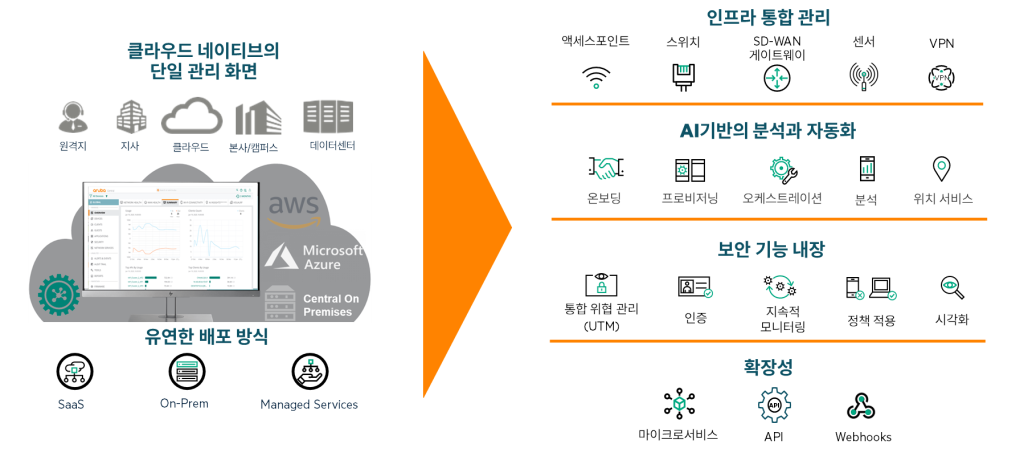
Aruba Central breaks down network silos by unifying management and operations across all infrastructure and network domains. From wireless APs and switches on the local network to WAN networks, data centers, and cloud environments, customers gain a single pane of glass from which to maintain their entire network.
It also streamlines operations across the network lifecycle. It provides customers with automation and orchestration capabilities, enabling IT departments to easily deploy, monitor, and secure their networks from a centralized management console.
Aruba Central also offers AI and machine learning-based analytics. These insights allow you to proactively prevent issues before they impact end users or the business, and proactively identify areas for improvement. This includes a variety of troubleshooting tools and guided resolutions for fast, accurate remediation.
In addition to the AI engine, Aruba Central offers a variety of other powerful monitoring capabilities, giving customers comprehensive visibility into key performance indicators and complete operational awareness.
Security remains a top priority, especially as traditional IT perimeters continue to dissolve due to the proliferation of BYOD and IoT devices on networks, along with remote and remote work environments. To address this, Aruba Central is designed to be built-in, not added-on, with features like unified threat management (UTM), IDS/IPS, device fingerprinting, and automated policy enforcement for users and devices across wired and wireless networks.
Finally, Aruba Central offers full extensibility through extensive API and webhooks, allowing you to easily integrate Aruba Central with other third-party IT systems and applications. This provides a powerful foundation for further streamlining workflows across multiple systems.
For example, telemetry from Aruba Central can be dynamically imported into ServiceNow to streamline event-driven monitoring and IT ticketing. Central also integrates with popular automation frameworks like Ansible, enabling large-scale deployment and configuration of network devices.
In this post, we briefly looked at the basic functions and concepts of Aruba Central, along with why a cloud-managed networking platform like Aruba Central is necessary and why IT managers are interested in it these days.
In the next post, we will take a closer look at the features provided by Aruba Central.