The COVID-19 pandemic has accelerated digital transformation across many industries and sectors, including online shopping, global supply chains, smart factories, online banking, and remote work. It has become essential for companies to remain competitive, redesign customer touchpoints, optimize operational efficiency, and reinvent themselves to survive the pandemic.
Digitalization of the enterprise Cloud, IoT, Network InnovationThis was made possible by three major infrastructure innovations.
- Cloudgave users the ability to connect and process data anytime, anywhere.
- IoTallows organizations to monitor and automate operations.
- Network InnovationIt allows users and devices to connect with each other from any location using any device.
While diverse network connectivity is crucial, increasing performance, flexibility, and security concerns can put digital transformation initiatives at risk.
In today's post, we will look at the powerful tools for successful digital transformation. SD-WANI'm going to tell you about these five essential reasons.
1. Enterprise applications located in the cloud
The days when end-user application traffic was always directed to data centers are over.
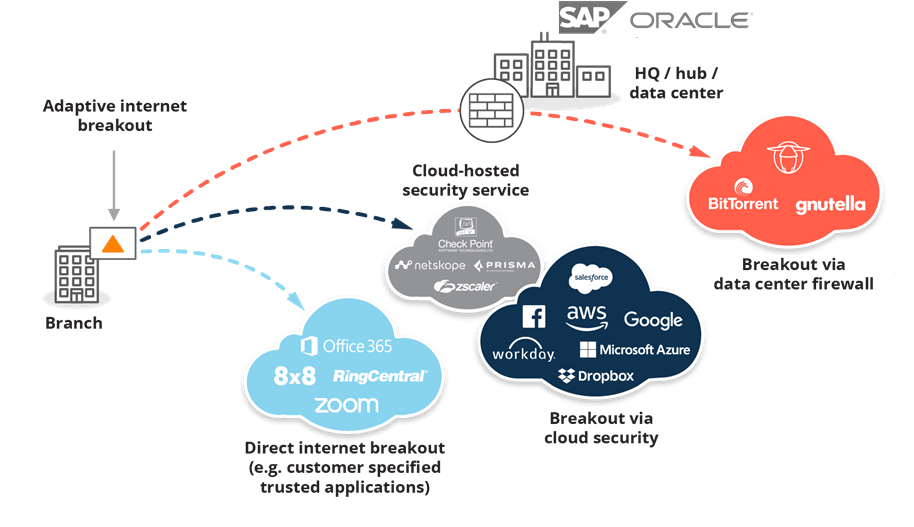
Most enterprise application traffic is heading to the cloud. However, many companies still route cloud-bound traffic through their data centers before exiting, instead of sending it directly to the cloud, which degrades overall application performance.
Advanced SD-WAN can route traffic directly to the local internet based on application type and security policies. This allows for intelligently orchestrating application traffic to the cloud, freeing up some of the bandwidth on MPLS lines.
Migrating to hybrid cloud (public + private cloud) and multi-cloud environments is nothing new, but they continue to grow rapidly and will likely replace data centers.
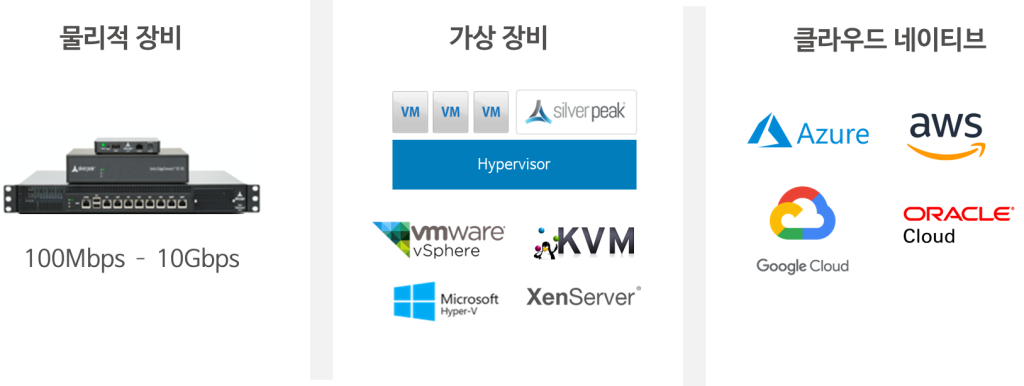
This means there's a growing need to simplify the process of orchestrating network traffic from on-premises environments to cloud environments, or from one cloud provider to another.
Virtual instances of Aruba's EdgeConnect SD-WAN platform can be easily deployed on cloud infrastructure, enabling easy connectivity to cloud environments.
Additionally, many companies are developing cloud-native applications using microservices, APIs, and multi-cloud approaches to enhance business flexibility and improve customer experiences. This shift requires greater flexibility and the ability to move to an "as-a-service" business model.
As a result, enterprises are now considering a Network-as-a-Service model based on SD-WAN.
2. Users who want to connect anywhere
The security perimeter is crumbling.
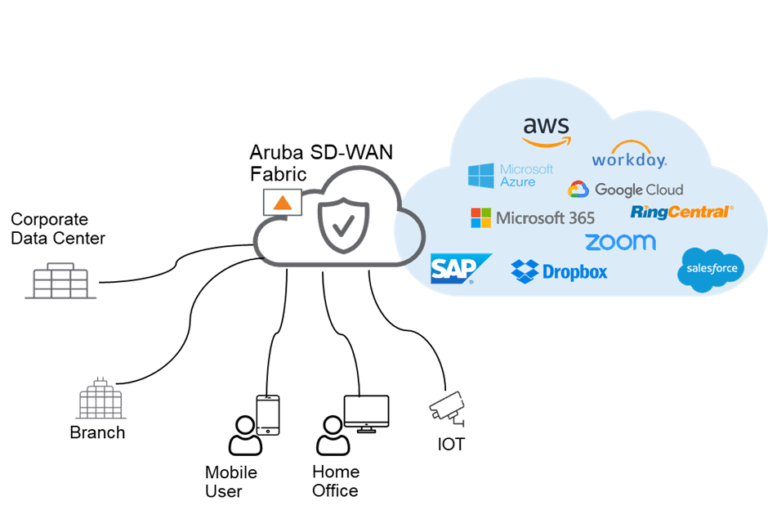
Previously, all application traffic was configured to pass through the data center, making it much easier to protect user traffic and businesses. Now, employees can connect from any device, anywhere, in diverse environments like home, airports, and coffee shops.
To provide secure access, Aruba EdgeConnect SD-WAN tightly integrates with cloud security providers like Zscaler and Netscope.
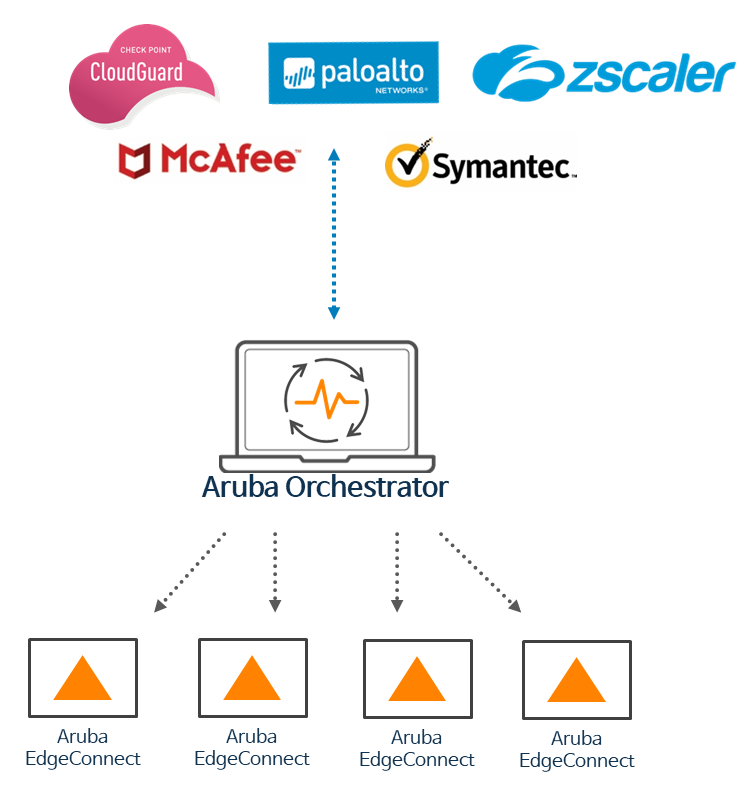
These manufacturers can provide Security Service Edge (SSE) security capabilities such as Zero Trust Network Access (ZTNA), Cloud Access Security Broker (CASB), and Secure Web Gateway (SWG).
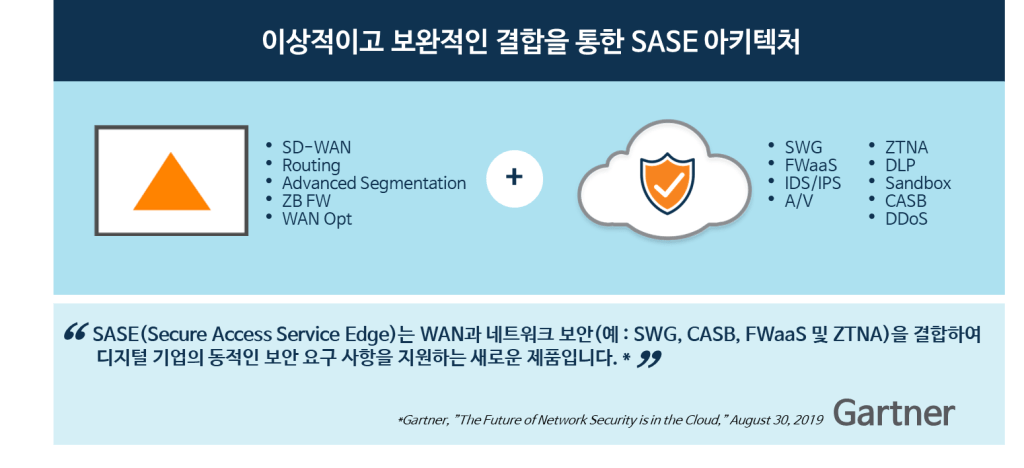
Thanks to integrations/connections with various security vendors, enterprises using Aruba EdgeConnect SD-WAN can choose best-in-class SSE security features. Powerful SASE architectureIt has become possible to build.
Remote work continues due to the coronavirus pandemic.
Aruba's Microbranch solution now includes advanced SD-WAN capabilities in Aruba's access points, helping you easily secure remote workers, retail stores, or other small locations.
Like Aruba EdgeConnect, it includes automated orchestration and secure connectivity to leading cloud security providers. You can define and configure business policies to route traffic to cloud security providers based on data center or content.
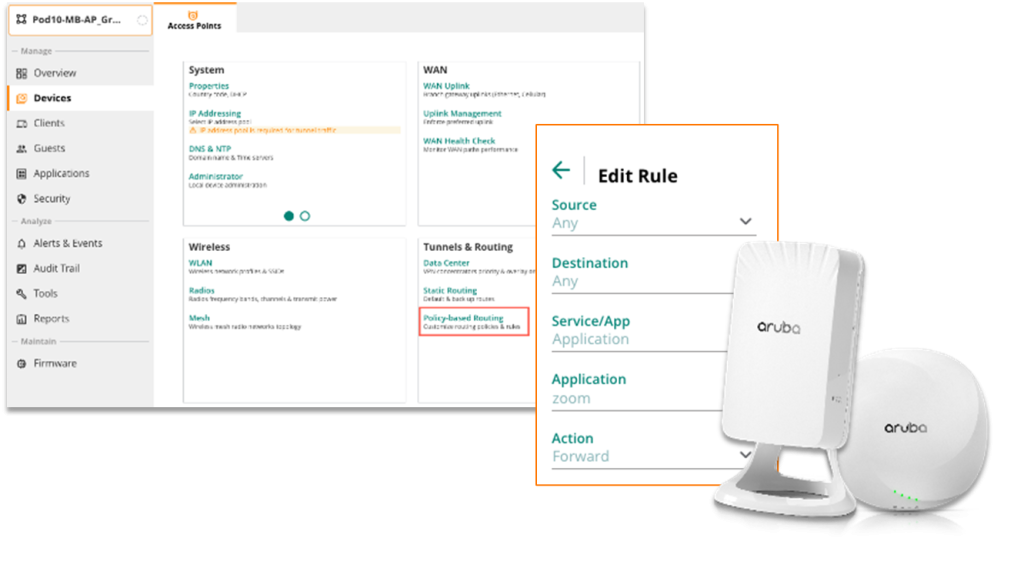
This provides remote workers with the same experience as the office, with performance, security, and reliability.
3. IoT poses serious security risks
IoT is becoming a critical component of all digital transformations, leading to a rapid increase in the number of network-connected devices.
However, IoT devices are built with simple designs, making it impossible to install or run security agents. This makes them extremely difficult to secure. Consequently, they pose a serious security threat that CIOs must address.
Additionally, IT and OT (Operational Technology) networks are converging. In the past, the two networks were completely separate, and OT networks weren't managed by the IT department.
However, with the emergence of IoT devices, they are becoming increasingly sophisticated and require communication with servers located on IT networks. This convergence, in turn, increases vulnerability to cybersecurity risks.
To reduce the attack surface and limit the spread of cyberattacks, Aruba EdgeConnect SD-WAN uses a zone-based firewall that can be segmented into granular areas based on policies and applications.
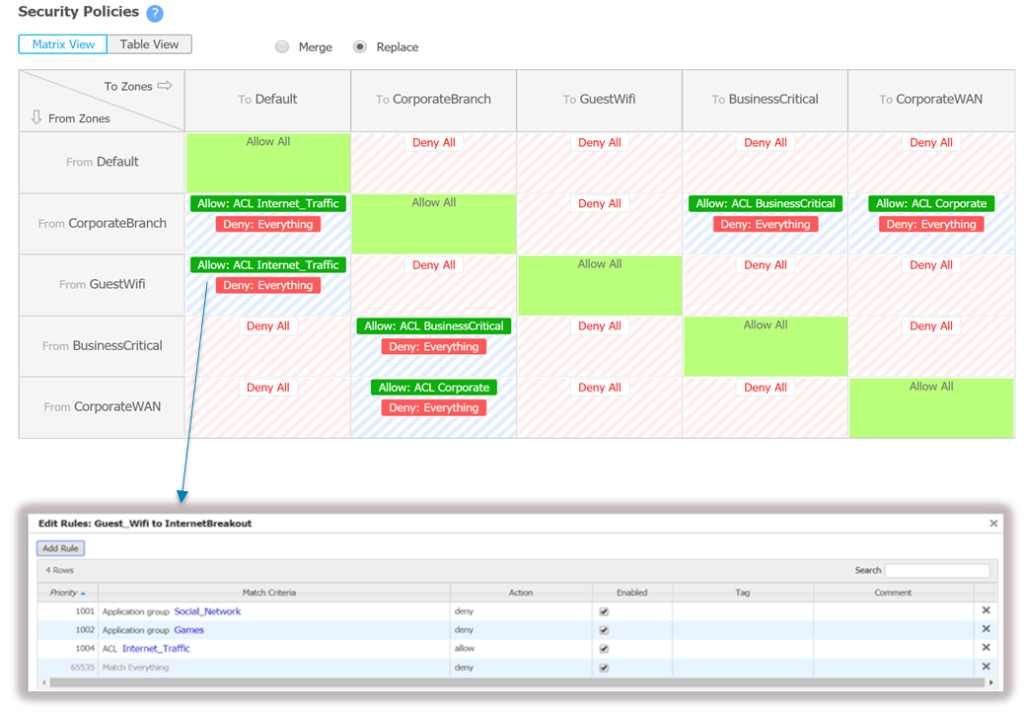
Additionally, the interconnection and integration between Aruba ClearPass and EdgeConnect enables granular microsegmentation by adding identity knowledge about users, devices, and roles, along with authentication capabilities such as RADIUS, TACACS+, and OAuth2.
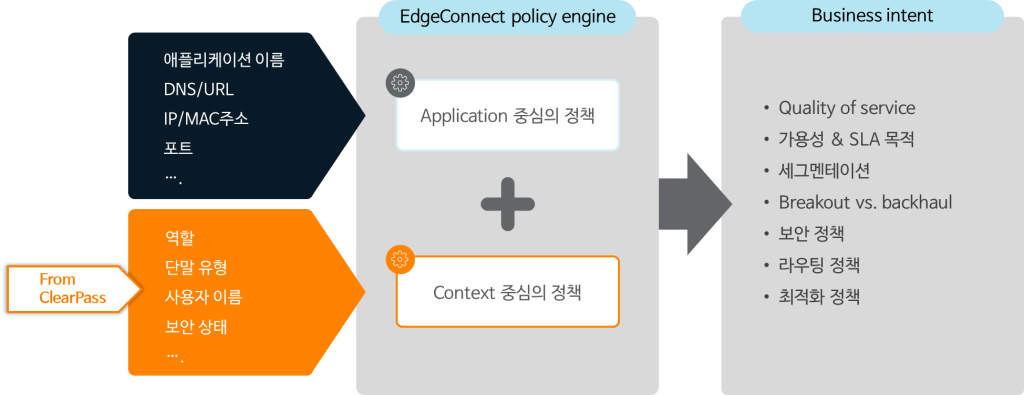
This zero-trust security framework can help enterprises meet compliance requirements such as PCI-DSS and HIPAA.
4. Data is a strategic asset that must be protected.
In today's world, data is a strategic asset that accelerates digital innovation and improves operations. It can also be used to detect patterns and enhance insights through artificial intelligence.
However, with the digitalization of services, sensitive data must be protected as it moves across networks.
Companies must comply with various security regulations, such as the PCI Data Security Standard (PCI DSS) to protect credit card holder data, the Health Insurance Portability and Accountability Act (HIPAA) for the healthcare industry, which provides security provisions for data privacy and protection, the GDPR to ensure personal data privacy, and the ISMS or ISMS-P implemented in Korea.
As mentioned above, Aruba EdgeConnect SD-WAN helps organizations protect sensitive data and maintain compliance by isolating different types of traffic through microsegmentation.
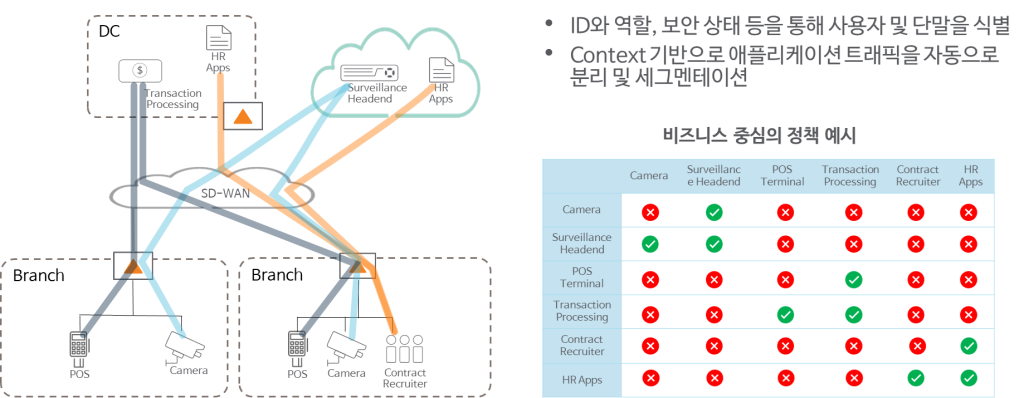
Data in transit within the fabric is encrypted with AES-256 IPSec tunnels to ensure secure data transmission.
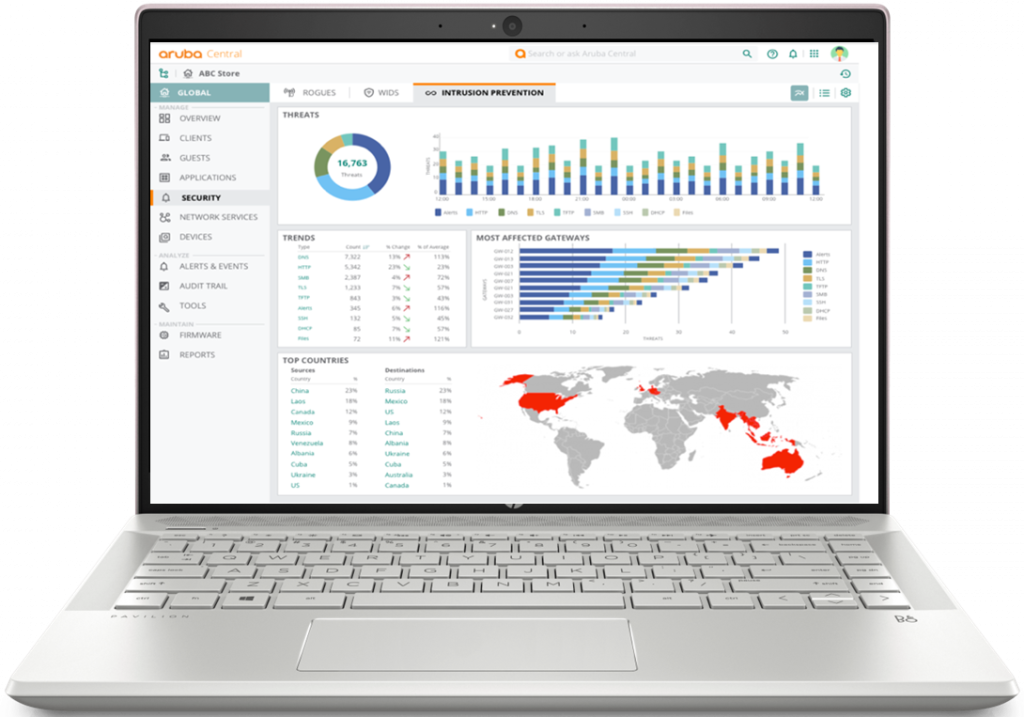
SD-WAN solutions also include intrusion detection and prevention (IDS/IPS) capabilities that monitor and drop traffic when security threats occur. IDS/IPS logs can also be monitored and exported to a local Security Information and Event Management (SIEM) system for real-time analysis of security events.
5. Increased need for connectivity
We live in a global era. Companies have offices and facilities around the world. They need to exchange large files and communicate seamlessly. Companies also need to quickly establish IT environments in new locations, but provisioning new MPLS lines can take weeks.
Not only that, but because MPLS is so expensive, enterprises often limit bandwidth, which degrades the user experience.
WAN transmission costs become cheaper and more flexible when utilizing Internet broadband or 5G connections.
Virtualization allows enterprises to combine and combine all transport lines across their WAN, including the Internet, 5G, and MPLS, to create a single, high-bandwidth logical line.

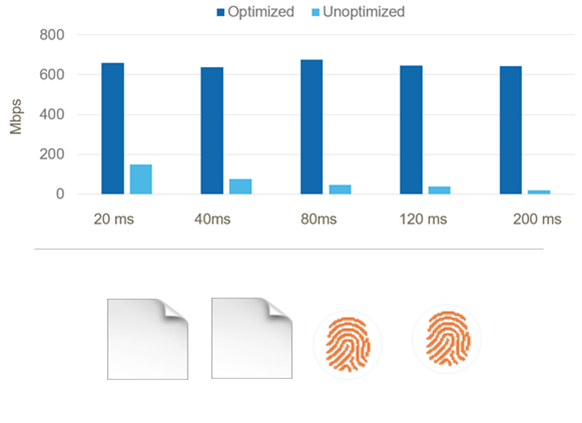
Additionally, to mitigate inefficiencies in Internet and wireless connections, Aruba EdgeConnect SD-WAN uses various technologies, such as path steering and WAN optimization, to deliver private-line performance over Internet and wireless connections.
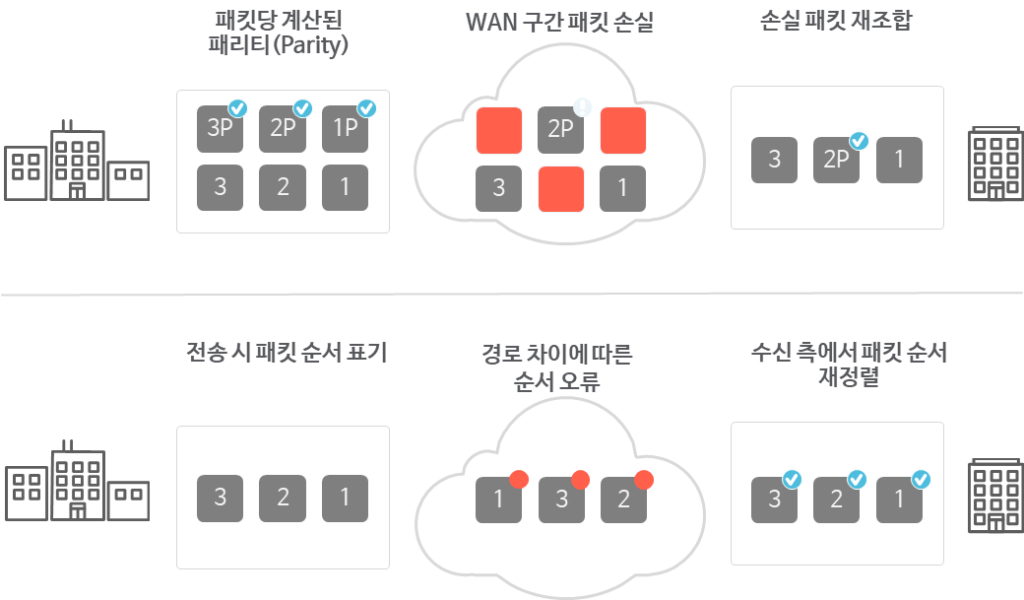
In summary, the COVID-19 pandemic has accelerated digital transformation for many businesses. Flexible, reliable, and secure network connectivity is crucial. The Aruba EdgeConnect SD-WAN edge platform leverages affordable broadband internet and 5G connectivity to deliver superior service quality while enabling flexibility and reliability.
It also supports intelligently routing traffic based on roles, attributes, and policies to your data center, cloud, or the services of industry-leading cloud security providers using secure local internet breakout.
Aruba EdgeConnect is a foundational component of the industry-leading SASE architecture, integrating tightly with and automating orchestration of best-in-class third-party cloud security providers.
Built-in security and segmentation capabilities now enable enterprises to secure network access while meeting compliance requirements.
For more information, watch the video below on Aruba's Edge-to-Cloud security.