As a security manager, when do you feel the most disheartened? After months of preparation ISMS-P certificationIt is the moment you hear news of a breach before the seal on all policy documents has even dried, after passing an external audit with an 'appropriate' opinion.
There is a common joke in the security industry.
“The safest network in the world is a network with the power plug unplugged.”
However, real-world business cannot be stopped. There is one uncomfortable truth I realized while facing numerous security incidents in the industry.
“Security on paper cannot block an attacker's blade for even a single second.”
In other words, the fact is that security solely focused on compliance can actually increase risk.
Today, by weaving together voices from the field with the latest threat landscape of 2026, I intend to conduct an in-depth analysis of the true direction of security that we must take.
When considering the direction of security, the first question we must face is this.
“Is our current defense system following 'regulations on paper'?,
Or is it blocking the 'movements of a living attacker'?‘
To find the answer to this question, HPE recently made meaningful changes.
existing Juniper Threat LabsBy integrating with HPE's powerful network security capabilities HPE Threat LabsIt was newly launched as such.
This is not merely a change of the research institute's name, but also a strong declaration to shift the security paradigm from 'reactive response' to 'infrastructure internalization.'.
HPE Threat LabsThe reason it is not merely an 'organization for publishing reports' lies in their way of working.
- From Research to Results: Going beyond theoretical research, we immediately incorporate insights gained from real-time threat hunting into the detection logic of actual security products.
- Practical Product Hardening: By constantly pressure-testing and auditing the product from the attacker's perspective, we create a 'robust' solution that does not collapse even in actual attack scenarios.
- Built-in Security: Rather than adding security separately on top of the network, we guide the network infrastructure itself to become an 'immune system' that detects and blocks threats from the design stage.
Ultimately, the only way to ensure gratitude does not betray us is Proving actual attacker tactics with data and integrating them into the infrastructureno see.
Now, let's examine the raw reality of the field we face through the latest threat landscape for 2026 analyzed by HPE Threat Labs.
2026 Threat Landscape: “Hackers Now Operate Like ‘Large Corporations,‘ Not ”Startups’”
HPE Threat LabsThe skilled researchers and security engineers Analysis and 발표 of global live telemetry [2026 In the Wild] ReportThis proves that attackers are no longer 'alone'. An analysis of 1,186 attack campaigns observed over the past year revealed that cybercrime has now evolved into 'corporate cartels'.
| Attack Type | Market share | characteristic |
| ransomware | 22% | Operating a team dedicated to researching specific VPN vulnerabilities, like the Akira Group |
| info stealer | 19% | PXA StealerEstablished an automated line that automatically transmits stolen data to Telegram immediately. |
| Phishing/BEC | 17% | Fraud impersonating executives using deepfake voice/video powered by generative AI is surging |
Within an attack organization, there are separate R&D teams dedicated to researching vulnerabilities, legal teams handling negotiations, and logistics teams processing stolen goods. For example, the recently rampant PXA Stealer We are equipped with an 'automated assembly line' that, upon detecting malware, transmits the stolen data in real-time to a dedicated Telegram channel.
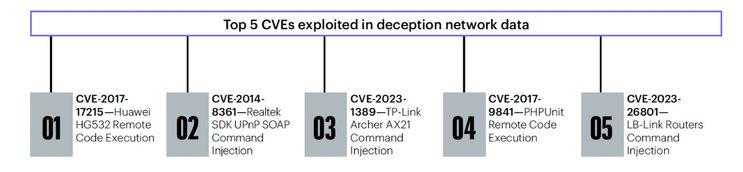
What is even more frightening is that they... the ones we believed would 'naturally be safe' VPN, SharePoint, and even routers의 Relentlessly digs into vulnerabilitiesThis is the point. A significant number of the 44.5 million brute-force attacks target outdated vulnerabilities for which patches were released years ago. This means that attackers are just as highly skilled at finding 'management loopholes' that we have neglected as they are at creating new techniques.
The Paradox of Compliance: “Why Compliance Increases Risk”
Why do we get breached even after achieving 100% compliance?
Regulation-centric security inevitably creates a 'checklist mindset.' In other words, it mistakes 'passing an audit' as the ultimate goal of security.
When passing an audit becomes the top priority, the security team starts asking, "Does this meet the audit requirements?" instead of, "Is this really safe?".
When you purchase solutions and create evidence to pass an audit, you end up missing these important questions.
Furthermore, whenever new security regulations are introduced, we add new solutions and 'patch them up' to fill the requirements.
As the headquarters adheres to Standard A, the cloud team to Framework B, and the regional offices to Regulation C, 'seams' appear between the domains.
In real-world simulations, while individual solutions function perfectly, the policies between them are inconsistent, allowing actual hackers to exploit the loose seams and perform unrestricted lateral movement within. On paper, all gateways are controlled, but in reality, the back door is open.
We must now redefine compliance not as an 'objective,' but as a 'by-product' that follows proper security.
Zero Trust: “It is not a product, but a 'constitution' that companies must establish‘
Here, we have the most misused word these days ‘The essence of 'Zero Trust'We need to address this.
Many vendors say, “If you adopt our Zero Trust solution, the problem will be solved,” but this is closer to marketing rhetoric that obscures the essence.
“Zero Trust is not a single product that needs to be adopted.
It is the policy framework and the operational model itself that companies should aim for.”
Zero Trust is like a 'healthy lifestyle.' Just as becoming healthy requires a synergistic combination of diet, exercise, and sleep rather than simply taking a single supplement, Zero Trust is also... “Never trust, always verify”This philosophy must be established as a company-wide policy.
- Policy-Centric “Governance determining ”who, with what device, under what circumstances, and what data” must be established first.
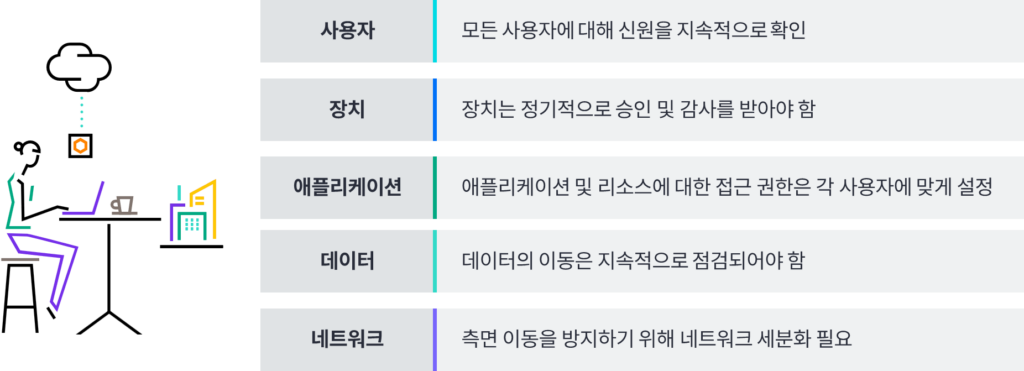
- The Power of Frameworks: Each solution and tool is merely an instrument to 'enforce' the sophisticated policies you have established. A zero-trust solution without policies is like a car without an engine.
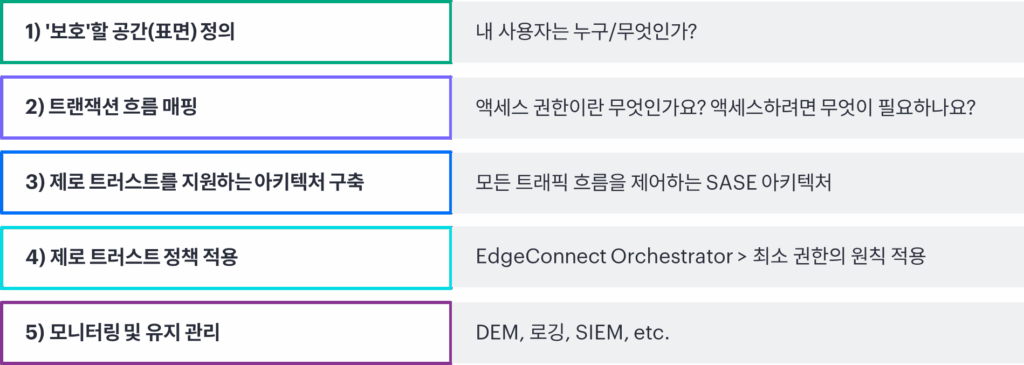
The Reality of Architecture: “The Tightrope Walk Between Business Efficiency and Security”
The biggest reason security designs fail in the field is that they ignore 'work fatigue (Friction).'.
For example, let's consider a company that operates a franchise or branches with hundreds of stores nationwide.
If you slow things down by imposing complex authentication at every step to strengthen security, employees will start 'bypassing' the security for their work.
Technologies such as personal routers or tethering
- It is a 'technical exception' for the security team, but,
- For field staff, it becomes a 'survival tool for doing work immediately.'.
A mature security architecture does not try to teach users.
Instead, it allows users to connect without inconvenience regardless of where they access it (home, cafe, office), but in the background Continuously verify identity and device statusTherefore, it blocks risks. This is the 'practical security' that the field can protect.
Conclusion: Transform your system with 'Integral Security'
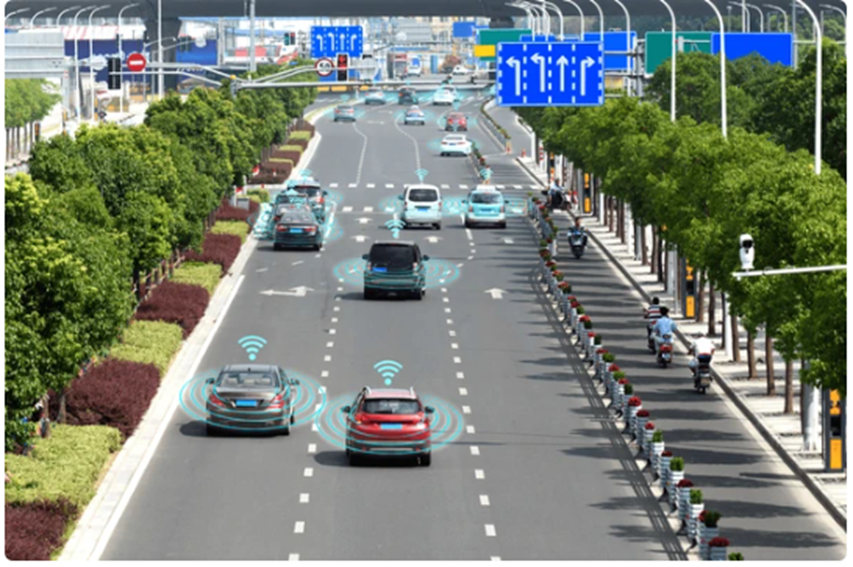
Ultimately, the destination we must aim for is Integral Security.
This is not about setting up a security checkpoint later on the highway called the network, Embedding intelligent sensing systems from the highway design stageno see.
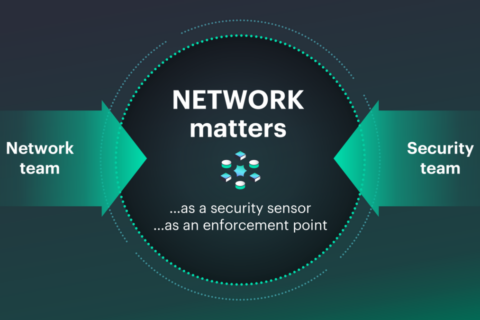
If you have established a company-wide Zero Trust policy, the most efficient way to implement it is for the network infrastructure itself to become a security sensor and enforcer.
- Unified SASE: Whether the employee is in the office or on a business trip, a single security policy follows and protects him.
- Internalized Control: Switches or APs (routers) automatically identify devices without requiring separate security equipment, and immediately isolate them if abnormal movement is detected.
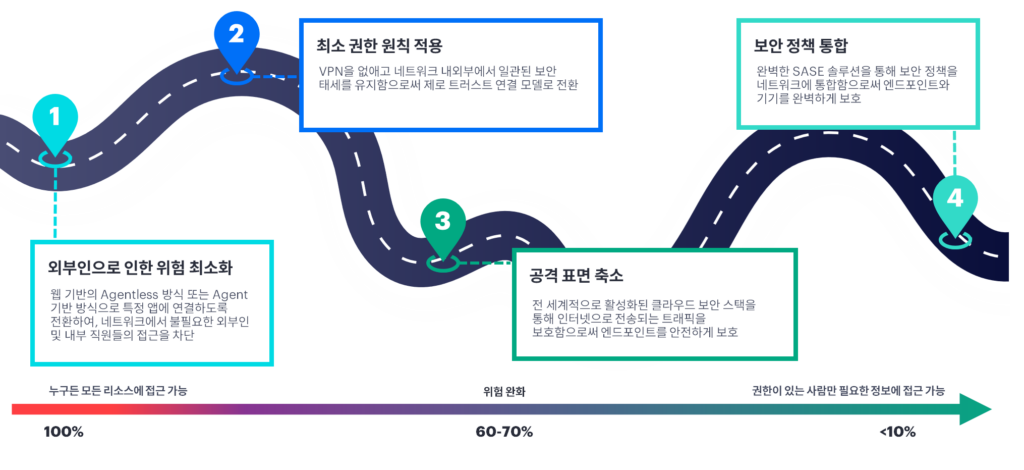
With such an integrated architecture, security becomes a 'safety belt' that allows you to accelerate with peace of mind, rather than an 'obstacle' that hinders business.
The values pursued by HPE Threat Labs align with this. Creating a system where security is not a separate layer isolated from the network, but rather integrated into the infrastructure itself to automatically adapt to threats, is the only way to maintain business continuity amidst a complex threat landscape.