Over the past year, many companies have experienced seven or eight security breaches that resulted in data loss or downtime.
Recently, the Ponemon Institute announced “The 2025 Global Study on Closing the IT Security Gap” The report highlights the importance of closing the cybersecurity gap.
According to the same survey, Network Access Control (NAC) is a key method for achieving strong security within an organization, particularly when it comes to IoT security. Furthermore, NAC's unique role in enforcing granular access control security policies while ensuring optimal network performance can facilitate collaboration between network and security teams.
RSA Conference 2025HPE Aruba Networking's modernized network access control, announced today, is an ideal complement to traditional NAC. Cloud-based HPE Aruba Networking Central NAC helps organizations overcome the challenges of traditional NAC and implement zero-trust security controls across the organization.
The Future of Network Access Control
Many people are familiar with the term “NAC.”.
This technology began to take hold in the early 2000s with “network admission control.”.
NAC has evolved over the years from a simple “yes/no” approach to allowing all access to corporate networks.
As a result, it is now an integral part of the security ecosystem in most organizations.
Aruba Networks acquired Avenda in 2010 and Amigopod in 2011.
Aruba Networks launched the new ClearPass product in late 2011, combining its eTIPS and Visitor Manager appliance solutions. Both products already had strong initial positions, and their subsequent integration into ClearPass quickly gained ground, supporting the evolving needs of the NAC market.
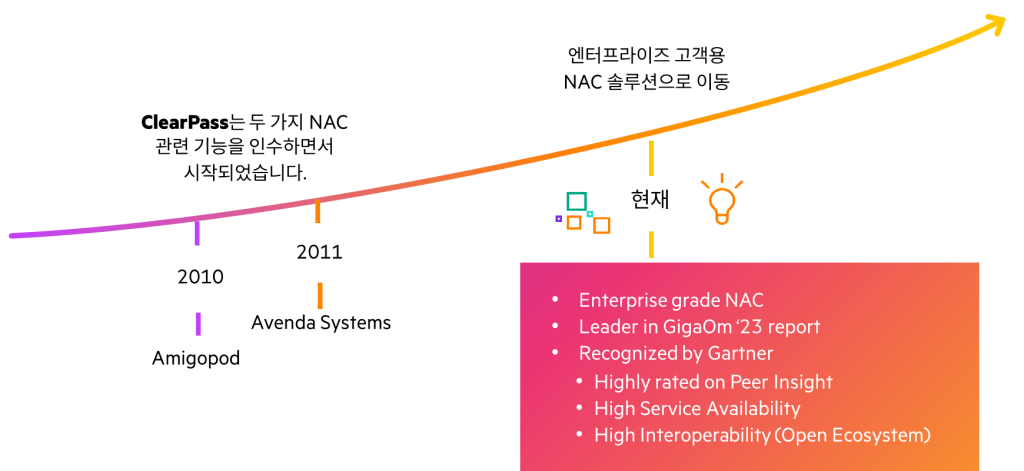
Soon, ClearPass began to gain recognition as one of the premium NAC solutions in the market, especially in the enterprise market.
It has quickly emerged as a best-in-class solution not only for Aruba customers but also for the entire NAC industry.
However, as many organizations continue to adopt cloud-based services, they are finding that cloud-based NAC solutions naturally complement the granular, contextual access control implemented on-premises. Enterprises are now realizing that a new approach to network access control is needed to overcome the challenges inherent in traditional NAC solutions.
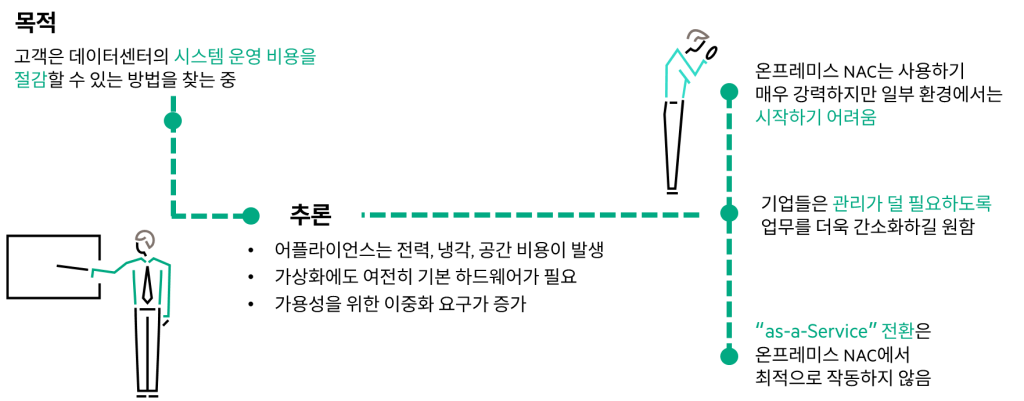
Next-generation Central NAC complements traditional NAC approaches by providing streamlined security in edge-to-cloud environments.
A cloud-based network access control solution for everyone
HPE Aruba Networking Centralis designed to provide network and security teams with a solution that delivers exceptional user experiences without compromising protection. HPE Aruba Networking Central NAC provides cloud-native security controls.
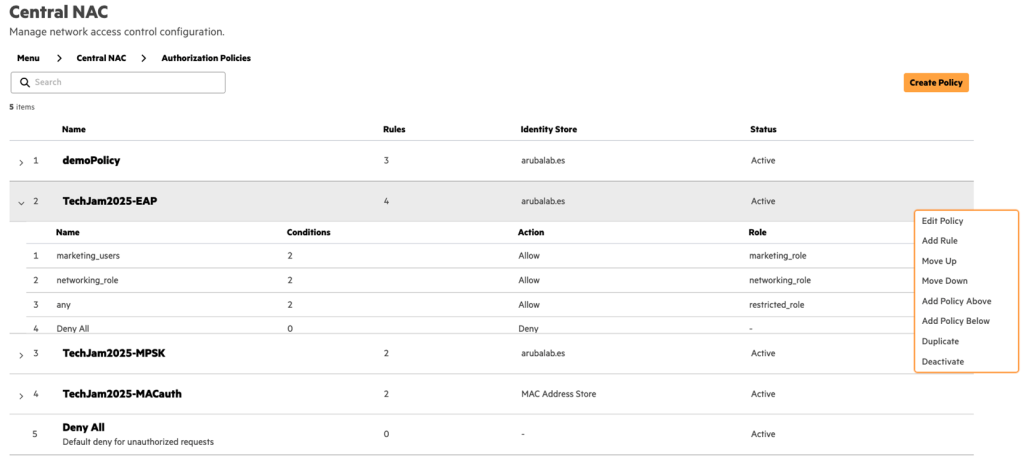
- Basic built-in: HPE Aruba Networking Central NAC is a feature built into Central.
This naturally makes security a part of the network management workflow.
All the elements you need to configure and enforce policies are available whenever and wherever you need them. - accuracy: Network and security teams need granular controls to provide strong protection.
HPE Aruba Networking Central NAC enables organizations to develop and enforce granular policies based on identity. - Integration: No single security solution can provide all the protection your organization needs.
NAC solutions must work together with other elements within a multivendor security ecosystem.
HPE Aruba Networking Central NAC includes integration with multiple cloud identity providers, enabling network and security teams to use the same identity framework for network policies, reducing cybersecurity gaps. - consistencyPolicies configured and applied in HPE Aruba Networking Central NAC are automatically defined and translated into access policies via Central Policy Manager. These policies are propagated across the entire network infrastructure (mobility gateways, switches, and access points), ensuring consistent policy enforcement from the edge to the cloud.
- Convenience: The intuitive controls of next-generation HPE Aruba Networking Central NAC enable network or security administrators to easily configure Zero Trust security policies without specialized NAC experience.
Can you give us an example of the value of such precise policy definition and implementation?
To ensure AI security, organizations can now assign policies that restrict data scientists to only access specific AI models, based on their individual identification. This allows for micro-segmentation to significantly reduce damage in the event of a breach.
Beyond Network Access Control: Networks as Security Solutions
AI-powered networks that prioritize security perform a dual role: supporting connectivity while also defending against cybersecurity threats.
That's why HPE Aruba Networking now offers the following services in addition to Central NAC:.
- Adaptive DDoS Defense: Provided through SASE New AI-based adaptive DDoS defense capabilitiesallows the system to adapt and respond to both normal traffic fluctuations and unexpected DDoS attack patterns.
This allows organizations to prevent and protect against DDoS attacks targeting their businesses.
By delivering this capability through SASE, enterprises do not need to add dedicated appliances. - High Availability SASE: HPE Aruba Networking SSEis designed from the ground up for performance and resilience.
Integrate all your security services through the same intuitive interface across all PoPs.
Designed to improve user experience and reduce IT issues.
New HPE Aruba Networking SSE Mesh ConnectivityIt establishes parallel connections to multiple PoPs between agents and connectors and then selects the optimal PoP path, providing seamless and efficient real-time access without downtime.
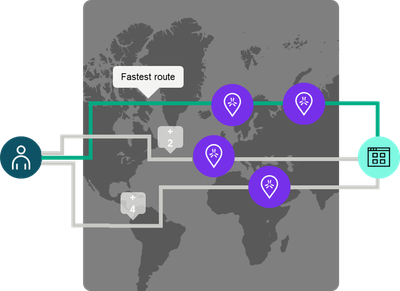
Additionally, ZTNA Private Edge, available within HPE Aruba Networking EdgeConnect SD-WAN, can now be activated by operators with an HPE Aruba Networking SSE ZTNA license at no additional cost or setup.
ZTNA Private Edge allows you to mirror zero-trust policies defined in the cloud and implement them locally. This provides hybrid workers with a consistent experience, high speeds, security compliance for local data, and business continuity.
As IT infrastructure evolves, it becomes increasingly important and reliant on businesses.
Accordingly, infrastructure is becoming more complex and more difficult.
In times like these, network security is crucial.
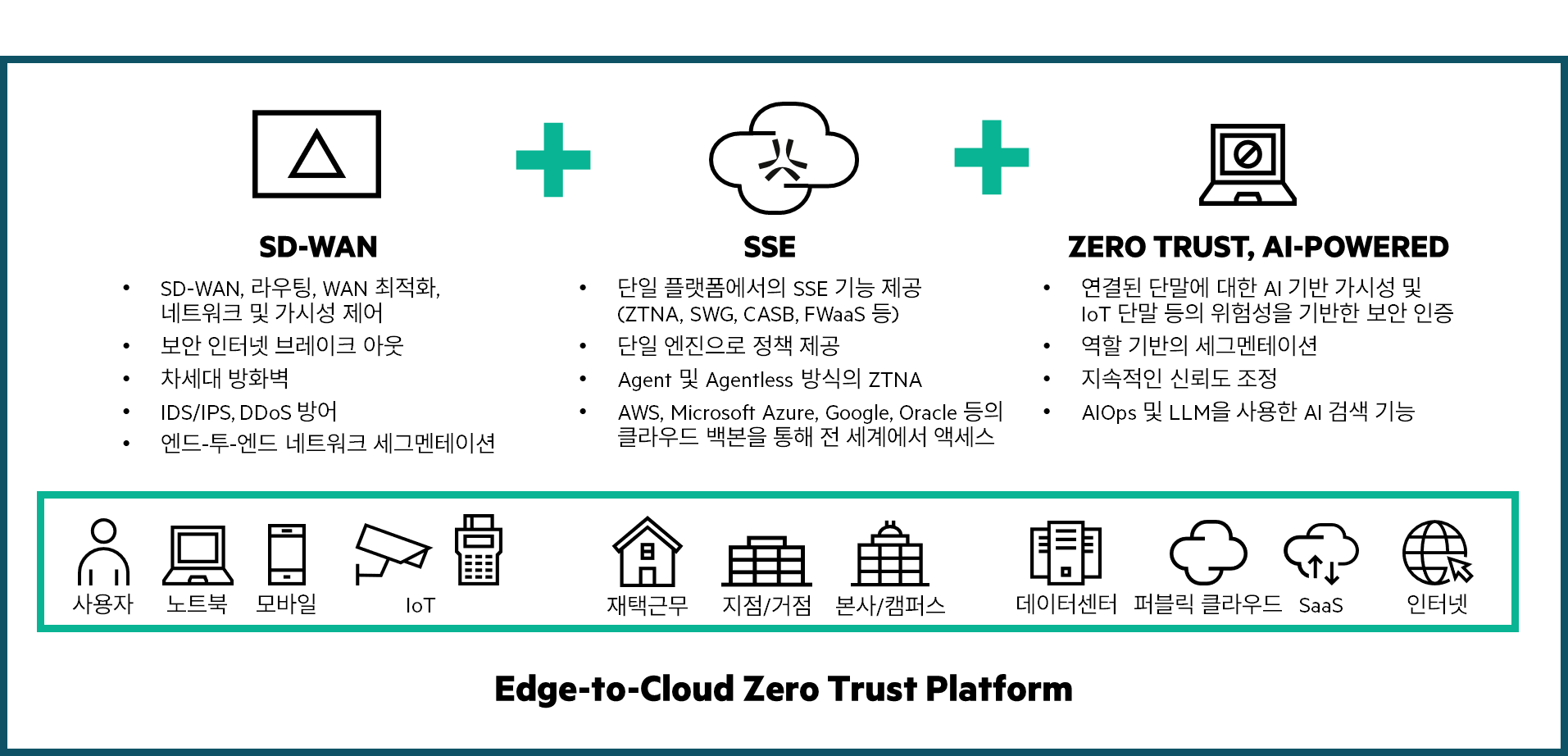
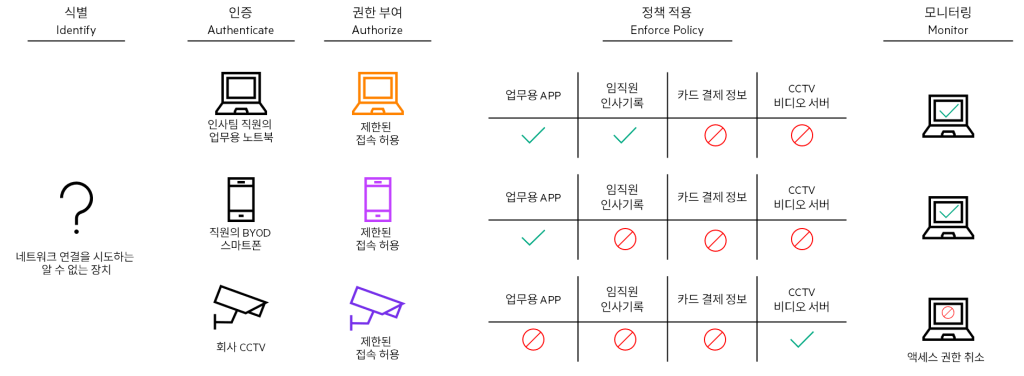
From the moment you connect to the network to the moment you disconnect, you must monitor it without fail and control access based on the principle of least privilege.
With the increasing use of cloud apps and the frequency of remote access, the need for next-generation NAC solutions is increasing.