With the Wi-Fi 7 announcement at MWC 2022 earlier this year, many are suggesting that they will skip Wi-Fi 6E products and wait for Wi-Fi 7. In fact, media outlets are even suggesting that Wi-Fi 7 should be the right choice instead of Wi-Fi 6E.
Current supply chain issues impacting the global economy, particularly the difficulty in sourcing Wi-Fi 6E chipsets, are cited as a primary reason by many.
So today I'd like to talk about correcting some of these things.
Aruba's Wi-Fi 6E products are handling unprecedented demand.
Aruba is confident that this will be one of the longest-running product upgrades in enterprise Wi-Fi history. Aruba has already released the second platform on its 6E roadmap, with a third on the way.
And we supply 6E products to more than 10 countries around the world, including our country.
And the number of countries continues to grow.
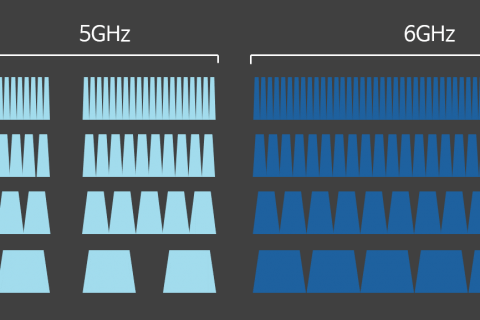
Aruba says the 6Ghz band offered by its 6E products offers a huge amount of new capacity (1,200Mhz of additional spectrum) that allows enterprises to achieve wider Wi-Fi channel bandwidth or Multi-layer designImplements.(1) Wi-Fi 6E now offers businesses and users worldwide the benefit of a clean, interference-free spectrum.
The supply chain for Wi-Fi 6E is not easily broken and continues to support growing demand.
“Leading WLAN companies have been ordering Wi-Fi 6E chipsets for over a year now, and they are now shipping them.
Wi-Fi 6E APs accounted for a significant portion of total enterprise AP sales shipped in Q4 2021.There are currently no Wi-Fi 7 chipsets, and by the time Wi-Fi 7 access points become widely available, we expect Wi-Fi 6E access points already shipping to account for more than a quarter of all access points.”
Chris Depuy, Technology Analyst, 650 Group
Wi-Fi 7 still has a long way to go when looking at the standards development process.
The IEEE release date for the 802.11be standard, which will form the basis of this new generation, is no earlier than March 2024.(2)
Additionally, the Wi-Fi Alliance has not disclosed a timeline for the new standard it is developing. However, several media reports suggest that it likely aligns with the IEEE's timeline.(3)(4)
Wi-Fi 7 fails to deliver the dramatic performance improvements that Wi-Fi 6E offered over previous generations.
At this point, it's doubtful that Wi-Fi 7 will offer meaningful improvements beyond the general consumer market.
For example, the 320MHz “Ultrawide” channel is currently only available in 15 countries.
And the much-hyped new “4096QAM” data rates require high signal-to-noise ratios (SNRs) that can only be achieved within a short distance of the AP.
Additionally, Wi-Fi 7 allows for up to 16 spatial streams. However, the required antenna array is too large and the Power over Ethernet (PoE) requirements are too high, making it unsuitable for most enterprise users using 30W or 60W PoE switches.
This means that businesses don't need to wait for Wi-Fi 7 because many of the performance improvements available in Wi-Fi 7 are available immediately in Wi-Fi 6E products.
Wi-Fi 7, a technology of the distant future that no one can yet predict
Aruba doesn't expect to release enterprise Wi-Fi 7 products until 2024 at the earliest. Given the huge demand for the new 6GHz spectrum band, this means 6E products will be its best-selling products for the next several years.
As evidenced by incorrect predictions like the previous rumor that the iPhone 13 would support 6Ghz wireless frequencies but didn't actually launch, speculation about Wi-Fi 7 is currently a mystery.(5)(6)
For enterprises to postpone planned 6E purchases and wait for Wi-Fi 7 would be an unnecessary wait, given the proven technology and performance of 6E and the anticipated release schedule for Wi-Fi 7.
However, that doesn't mean that what we've discussed today won't be helpful to ordinary consumers.
"Power users" like early adopters, gamers, and streamers are quick to purchase new products and expect the best possible performance from all their equipment. Because home Wi-Fi networks rely on AC power from the wall rather than PoE, they aren't limited by the number of antennas or spatial streams.
However, enterprises will need to quickly deploy Wi-Fi 6E environments to realize the unprecedented opportunities, as the 6GHz band is already open and products capable of utilizing it are already being released.
[reference]
- Aruba Blog by Chuck Lukaszewski