At the recent HPE Discover keynote, President Antonio Neri defined the paradigm of the infrastructure market in a single sentence.
“The true beginning and end of AI innovation is ultimately the network.”
While the market's attention seems entirely focused on which GPU is faster or which Large Language Model (LLM) is smarter, no matter how outstanding the computing chips possessed, an AI Factory is bound to come to a halt if the arteries connecting them organically are weak. This is why, as declared by Chairman Antonio Neri, we must pay attention to the physical infrastructure required to operate these massive AI workloads 'sustainably' and 'profitably.'.
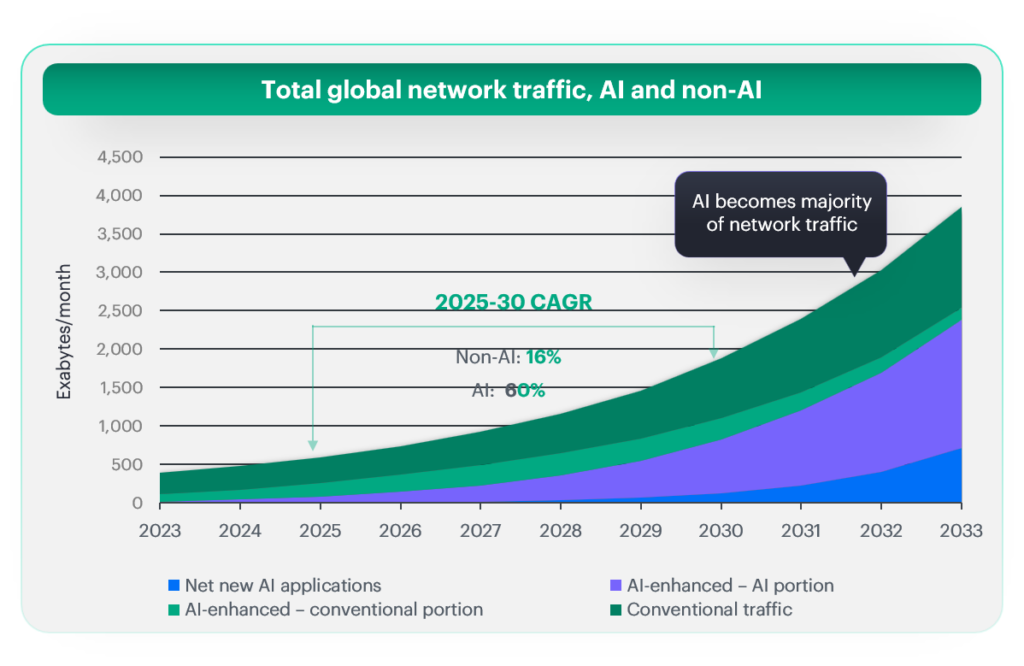
When many people think of AI networking, they only think of ultra-high-speed switches (Backend Fabric) inside data centers.
However, as AI is distributed beyond the massive data center (AI Factory) to the edge area where users and data exist ‘AI Grid’ As we entered the era, The value of Wide Area Networks (WANs) is completely recalibratedIt is happening.
So, in this blog post, we will structurally examine why HPE Networking ultimately determines the overall completeness of AI while embracing NVIDIA's ecosystem, and why this is directly linked to Tokenomics.
Beyond the Limitations of Data Centers: Why 'AI Grid (Distributed Infrastructure)'?
The traditional 'AI Factory' model, which densely packs tens of thousands of GPUs into a single massive data center, requires space, and above all Critical point of power supplyI encountered. Supplying hundreds of megawatts (MW) of power to a single site for large-scale LLM learning is nearly impossible..
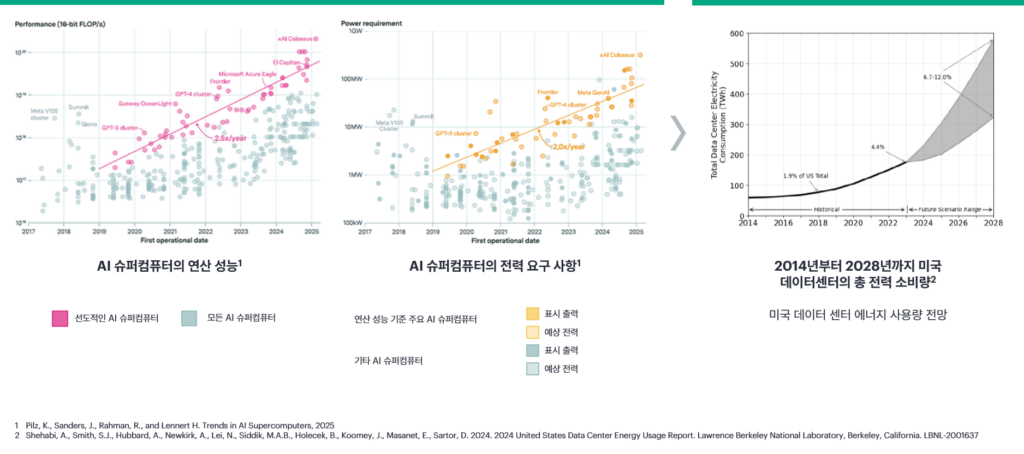
In the end, the answer is Infrastructure decentralization and gridization (AI Grid)no see.
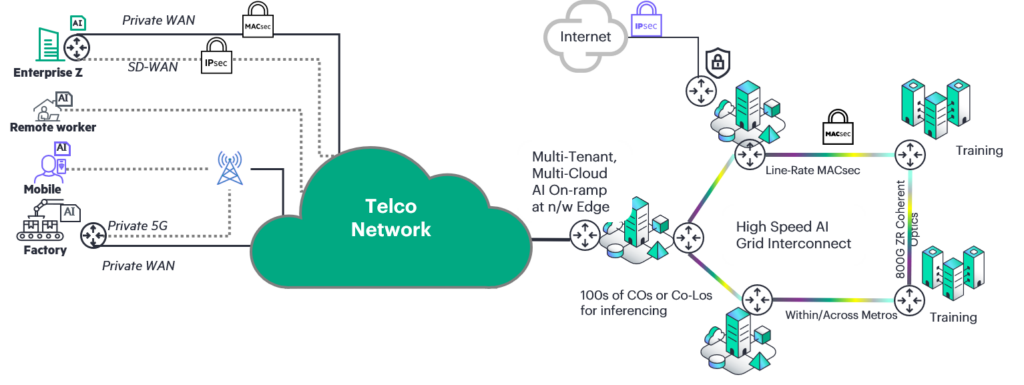
It involves organically connecting AI infrastructure by utilizing existing assets (space, power, fiber optic cables) in distributed edge data centers or telecommunications carrier central offices with a capacity of hundreds of kilowatts (KW). According to an Omdia survey, 871 companies adopting AI are already implementing or planning to implement edge inferencing, and this traffic is projected to grow more than fivefold within the next three years, surpassing traditional data traffic by around 2031.
Deployment of Spectrum-X on Leaf-Spine: The Harsh Reality of NVIDIA Policy and the Ecosystem
If you look at HPE's AI Grid reference architecture (HPE e2e AI Grid Solution), you will find one peculiar point.
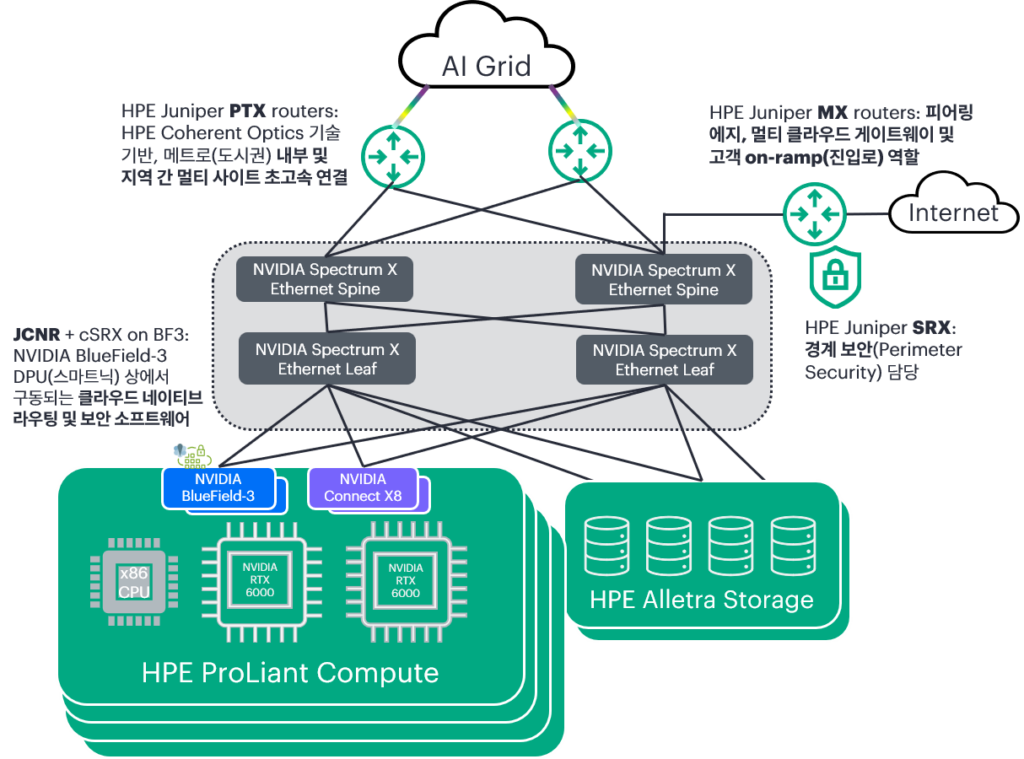
Despite HPE acquiring Juniper and securing the industry's best QFX switch lineup, NVIDIA's Spectrum-X occupies the internal GPU backend (leaf-spine) area of the data center.
This is It is the best choice that was unavoidable given the framework set by NVIDIA (the AI Grid ecosystem) and hardware certification policies.It is close to.
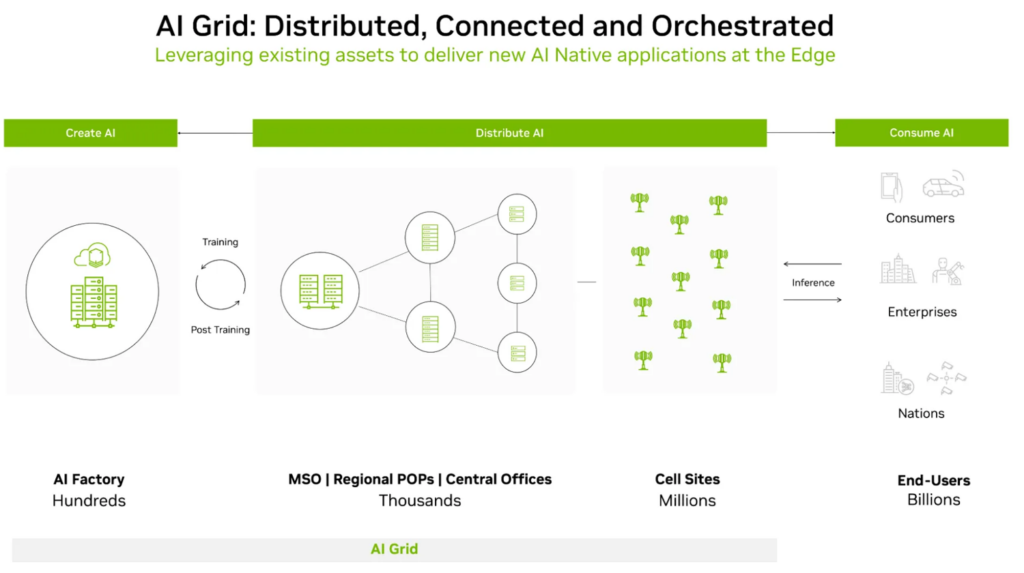
- Strong hardware-level dependency: To meet the high-performance AI Factory specifications proposed by NVIDIA and receive official technical support (NVIDIA-Certified), a Spectrum-X deployment that perfectly meshes with the BlueField-3 DPU/SuperNIC inside the server at the hardware level is semi-mandatory requirementThis is it.
- Irreplaceable proprietary technology: Even if a standard Ethernet switch (such as QFX) were placed in this spot, a link would still be established, but it would not be possible to utilize NVIDIA’s proprietary Adaptive Routing and ultra-low latency Congestion Control algorithms. Consequently, a tail latency bottleneck where the GPU is idle would occur, causing the cost-effectiveness of the expensive AI infrastructure to plummet; thus, the structure is such that the backend leaf-spine must inevitably accept NVIDIA’s policy-driven packaging as is.
HPE cleverly embraced this harsh ecosystem reality and instead established an optimization strategy (Tiering) to front-end Juniper's powerful routing and security portfolio across the entire area connecting the outside and inside of the data center..
The real 'HPE game' starts at the WAN: Perfect division of roles across network layers
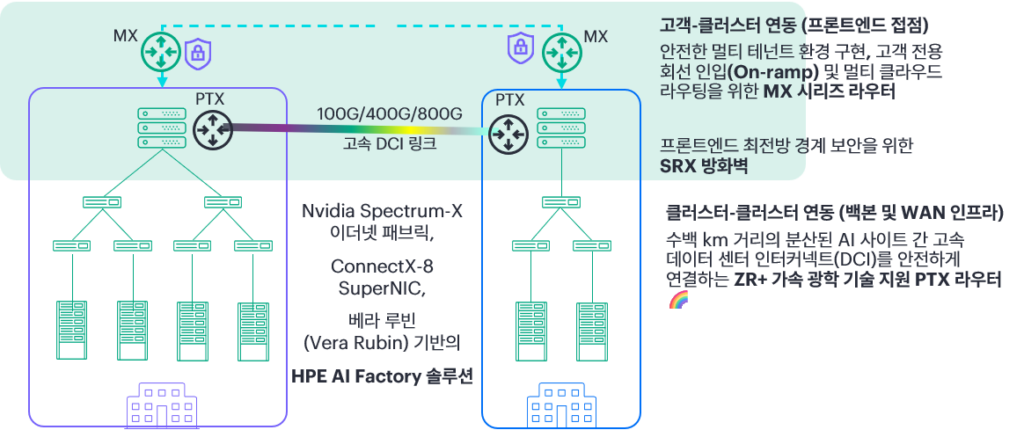
As can be seen in the architecture diagram above, tight computation within a single AI Factory is entrusted to NVIDIA Spectrum-X, while the massive high-speed road network that securely connects it to the outside world and other AI clusters is thoroughly... HPE Networking's Juniper SolutionsThis is controlling.
The specific roles and technical insights of the equipment for each layer are summarized as follows:.
| Network layer | Application Solution | Key Roles and Technical Insights |
| GPU Backend Fabric (Intra-Site) | NVIDIA Spectrum-X (SN5610) | NVIDIA policy-based domain. Provides large-scale data synchronization between GPUs and an ultra-low latency RoCE environment.. |
| Cluster-to-Cluster interconnect (Inter-Site WAN) | HPE Juniper PTX Series (PTX10002-36QDD etc.) | “Key Areas Transforming WAN into a Second AI Fabric”. It is responsible for high-speed data center interconnects (DCI) between distributed AI sites, and combines GPU resources located hundreds of kilometers away into a single virtual cluster using high-density 800GE and ZR/ZR+ accelerated optical technology.. |
| Customer-to-Cluster On-Ramp (Frontend / Edge) | HPE Juniper MX Series (MX301 / MX304, etc.) | Multi-tenant Slicing and Secure Access Edge Roles. Securely and precisely isolate and control large-scale VRFs, routing tables, and overlay tunnels when numerous enterprise customers or end users access the infrastructure.. |
| Perimeter Security | HPE Juniper SRX Series (SRX 4700, etc.) | Fully secure frontend security is ensured by performing line-rate MACsec encryption, inline IPsec, and DDoS protection at the front of the AI Factory.. |
Due to power supply limitations, the traditional large data center model of densely packing tens of thousands of GPUs on a single site has reached its limits.. At a point where distributed edge infrastructure must be gridded (AI Grid) and organically connected, Juniper's high-performance WAN technology dominates the entire external network and frontend, excluding the backend.This is the reason why it forms the true backbone of this HPE AI solution.
Inference Disaggregation (Prefill vs. Decode) and Token Economics
The most important metrics for AI service providers (evolution from CSP to AI SP) are 'Cost per Token' and 'Tokens/Sec'.. The AI inference stage that determines this is broadly divided into two processes..
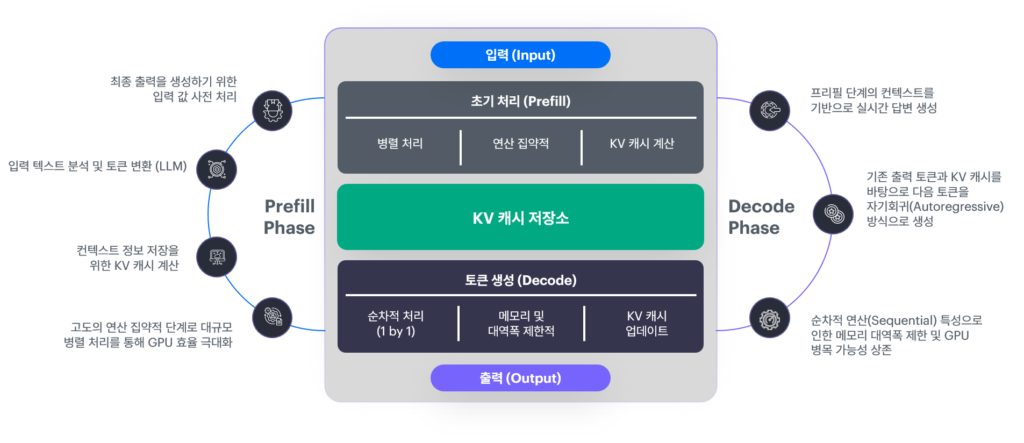
As you can see, AI inference is split into two completely different stages: 'Prefill' and 'Decode'.
- Prefillis a 'computationally intensive' section where large-scale parallel processing occurs, and,
- Decodeis a 'memory bandwidth limited' section that outputs one character at a time sequentially (autoregressive).
What would happen if you tried to process these two steps simultaneously within a single GPU box?
'Mutual interference and efficiency degradation' occur, where memory efficiency (Decode) drops due to heavy computations (Prefill), while valuable computation cores of expensive GPUs are left idle (Prefill bottleneck) as tokens are extracted one character at a time (Decode).
From the service provider's perspective, this means... ‘The management disaster of 'rising price per token'It continues to.
The breakthrough presented by HPE Networking is to completely disaggregate this step through the WAN.
In a large AI factory with powerful parallel computing power PrefillProcess KV CacheIt quickly calculates the result and then transmits only this data to the edge infrastructure closest to the user via HPE Juniper PTX's ultra-high-speed, ultra-low-latency WAN fabric.. And at the edge DecodeIt exclusively handles this and distributes tokens to users without interruption..
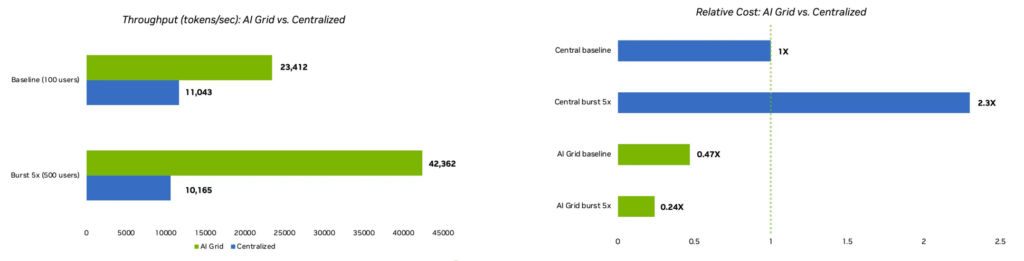
Only when this architecture is realized can it be compared to a centralized infrastructure 320% High token throughput과 Cost savings of 90% (0.24X level)This completes the overwhelming Token Economics figures.
Skate toward where the puck is going.
“AI adoption is rapidly evolving the networking landscape.
Are you skating to the puck or ponder where the puck is going to be?”
As ice hockey legend Wayne Gretzky famously said, companies preparing AI infrastructure now must look not at where the hockey puck is now (simple GPU additions and internal leaf-spine competition), but at 'where the puck is going (distributed AI Grid and WAN innovation).'.
HPE organically integrates hardware computers, high-performance Alletra storage, and NVIDIA's computing platform with Juniper's carrier-grade high-performance routing stack (PTX/MX/SRX) to enable observation and management through a single pane of glass. End-to-End (E2E) AI Grid SolutionI completed it..
If you wish to transform your existing power and space assets into a high-yield infrastructure based on token economics (Metered Tokens-as-a-Service), now is the time to consider innovating your WAN infrastructure, AI's second fabric. As Chairman Antonio Neri said, AI's true differentiation ultimately begins in the network.