Edge Study

  • [ACSA Training #35] Routing Types

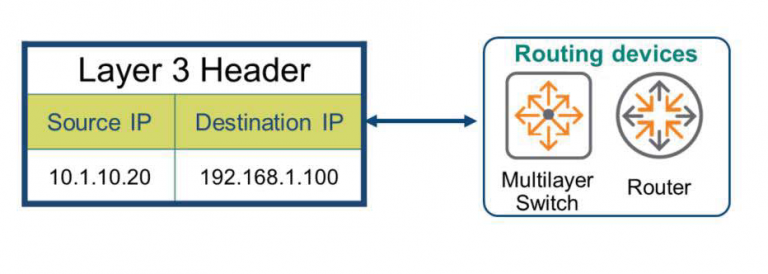
    We already covered routing in the previous post. We examined how actual packets move at Layer 3 along with IP routing tables. Now, let's take a look at the actual types of routing and the protocols involved. Types of Routing in AOS-CX: Routing devices make Layer 3 forwarding decisions based on the optimal path in the IP routing table…


  • [ACSA Education #34] VRRP

    In the previous post, we looked into the Default Gateway. An endpoint can only have one Default Gateway. And it can become a single point of failure. Looking at the figure below, if Core-1 fails, all hosts using Core-1 as the Default Gateway, including PC-1, will be isolated. How should we deal with this situation? Redundancy…

  • [ACSA Training #33] Routing

    Since a switch is a Layer 2 device, its ports can only execute Layer 2 functions and protocols, such as becoming a member of each VLAN (member port) or transmitting frames. When an endpoint is connected to a port used as a Layer 2 interface, it forwards an L2 frame based on the destination Layer 2 MAC address. ※ AOS-CX switch ports are Layer… by default

  • [ACSA Education #32] Layer 3 Fundamentals

    Having conducted approximately 30 training posts related to ACSA, I have covered content centered on Layer 2. Now, I would like to move up a level from Layer 2 and discuss Layer 3 content. We will examine Layer 3 topics such as IP packets, routing, and gateways. Let's start by finding out what routing is. Routing already refers to the interaction between devices within the same network (broadcast domain)...

  • [ACSA Education #31] Static & Dynamic LAG

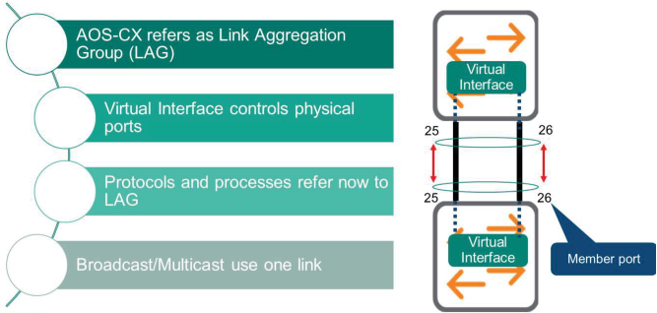
    In the previous post, we briefly looked at LAG (Link Aggregation Group). LAG has two operating modes: Static LAG and Dynamic LAG. Let's examine them in turn. Static LAG: In Static Link Aggregation mode, devices do not exchange any control information with each other. In other words, LAG between switch peers…

  • [ACSA Education #30] Link Aggregation

    Switches must provide connections to many devices located on various VLANs. All traffic generated here communicates with each other by sharing links between switches. Therefore, multiple links are sometimes connected between switches to enhance resilience. However, this does not increase the bandwidth of the connection between the two switches. Even if two links are connected, only one of them…

  • [ACSA Training #29] Rate Limit & Loop Protection

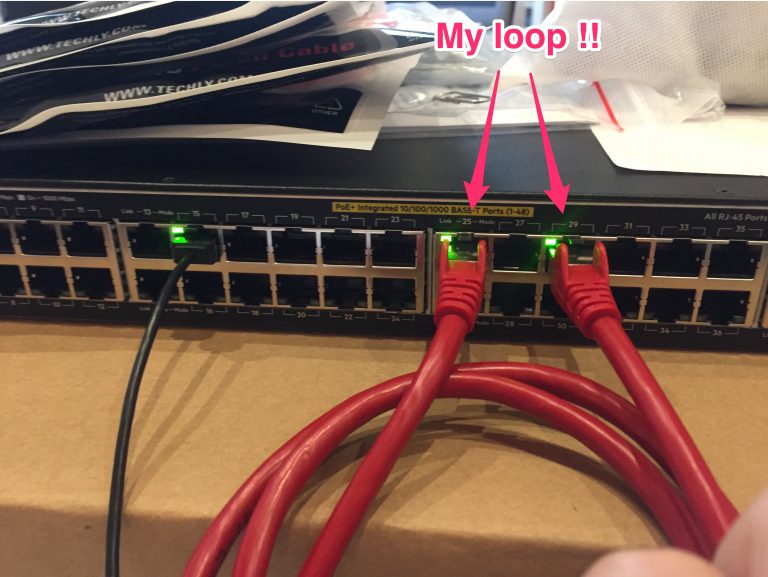
    If the Spanning Tree is configured incorrectly, a Layer 2 loop may be created. In such situations, AOS-CX can specify the amount of traffic that can be received on an Ethernet port or Link Aggregation Group (LAG), such as broadcast, multicast, or unknown unicast traffic. This feature is independent of the Spanning Tree, but CPU utilization…

  • Setting up a simulator lab with EVE-NG

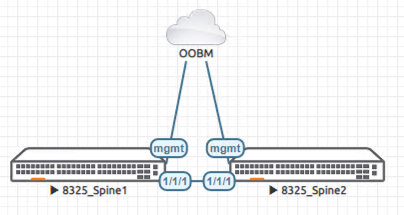
    To use the Aruba AOS-CX simulator, you first need to install an emulator such as EVE-NG. If you have not yet installed it, you can install it as a virtual machine using a hypervisor like VMware or Hyper-V. Please refer to the previous post for instructions on how to install it on Hyper-V. Once you have successfully installed EVE-NG, you now need to add an image to set up the virtual lab. In EVE-NG, Aruba products as shown below…

  • [ACSA Education #28] MSTP Theory and Regional Structure

    A Common Spanning Tree (CST) defines a single Spanning Tree Instance for the entire network, regardless of the number of VLANs. All BPDUs use Untagged VLAN 1, so VLAN details are not considered. Additionally, due to the absence of load balancing, specifying alternative paths or achieving low line usage and potential performance degradation…

  • Installing EVE-NG on Hyper-V

    In the previous post, I introduced the AOS-CX simulator. The AOS-CX simulator can be run using emulators such as EVE-NG or GNS3. Today, I would like to look into the installation using EVE-NG. EVE-NG is a very powerful network virtualization emulator that offers the advantage of allowing you to use network equipment from various manufacturers just like actual devices. More detailed…