Edge Study

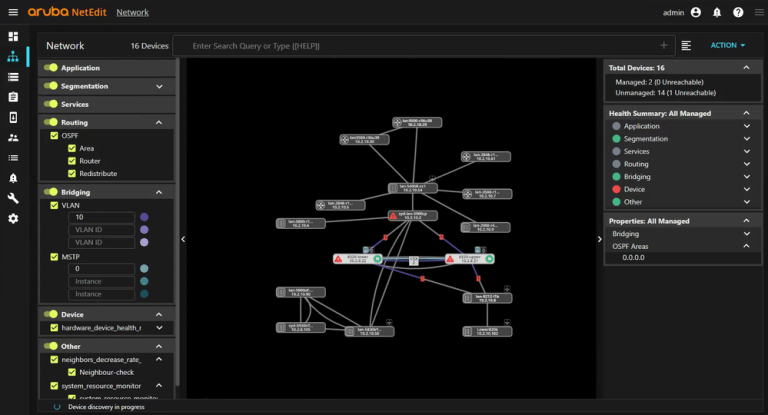
  • Managing ArubaCX Switches with NetEdit

    Our networks are bound to grow. Existing networks expand, or we may split networks according to purpose or create new ones for new businesses. As networks grow in this way, maintenance becomes extremely difficult from an administrator's perspective. In particular, large-scale network changes require prior preparation, design, configuration, and verification at every single network device…

  • [ACMA Training #4] AOS 8 Architecture

    The ACMA certification exam is conducted based on the AOS 8 operating system. Therefore, it is important to understand the AOS 8 architecture. In the previous post, I already explained the Aruba wireless LAN portfolio. While explaining APs (Access Points), I discussed the concepts of CAPs (Campus APs) and IAPs (Instant APs). Today, I will discuss the structure of the AOS 8 architecture, and the past…

  • [ACMA Training #3] RF Transmission Output

    All manufacturers, including Aruba, specify the power (output) of the AP's antenna port. RF power can be measured in units of mW (milliwatts) or dBm (decibels per milliwatt). 0 dBm is equal to 1 mW. When the dBm value becomes negative, the milliwatt value drops to a decimal point. In other words, mW represents data linearly, while dBm represents data in the form of a logarithmic function. RF power is the AP's coverage area's…

  • [ACMA Training #2] RF Basics

    Wireless networks are primarily designed considering coverage or capacity. When designing for WLAN coverage, the design must be based on the area to be covered. If a coverage-based design is configured to provide 100% coverage across the entire area, using high-power APs allows for a design with fewer APs. On the other hand, when designing a capacity-based WLAN…

  • [ACMA Training #1] Introduction to Wireless LAN (802.11)

    Following the previous basic training on the ArubaCX switch, we would like to proceed with training on Aruba Wireless Local Area Networks (WLAN). In this post, we will provide a basic introduction to wireless LANs and explain the technologies involved. Introduction to Wireless LAN Organizations: To break down the term, wireless LAN is called a Wireless Local Area Network (WLAN). Various organizations responsible for these wireless LAN standard technologies…

  • [ACSA Training #40] Safe Maintenance

    Network management is an essential skill for both network administrators and engineers. In this post, we will explore various foundational knowledge necessary to understand and perform the most important network management techniques. Out-of-Band Management Port (OOBM): The ArubaOS-CX switch family includes an OOBM (Out-of-Band Management) port used exclusively for monitoring and managing the switch. Within the ArubaOS-CX operating system, a separate…

  • [ACSA Education #39] Stacking

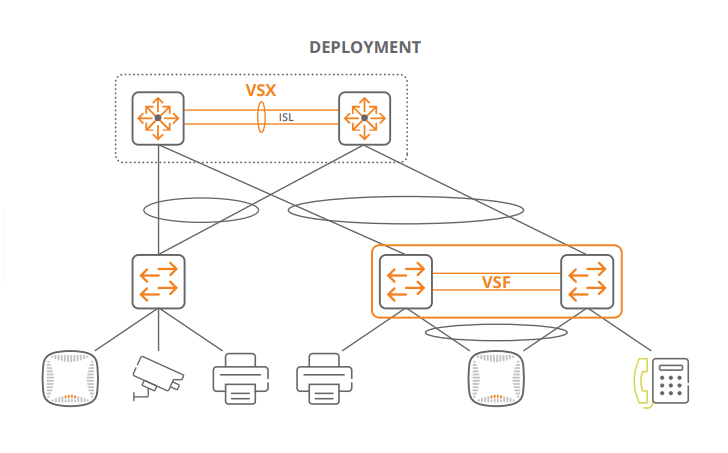
    Stacking technology is necessary to design, implement, and configure a more resilient and stable high-performance network. In this post, we will explore this stacking technology and examine Aruba switch stacking technologies, specifically VSF (Virtual Switching Framework) and VSX (Virtual Switching eXtension). Operation Plane – Data / Control / Management Plane Network devices logically consist of 3…

  • [ACSA Training #38] OSPFv2 Operation

    In the previous post, we looked at what OSPF is as a protocol and how it works. Today, we will examine what needs to be kept in mind to actually operate OSPFv2. From a protocol perspective, there are two types of networks. Point-to-Point Network: Only two peers are located on the link. When an interface is configured as a point-to-point link, OSPF [assets] that if one neighbor exists on the interface…

  • [ACSA Training #37] OSPFv2

    OSPF is the most widely used method for routing traffic within an organization. Among them, OSPFv2 is used to route IPv4 packets within the corporate internetwork. Today, we will look at OSPF areas, router IDs, various message types, and neighbor states. Introduction to OSPF: RFC 2328 [regarding] OSPFv2 for routing IPv4 addresses…

  • [ACSA Training #36] Routing Protocols

    Before learning about routing protocols, we need to understand Autonomous Systems (AS). An Autonomous System can be described as a collection of routers under a management domain. In other words, an ISP (Internet Service Provider) owns its own internal network. Furthermore, the ISP possesses the autonomy to manage even the routers within that network. This is precisely what an Autonomous System (AS) is….