Edge Study

  • [ACP-DC Training #13] Spine-Leaf Architecture

    The Spine-Leaf architecture consists of Spine switches acting as the core, Leaf switches serving as the access layer, and numerous endpoints responsible for the data center's computing and storage resources. This structure is highly scalable, efficient, and optimized for low-latency communication, making it highly suitable for modern data center environments that require high-performance networks. The goal of a typical data center architecture, the Spine-Leaf architecture…

  • [ACP-DC Training #12] Virtual Routing and Forwarding (VRF)

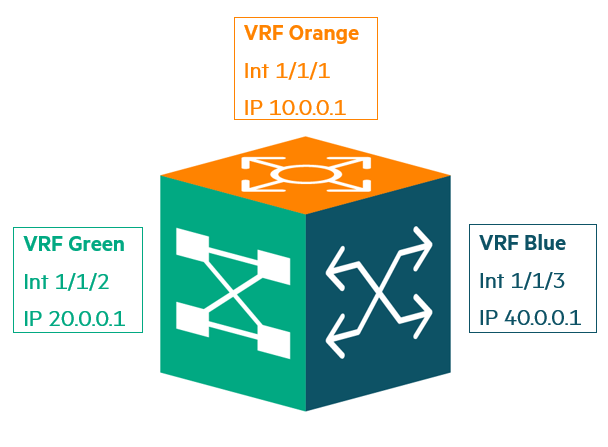
    Virtual Routing and Forwarding (VRF) is an L3 (Network Layer) isolation technology used to build a Virtual Private Network (VPN). VRF isolates routing tables from other VPNs within the system and enables the use of redundant IP addresses. In other words, VRF is a technology that allows multiple routing table instances to coexist simultaneously within a single router. Each…

  • [Aruba DevNet Lecture 2] Escape Excel Hell! Organize Your Equipment Assets in 3 Seconds with Python

    In the last Lecture 1, we successfully obtained an 'Access Token' that opens the door to the Aruba Central API. If you haven't seen it yet, I recommend watching Lecture 1 first! Today, we will use that token to perform a task that is truly 'profitable and time-efficient.' It is none other than the network administrator's eternal challenge: asset management (Inventory). ‘Team Leader: Currently…

  • [Aruba DevNet Lecture 1] Introduction to Automation and IaC for Network Engineers

    Starting today, I would like to launch a somewhat special and very powerful technical series. It is the 'Aruba Network Automation' series. Haven't network engineers had experiences like this at least once in the field? ‘Having to change the VLAN settings for 50 switches, I broke out in a cold sweat after making a mistake while copying and pasting with 50 Putty windows open…’ “Doing an inventory check on APs…”

  • [ACP-DC Training#11] Loop Prevention and LAG Implementation

    Data center design involves multiple layers of redundancy, extending from server NIC cards to uplinks and switches. While this redundancy is essential, it simultaneously increases the risk of network loops, broadcast storms, and network outages. Today, we will learn key technologies to prevent these risks and build high-performance, redundant L2 data centers. 1. Structure of a Collapsed Core L2 Data Center A data center is…

  • Role-based zero trust environments

    Until now, our network security has been very static. We controlled traffic and strengthened security by creating security policies based on source IP addresses, destination IP addresses, and ports. However, times have changed. IP addresses are shifting to a DHCP environment, and it is becoming increasingly difficult for IT teams to control user devices, including personal terminals. In this environment, network security using existing security methods…

  • Putting a container image on a switch

    Starting with AOS-CX version 10.13, a new feature called the Feature Pack has been introduced. Advanced features can now be accessed through an additional software license subscription called a Feature Pack. There are two types of Feature Packs: Advanced and Premium. The Premium license is required to enable the NAT and IPSec functions of the CX 10000 switch. Other Feature Pack features are…

  • [acp-dc training#10] vsx (2)

    In the previous post, we explored VSX, the virtualization technology of HPE Aruba Networking AOS-CX switches. We explained the components of VSX, the differences from VSF, and its advantages. Today, we will cover the practical aspects. We will examine how to utilize VSX in practice, such as live software upgrades and technologies like Split Brain. VSX Control Plane Separation and Software Update Control Plane…

  • [ACP-DC Training#9] VSX (1)

    Today, the demand for network availability is ceaseless. Customers require networks that operate 24 hours a day, 365 days a year, and HPE’s VSX technology offers a solution to this problem. HPE Aruba Networking’s VSX technology is a virtualization technology for data center and core switches running on the AOS-CX operating system. This solution enables switches in critical areas to function as if they were a single virtualized…

  • [ACP-DC Training#8] 2-Tier Design for Small Data Centers

    Layer 2 two-tier designs are simple to deploy, operate, and troubleshoot because they utilize existing traditional protocols. They can be managed without specialized knowledge of overlay protocols or complex designs. This architecture is suitable for small to medium-sized data centers, but in larger environments, it can also be implemented at the data center POD level. In a two-tier data center, host information is traditional bridge…