Edge Study

  • [ACSA Training #8] TCP Header

    In the last post, we looked at the IPv4 header at Layer 3 (Network Layer). Today, we will explore TCP and UDP, which can be found at the Transport Layer, Layer 4. 3-Way Handshake: First, before processing application data, TCP establishes a controllable connection to ensure reliable data delivery to the destination. Looking at the figure below, Host…
  • [ACSA Training #7] IPv4 Header

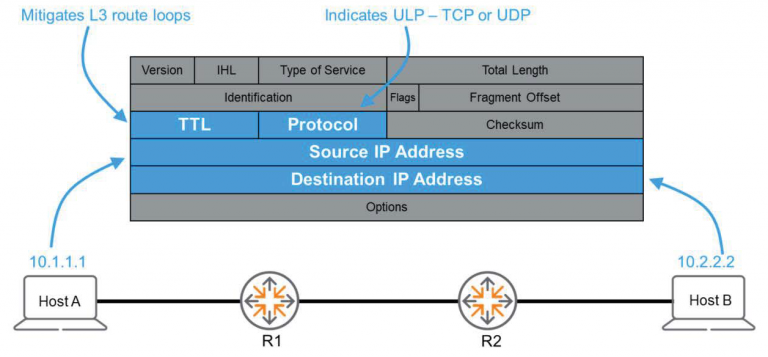
    The figure shows the IPv4 header information added to Layer 3 packets. The important fields in the header are as follows: TTL (Time To Live): This field indicates the validity period of the data as a method to prevent packet infinite looping at Layer 3. If routers are misconfigured, IP packets can circulate endlessly between two or more routers. This…

  • [ACSA Training #6] Ethernet Frame

    In the last post, we looked at the TCP/IP Stack. We examined the differences between the TCP/IP Stack and the OSI 7-layer model. Today, we will explore Ethernet, which corresponds to Layers 1 and 2 of the OSI 7-layer model. Ethernet is a computer network technology used at Layers 1 and 2 of the OSI model. This standard uses a 6-byte (48-bit) MAC (Media Access Control) address at Layer 2…

  • [ACSA Training #5] TCP/IP Stack

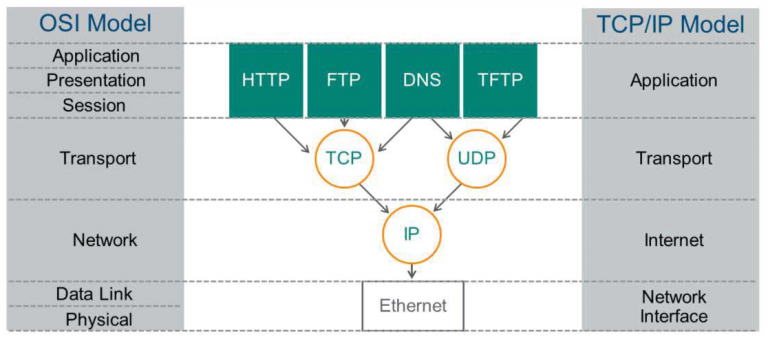
    The Internet Protocol Suite is a conceptual model and communication protocol used in the Internet and computing networks. Because the basic protocols of this suite are TCP and IP, it is commonly known as the TCP/IP Stack. This model provides end-to-end data communication. It specifies methods for data packetization, addressing, transmission, routing, and reception. The TCP/IP model is also compared to the OSI 7-layer model…

  • [ACSA Training #4] Types of Traffic

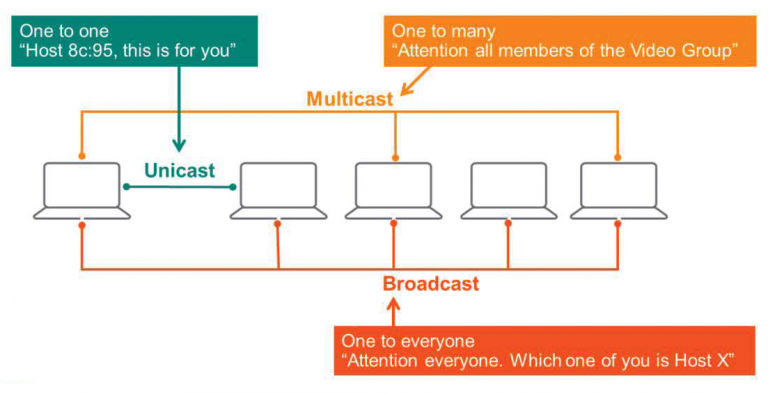
    Today, I would like to learn about the types of traffic. Computer communication can be classified into three categories: Unicast, Multicast, and Broadcast. Unicast represents one-to-one communication (one transmitter and one receiver). To give a simple example, let's assume there are several students in a classroom. A teacher stands at the classroom door and delivers a message by calling out the name of a specific student, let's call A. This…

  • [ACSA Education #3] Physical Media (Devices)

    Computer devices use different media to transmit information. Each medium has different characteristics depending on its type. Fiber optic media modulates light wavelengths, Wi-Fi modulates radio waves, and copper wire media modulates electrical characteristics such as voltage. Copper Cable In the previous post, regarding signals to represent logical data, binary numbers, at Layer 1…

  • [ACSA Training #2] OSI 7 Layers

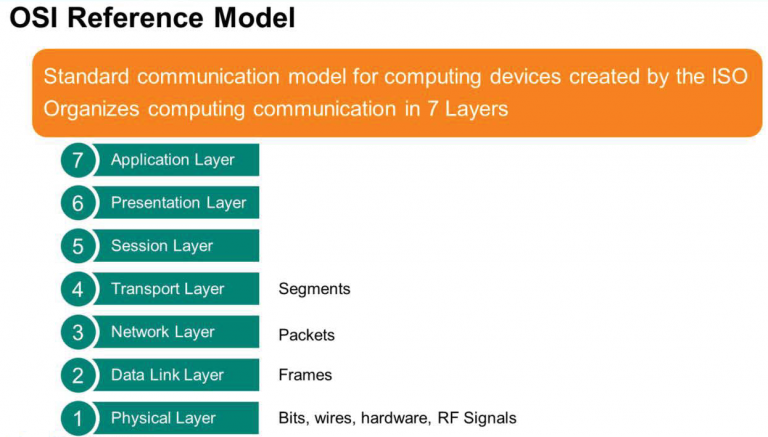
    As computers rapidly advanced in the mid-1980s, all manufacturers attempted to implement their own proprietary communication protocols. As a result, compatibility issues arose between products from different manufacturers, leading to unreliable communication. To resolve this, the International Organization for Standardization (ISO) proposed the OSI (The Open Systems Interconnection) model, a standard communication model for computing devices… .

  • [ACSA Education #1] Network Basics

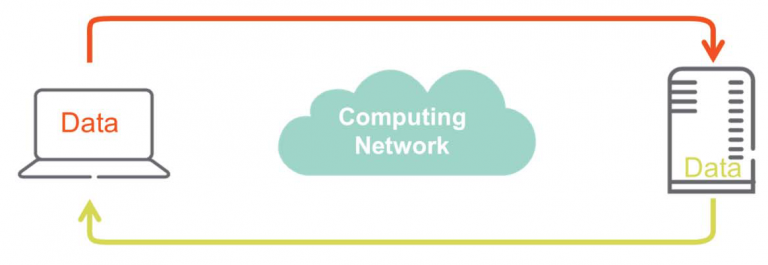
    Today, shall we start by briefly looking into networks? Before we do that, I think we need to understand what communication is. In English, communication is called "Communication." In other words, it means communicating with one another. People conveying their intentions and exchanging information with one another—that is what communication means. The same applies to machines. Different computers exchanging data—that is what computers...