HPE Aruba Networking Central, ArubaOS 10 (AOS 10)meet
If you are currently using an ArubaOS 8 (AOS 8) environment, either managed via AirWave or standalone (Controller-less), upgrading to the new ArubaOS 10 (AOS 10) software can greatly help you simplify, scale, and optimize your Wi-Fi architecture.
Existing network infrastructures are under constant pressure due to new demands emerging from the digital environment, making agility and flexibility increasingly important. New IoT devices and new applications each present increasingly challenging operational environments for network managers.
Reducing repetitive, manual tasks and refocusing network priorities on supporting the company's business are key challenges for IT infrastructure teams. For this reason, companies are actively exploring cloud-native approaches to address existing network issues.
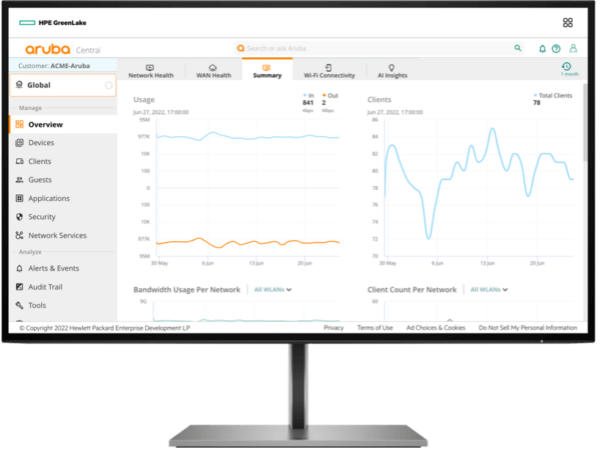
AOS 10 is a next-generation distributed operating system, fully configured and operated by HPE Aruba Networking Central.
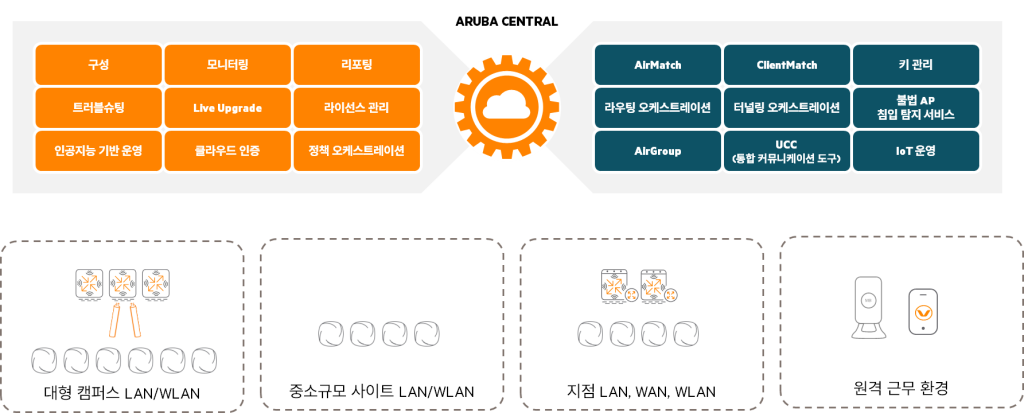
Available for both access points (APs) and gateways (7xxx and later), AOS 10 combines the strengths of InstantOS, ArubaOS 8, and AOS 8 SD-Branch to provide a unified network underlay.
This allows you to streamline your daily tasks with more efficient workflows and add more enterprise network and security capabilities to prepare for and protect against future network threats.
Amazing new benefits you can gain from the cloud environment
If you're managing more sites, more users, more clients, and more network infrastructure devices, upgrading your controllers to AOS 10 can help you:.
Larger and more efficient scalability
With Central, you can: Up to 16,000 APsYou can manage and deploy multiple clusters if needed. This cloud model does not require a separate management server.
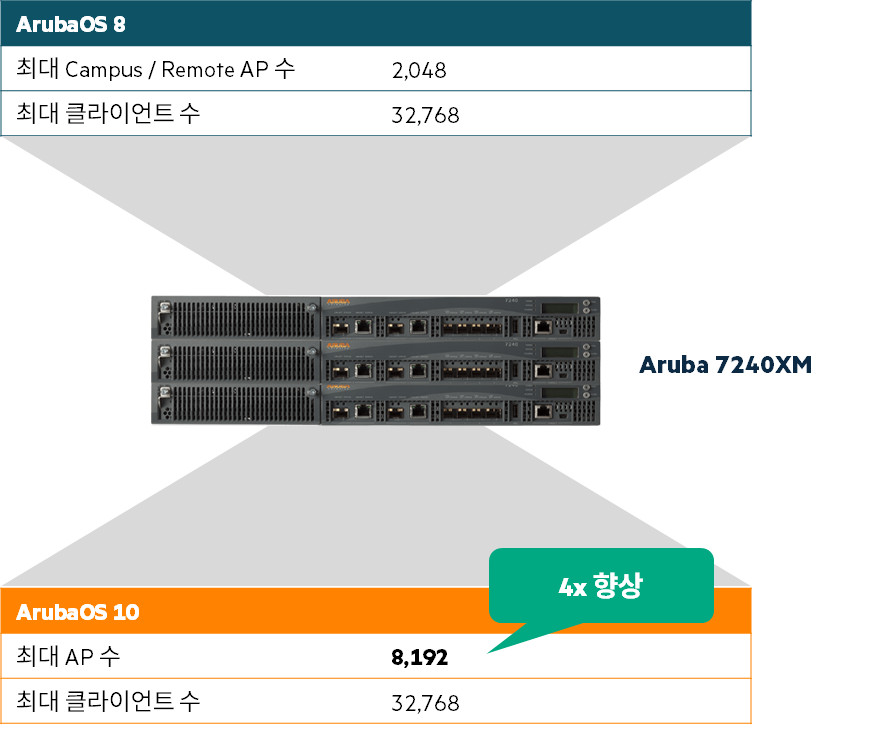
However, if your business has security compliance requirements, Central can also be deployed as an on-premises solution.
Integrated management of services
The feature you are currently using is now Centralized into a single screen and operating environmentIt will work.
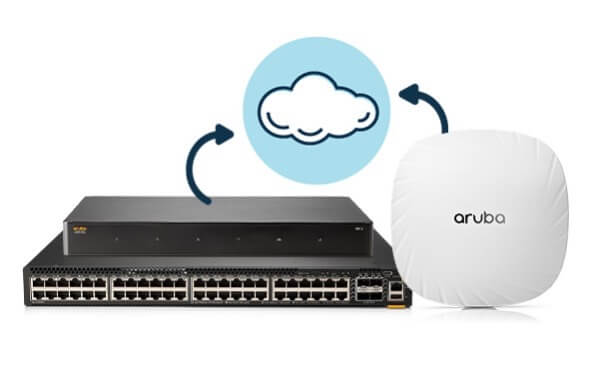
AirMatchfrom MultiZone, you can orchestrate all current features, including live upgrades for clusters, with a single login credential. You can also manage HPE Aruba APs, switches, and more all at once.
Microservices-based architecture (MSA)
Microservices architecture allows you to decouple applications like Central into separate services, giving you immediate access to new software upgrades, feature additions, and the ability to scale backend resources to meet your needs.
The HPE Aruba Networking engineering team can implement these services without significantly disrupting network management usability, improving reliability and availability, accelerating time to market, and increasing the value of your network investments.
AI-powered insights and problem solving
The AI Insight dashboard displays reports on network events that may impact overall network quality.

These events represent anomalies observed at the access point, connection, and client levels during a selected time range. Each insight provides specific details about the event occurrence for easy debugging or offers automated troubleshooting options.
Add SD-WAN capabilities to existing hardware
Provision and configure 7xxx series and 9xxx series gateways for SD-Branch/WAN capabilities to optimize and control end-to-end WAN, LAN, and cloud security services.

API integration expansion options
Central's built-in API gateway supports REST APIs and streaming APIs as interfaces for various services.
For more details herePlease refer to .
For more detailed information about AOS 10, please refer to the PDF document below.