In today's digital world, many companies are migrating their workloads to the cloud.
Users connect their devices from anywhere and access sensitive data in the cloud through untrusted links.
As the amount of data stored in the cloud grows and privacy concerns and the threats and security issues posed by remote access increase, enterprises are adopting zero trust and Secure Access Service Edge (SASE) architectures.
At the same time, regulators are creating new security frameworks and standards, such as GDPR, NIST, SOX, PCI DSS, and HIPAA, to protect organizations, employees, and consumers and reduce cybersecurity risks.
In 2022 alone, organizations worldwide detected 493.33 million ransomware attacks.1, approximately 301,000 adults worldwide have experienced a phishing scam.2. Additionally, in the same year, the number of data breaches in the United States reached 1,802, and more than 422 million individuals were affected by data breaches, leaks, and exposures.3.
These regulations and standards help address several cybersecurity threats, including:
- Malware and ransomware: Threats that can come from malicious websites, emails, software, and other files.
- Phishing and social engineering: Trick users into disclosing sensitive information
- Insider Threat: Suspicious activity, including data theft or sabotage, that is difficult to detect in an organization.
- Data Loss and Data Leakage: Many regulations require organizations to report data breaches to authorities and affected individuals.
- Third Party Risks: Regulations require organizations to conduct due diligence on vendors and suppliers to ensure compliance with security standards.
- The explosion of IoT: The number of IoT devices has grown exponentially over the past few years, expanding the attack surface and exposing them to major cybersecurity risks.
SASEis a term coined by Gartner in 2019 and stands for Secure Access Service Edge.
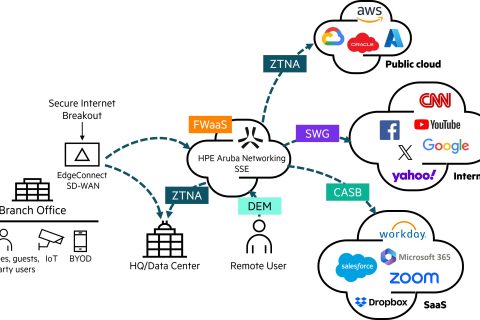
It combines SSE (Secure Service Edge) with SD-WAN capabilities to provide comprehensive security features such as ZTNA (Zero Trust Network Access), CASB (Cloud Access Security Broker), and SWG (Secure Web Gateway).
So, let's explore five ways SASE and SD-WAN can help improve regulatory and standards compliance.
1. Data Protection
To comply with regulations like GDPR or HIPAA, organizations must protect sensitive data.
In times like this, CASB and DLP (Data Loss Prevention) strengthen data protection.It helps to do so.
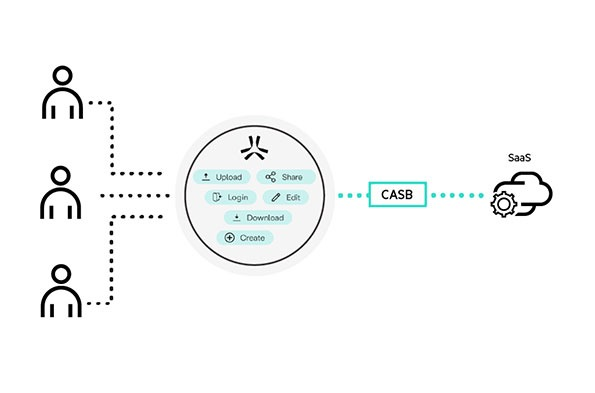
CASB discovers and monitors cloud-based applications, identifies users, and enforces enterprise-wide security policies.
DLP can identify and classify sensitive data based on content and context, and monitor user behavior.
CASB and DLP monitor exposed data to prevent users from intentionally or unintentionally downloading or uploading sensitive data to cloud applications like Dropbox, Github, and Salesforce.
CASBs also help reduce Shadow IT and enforce security policies such as authentication and single sign-on (SSO) by identifying unauthorized SaaS applications in your organization.
SD-WAN and SASE create encrypted tunnels between users and applications, protecting data in transit as required by compliance regulations and standards.
It's important to note that CASB solutions can decrypt data in transit for inspection.
This requires deploying a trusted certificate to users' devices. Regulators may require additional security measures to manage certificates and encryption keys.
Another approach for CASBs is to use APIs to access data stored in the cloud in a decrypted form.
2. Access Control
Many industry standards and regulations require a zero-trust architecture, limiting access to only the systems and data necessary for each role within the organization (the principle of least privilege).
ZTNA provides least privilege access with granularity based on role and identity.
This allows users to access the appropriate resources based on their role in the business, ensuring only authorized users have access to sensitive data. Traditional VPNs increase security risks by granting users access to all resources once they connect., ZTNA provides an additional layer of security compared to VPNs.do.
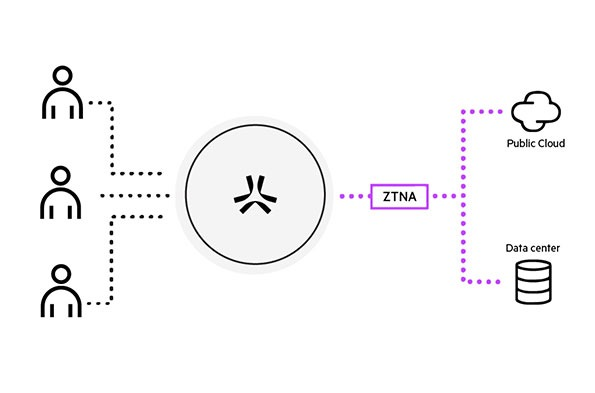
Additionally, some ZTNA solutions are agentless.
This allows enterprises to seamlessly grant access to potentially non-compliant external contractors without requiring them to install ZTNA agents on their devices.
Each branch office location offers advanced microsegmentation capabilities with secure SD-WAN featuring next-generation firewall capabilities to protect critical parts of the LAN and WAN.
Administrators can create zones, assign applications to zones, and create unique security policies to control access between zones or across entire zones. These policies can completely block access, allow traffic in only one direction, or restrict inter-zone traffic to specific purposes.
This solution also helps protect IoT devices that cannot run security agents by isolating IoT traffic from mission-critical applications.
3. Threat Prevention
Regulations and standards often require policies restricting Internet use to reduce cybersecurity threats.
SWG creates a secure environment to protect users in real time.do.
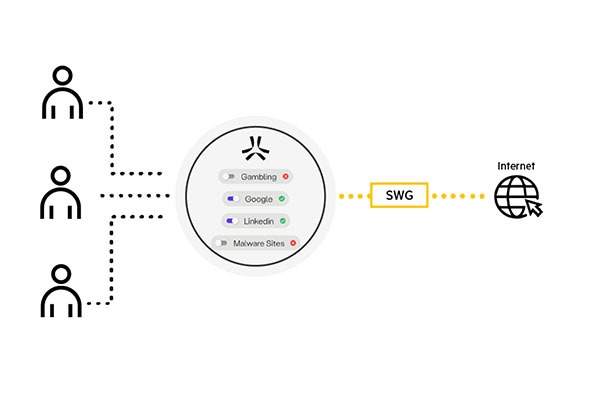
It helps protect your data and systems from cyber threats by detecting malicious activity, including malware and phishing attacks, in Internet traffic and blocking malicious content.
SWG also blocks access to websites known to contain malicious content that may violate compliance.
Additionally, SWG provides visibility into encrypted traffic by decrypting and inspecting SSL/TLS traffic.
In addition, the secure SD-WAN solution has features to protect users: Includes intrusion prevention (IDS/IPS) and DDoS protectionThis feature can be centrally configured based on firewall zones to enforce granular security policies.
4. Centralized policy management
Cloud-hosted SASE and SD-WAN solutions enable network and security administrators to: Centrally manage policies and instantly deploy them to remote users and branches.This approach not only provides consistent security policies for branch offices and remote users, but also helps ensure compliance with regulations and standards.
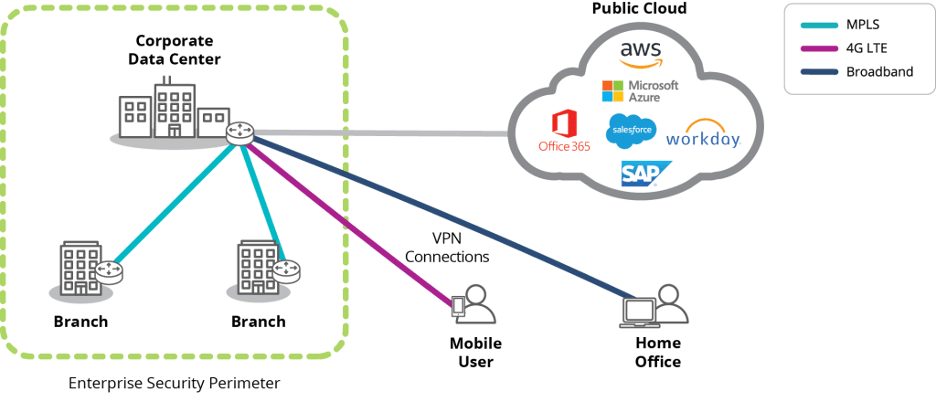
Centralized policy management allows administrators to ensure that users are following established policies.
This is especially useful for remote sites located overseas, where compliance can be more challenging, and where you may be subject to various regulatory obligations, such as GDPR in Europe and CCPA in California.
5. Visibility, Reporting, and Audit
SASE and SD-WAN Provides advanced visibility into network and security incidents.do.
Continuously monitors the network, enabling architects to implement real-time remediation measures.
You can capture events related to traffic sessions and the causes of those events.
This information can be sent to a SIEM solution to help identify and respond to security incidents.
Integration with SIEM solutions provides a comprehensive view of security threats and vulnerabilities.
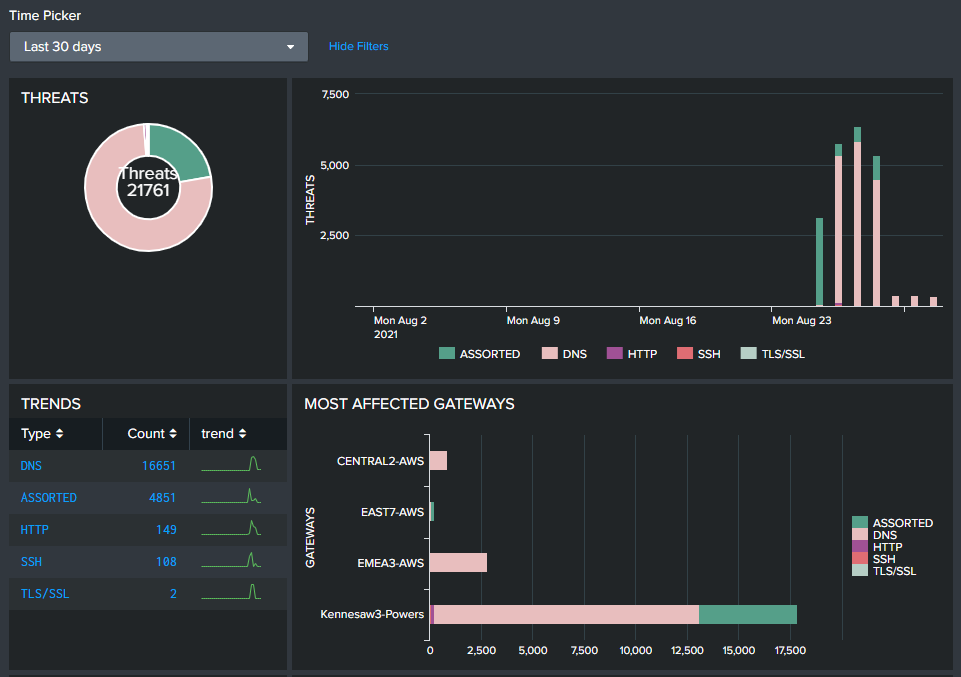
Filter, sort, navigate, and view bulk security event alerts generated across your entire network, helping you pinpoint security events that require further investigation.
In addition to addressing security issues, you can use audit logs and reporting to demonstrate compliance.
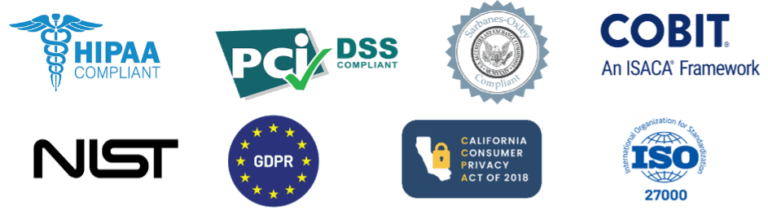
As digital transformation and regulatory environments intensify, SD-WAN and SASE help IT leaders, risk managers, and GRC (governance, risk, and compliance) teams accelerate compliance with regulations and standards like HIPAA, PCI-DSS, NIST, and GDPR.
These solutions provide data encryption, secure web access, and prevent data loss and malware attacks.
Restrict access to only necessary cloud hosting resources, identify and monitor data flows in the cloud, and block malicious content.
Additionally, secure SD-WAN installed in each branch office provides micro-segmentation capabilities, allowing you to isolate mission-critical applications and IoT traffic. This enhances user experience and provides flexibility, allowing you to direct traffic to the cloud without backhauling it to the data center. In addition to SD-WAN functionality, it integrates routing and firewalling capabilities, reducing the hardware footprint of branch offices.
HPE Aruba Networking's SSE is designed to provide secure access to business applications and accelerate the transition to a modern workplace. Cloud-native SSE platformno see.
The platform provides authenticated user access to individual applications at the network edge, a Secure Web Gateway (SWG) that protects user access to the internet, and a Cloud Access Security Broker (CASB) that enforces policies to protect sensitive data.
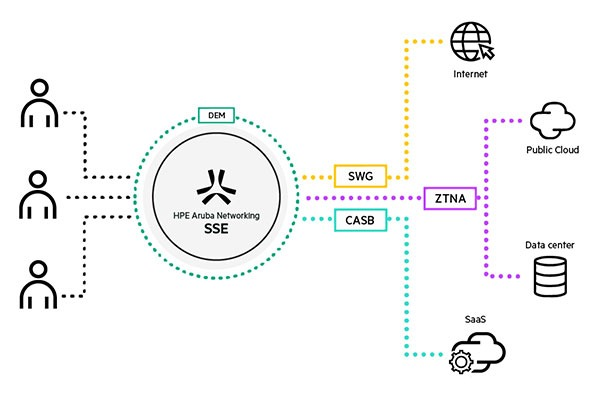
Tightly integrated with EdgeConnect SD-WAN, it empowers organizations to build a unified SASE architecture and address the challenges of digital transformation and hybrid operations, securing SaaS applications and accelerating compliance efforts.
HPE Aruba Networking is committed to helping customers comply with GDPR.
EdgeConnect SD-WAN has been certified to meet the TrustArc Privacy and Data Governance Framework to ensure we adhere to and continuously improve GDPR-compliant privacy practices:
Also for secure SD-WAN ICSA Labs Certificationhas been obtained.
For more details Unified SASE webpageCheck it out here.