The era of 'Agentic AI' has arrived following the storm of Generative AI. The pace of technological evolution is fierce enough to leave engineers and IT leaders breathless. As infrastructure becomes more complex than human imagination, how long must we continue to sacrifice our weekends and stay up all night analyzing logs and performing manual controls?
The era of Software-Defined Networking (SDN), which we have been familiar with for decades, has ended. Networking must now completely shift its paradigm beyond centralized control to Self-Driving Networking, where it makes decisions and acts on its own.
We begin with the fundamental questions we will face at the threshold of the world five years from now—which will be a technological inflection point just as the Internet, mobile, and cloud did—and HPE Networking's answers to them.
💬 First Question: “Can the current infrastructure handle AI agents that make decisions and act on their own?”
We are now in the era of 'Assist,' where operators ask AI chatbots, "What is the cause of the failure?" and receive answers.
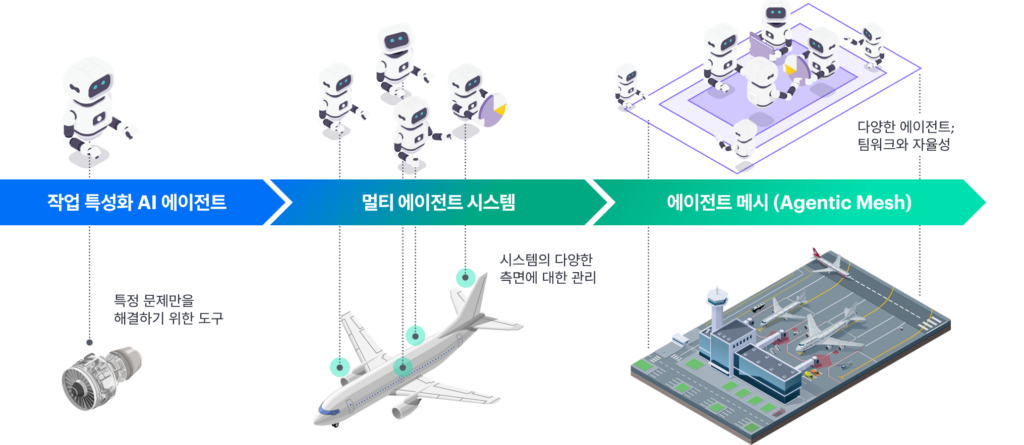
However, the near future will be the era of the 'Agentic Enterprise,' where AI agents independently assess infrastructure conditions, collaborate to resolve issues, and report only the results to humans.
Here, we must ask a cool-headed question.
Large Language Models (LLMs) that have learned vast knowledge of the general world are indeed dizzyingly complex and
Is it possible to infer packet drops or topology changes in the network environment in real time?
If you place 'infrastructure-ignorant' general-purpose LLM brains on top of traditional network architectures designed decades ago, the AI will eventually become useless as it hits a wall of real-time data blockage and isolated knowledge.
💡 HPE Networking's Future-Oriented Solution: The answer to this concern has already been planted at the bottom of the infrastructure.
Beyond simply providing solutions, the infrastructure thinks and moves on its own. Perfect autonomous driving mechanismI implemented it.
The starting point is precisely what sets it apart from a standard LLM. LEM (Large Experience Model)no see.
This massive AI brain, trained on vast network operation experience and domain data accumulated over the past several years, accurately infers and judges the context of the infrastructure in real time.
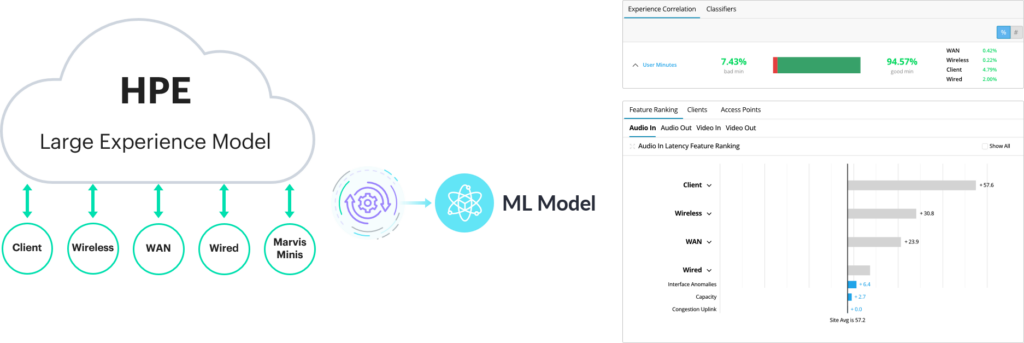
The judgments made by this LEM are directly transferred to 'Marvis Action,' a powerful execution engine that solves actual problems. Based on the LEM's reasoning, Marvis Action accurately identifies the root cause of failures and acts as the hands and feet, taking autonomous measures without human intervention.
Through this perfect combination of 'brain and hands and feet,' a true self-driving infrastructure is completed.
In addition to this, the biggest topic of conversation in the industry recently is MCP (Model Context Protocol) Combined with standard specificationsIt becomes perfect only while doing it.
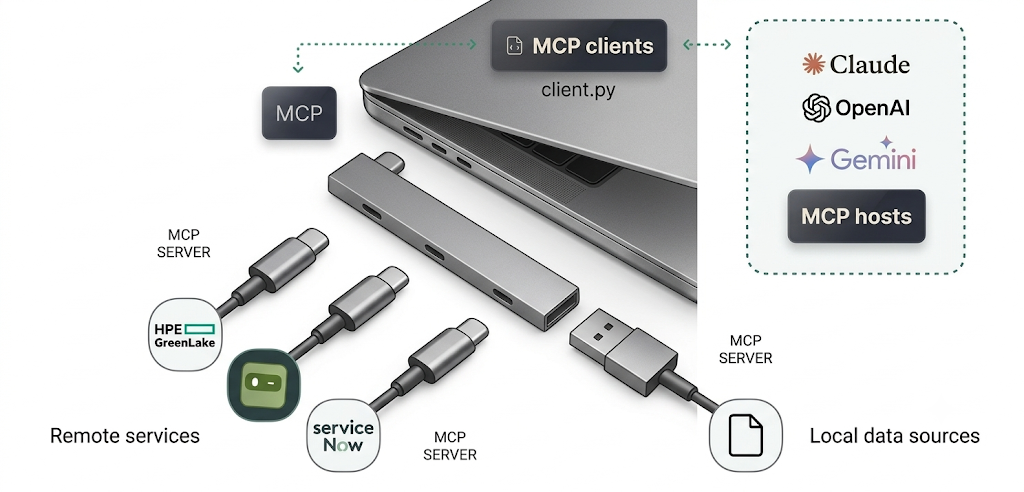
By leveraging the MCP standard led by HPE Networking, enterprises can freely swap out their desired cutting-edge AI brains—whether Gemini or Claude—onto their infrastructure at any time in a plug-and-play manner, without worrying about technology lock-in. With the powerful wings of flexibility added to an unrivaled autonomous driving engine, this enables the ownership of a seamless, fully autonomous operating system in any massive infrastructure environment.
💬 Second question: “How long will you continue to cool the massive heat and power generated by GPU clusters with air?”
As ultra-high-performance AI models and large-scale hybrid HPC infrastructure become more mainstream, the most formidable enemy data centers will face is not 'latency,' but 'heat and power (Beyond the Grid).' The tremendous heat generated by thousands or tens of thousands of GPUs running at full capacity has already passed a critical threshold that conventional air cooling systems can no longer handle.
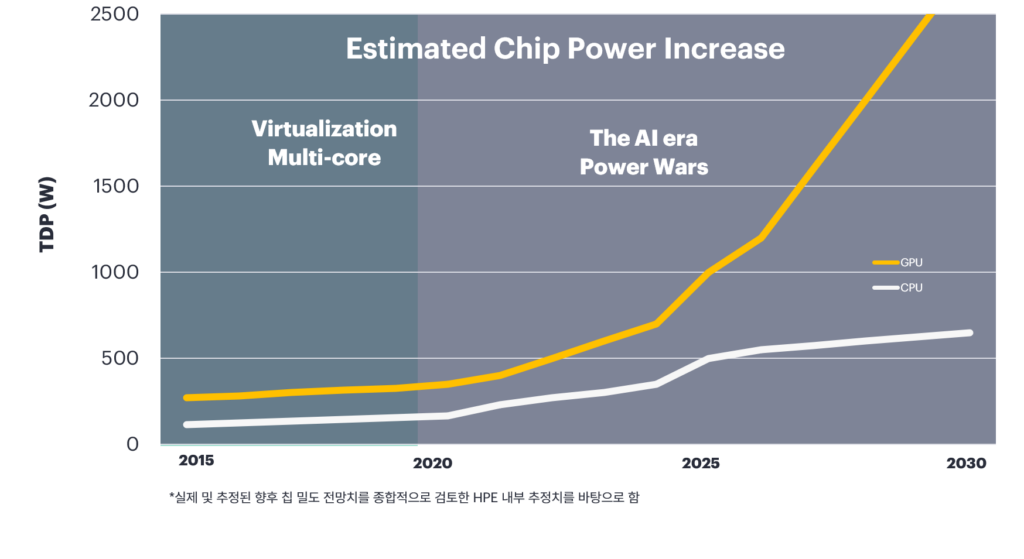
A contradiction has begun to arise where the power available for AI computation is insufficient due to the need to cool down the energy.
💡 HPEFuture-oriented solution: Companies leading the future must predict even the physical limitations of hardware.
HPE is an unrivaled core asset at the enterprise level Direct Liquid Cooling (DLC) I have been researching technology for a long time.
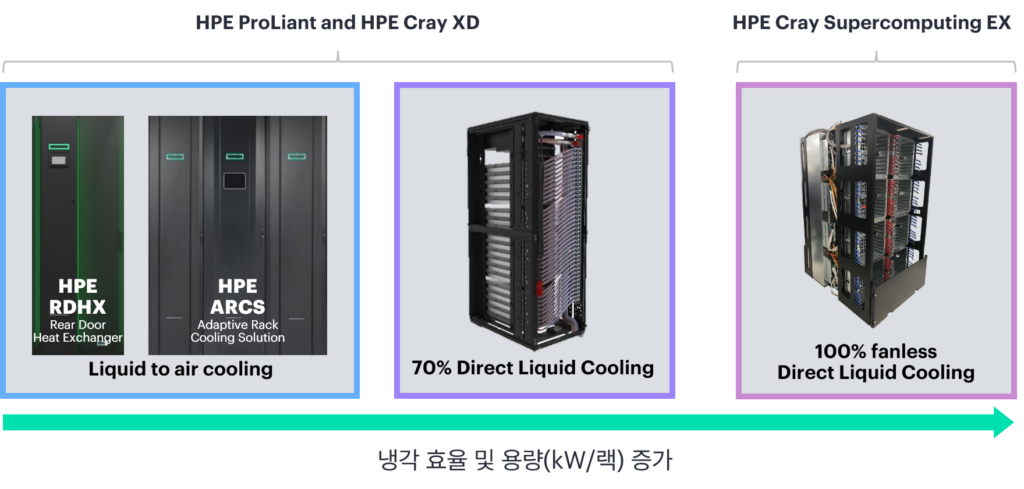
And now, beyond servers and storage Transplanted across the entire networking infrastructureI am doing it.
By optimizing the backbone switch itself—the core of ultra-high bandwidth large data centers—into a 100% fanless liquid-cooled structure, we are demonstrating engineering leadership that dramatically reduces energy efficiency (PUE) and costs. In essence, we have already completed the perfect 'physical innovation' to meet the ultra-high-performance computing environment of the future.
💬 Third Question: “In the era of quantum computers, all your security equipment could become scrap metal.”
The moment large-scale quantum computers become commercialized (Quantum Utility) 10 years from now, modern encryption standards and authentication infrastructures such as RSA and ECC, which we believed to be perfect, will face catastrophic destruction in just a few minutes.
The most chilling thing is that the danger is not a future event.

Cunning hackers [target] long-lasting government secrets or corporate core asset data We are indiscriminately stealing and stockpiling them in advance (Harvest Now, Decrypt Later). And the strategy is to open everything up at once on the day quantum computers come out.
‘This is why the ultimate Zero Trust system of 'Proof Before Trust' is needed starting today.
💡HPEFuture-oriented solution: “I do not say, ”Throw everything away and buy new things to prepare for the quantum age.”.
HPE pondered ways to prevent future disasters while protecting customers' assets.
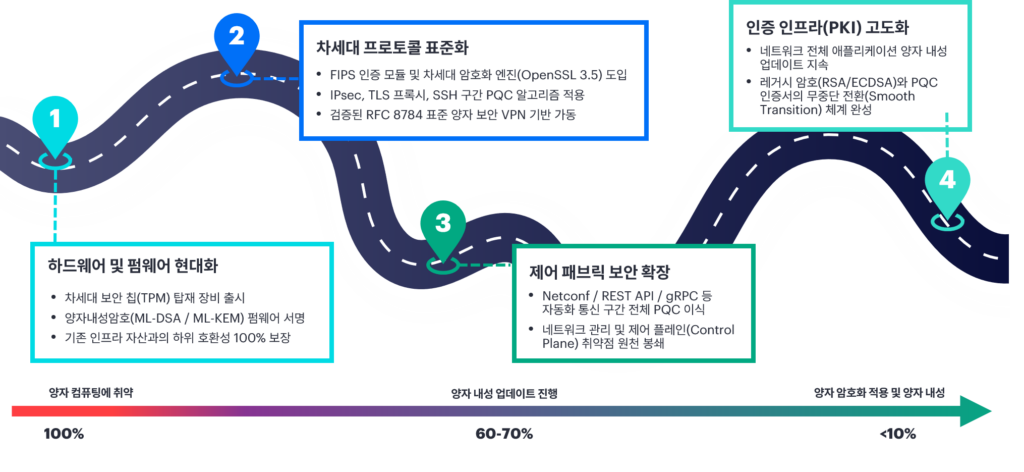
We are completing a 'PQC (Quantum-Resistant Cryptography) Roadmap' that enables the deployment of quantum defenses across our entire lineup of server, storage, and network hardware with simple software and firmware updates. From hardware TPM chipsets to control plane vulnerabilities, we have perfectly extended the future lifespan of your infrastructure to ensure you possess quantum-level defenses with just a few clicks.
Epilogue: A company that prepares in advance, not waits for the future
Ultimately, the end goal of the infrastructure is like an 'autonomous control tower system' that perfectly controls a massive international airport with tens of thousands of airplanes coming and going without manual human control.
The key to enabling numerous aircraft (AI agents) to fly to their destinations without incident, demonstrating organic teamwork in real-time, is an 'AI brain' that accurately understands the context of the infrastructure and reasons; providing a solid foundation to ensure that this advanced AI control tower operates perfectly without power outages or paralysis is precisely 'HPE Networking's Next-Generation Full-Stack Infrastructure Strategy.'.
To complete this massive control tower, the three alphabets inscribed in our mission [H·P·E] We are directly designing future infrastructure standards above.
- 🤖 [H] Hyper-Automation: We build a software autonomous operation system that combines LEM, Marvis Action, and MCP standard protocols, enabling AI agents to independently assess infrastructure conditions and take action.
- 💧 [P] Physical Innovation: For next-generation high-performance GPU clusters that generate tremendous heat, it supports unrivaled Direct Liquid Cooling (DLC) technology that utilizes the backbone switch itself with a 100% fanless liquid cooling structure.
- 🔐 [E] Essential Security: In response to the 'collect first, decrypt later' threat of the commercialization era of quantum computers, we are realizing a Quantum-Resistant Cryptography (PQC) roadmap that equips the entire infrastructure with a complete quantum defense wall through software updates alone, without the need for equipment replacement.
We are not a company that simply prepares to keep pace with the coming future.
The blueprint for all these autonomous control systems is the future standard that HPE is defining and proving.
With the perspective of a technological pioneer who designs the future themselves rather than waiting for it, please define the next chapter of networking yourself with HPE Networking.