AOS-CX

  • From Data Center to Center-of-Data

    According to Gartner, “by 2025, infrastructure strategies will integrate on-premises, colocation, cloud, and edge delivery options.” This represents tremendous growth compared to the mere 201 TP3T in 2020. This signifies a significant architectural shift, requiring workloads to be located closer to the edge environments where data is generated. However, many corporate IT organizations [are] acknowledging these…
  • [ACSA Training #40] Safe Maintenance

    Network management is an essential skill for both network administrators and engineers. In this post, we will explore various foundational knowledge necessary to understand and perform the most important network management techniques. Out-of-Band Management Port (OOBM): The ArubaOS-CX switch family includes an OOBM (Out-of-Band Management) port used exclusively for monitoring and managing the switch. Within the ArubaOS-CX operating system, a separate…

  • Announcing the ArubaCX 10000 Series

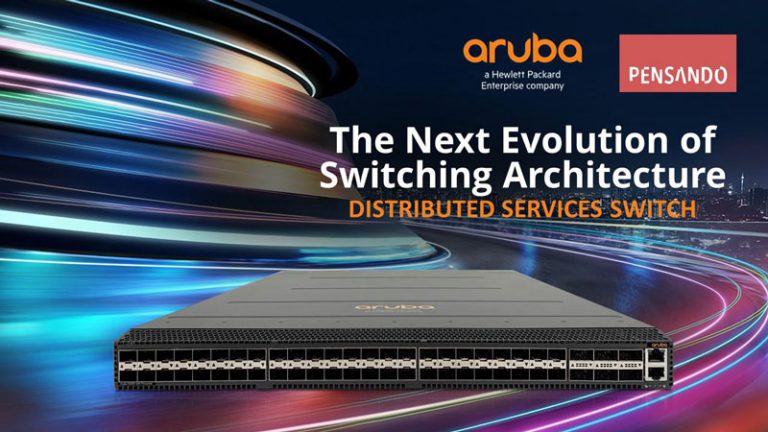
    Aruba has announced the ArubaOS-CX 10000 Series Switch, the industry's first distributed services switch family. Distributed services switches help enterprises deploy software-defined stateful services where data is generated and processed today. By eliminating legacy appliances or host-based software, this enables the deployment of modern applications and the hybrid cloud infrastructure required by IT organizations…

  • [ACSA Education #39] Stacking

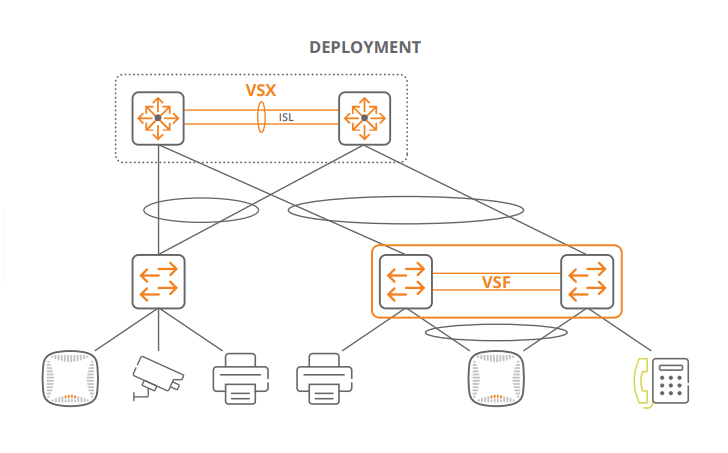
    Stacking technology is necessary to design, implement, and configure a more resilient and stable high-performance network. In this post, we will explore this stacking technology and examine Aruba switch stacking technologies, specifically VSF (Virtual Switching Framework) and VSX (Virtual Switching eXtension). Operation Plane – Data / Control / Management Plane Network devices logically consist of 3…

  • [ACSA Training #38] OSPFv2 Operation

    In the previous post, we looked at what OSPF is as a protocol and how it works. Today, we will examine what needs to be kept in mind to actually operate OSPFv2. From a protocol perspective, there are two types of networks. Point-to-Point Network: Only two peers are located on the link. When an interface is configured as a point-to-point link, OSPF [assets] that if one neighbor exists on the interface…

  • [ACSA Training #37] OSPFv2

    OSPF is the most widely used method for routing traffic within an organization. Among them, OSPFv2 is used to route IPv4 packets within the corporate internetwork. Today, we will look at OSPF areas, router IDs, various message types, and neighbor states. Introduction to OSPF: RFC 2328 [regarding] OSPFv2 for routing IPv4 addresses…

  • [ACSA Training #36] Routing Protocols

    Before learning about routing protocols, we need to understand Autonomous Systems (AS). An Autonomous System can be described as a collection of routers under a management domain. In other words, an ISP (Internet Service Provider) owns its own internal network. Furthermore, the ISP possesses the autonomy to manage even the routers within that network. This is precisely what an Autonomous System (AS) is….

  • [ACSA Training #35] Routing Types

    We already covered routing in the previous post. We examined how actual packets move at Layer 3 along with IP routing tables. Now, let's take a look at the actual types of routing and the protocols involved. Types of Routing in AOS-CX: Routing devices make Layer 3 forwarding decisions based on the optimal path in the IP routing table…

  • Introducing HPE Discover 2021

    On June 23, HPE (Hewlett Packard Enterprise) held the HPE Discover 2021 conference. HPE Discover is an annual event hosted by HPE that showcases the company's new products and solutions, as well as its future vision and strategy. At this year's HPE Discover 2021: Edge-to-Cloud conference, not only HPE's server and storage product families but also Aruba's new products and various…

  • [ACSA Education #34] VRRP

    In the previous post, we looked into the Default Gateway. An endpoint can only have one Default Gateway. And it can become a single point of failure. Looking at the figure below, if Core-1 fails, all hosts using Core-1 as the Default Gateway, including PC-1, will be isolated. How should we deal with this situation? Redundancy…