Recently, the paradigm of AI data centers is rapidly shifting from being 'computing'-centered to 'network fabric'-centered.
This is because the importance of 'AI backend networks' that combine tens of thousands of GPUs to process models with trillions of parameters has increased.
Today, the three giants that dominate this market — Arista, Cisco, and HPE — We examine the strategic moves and the technological moves hidden within them.
The pinnacle of efficiency: Aristaand Broadcom's 'Merchant Silicon' alliance
Arista has been using general purpose chipsets from specialized manufacturers such as Broadcom since its inception. ‘Merchant Silicon’ It was a leader in strategy.
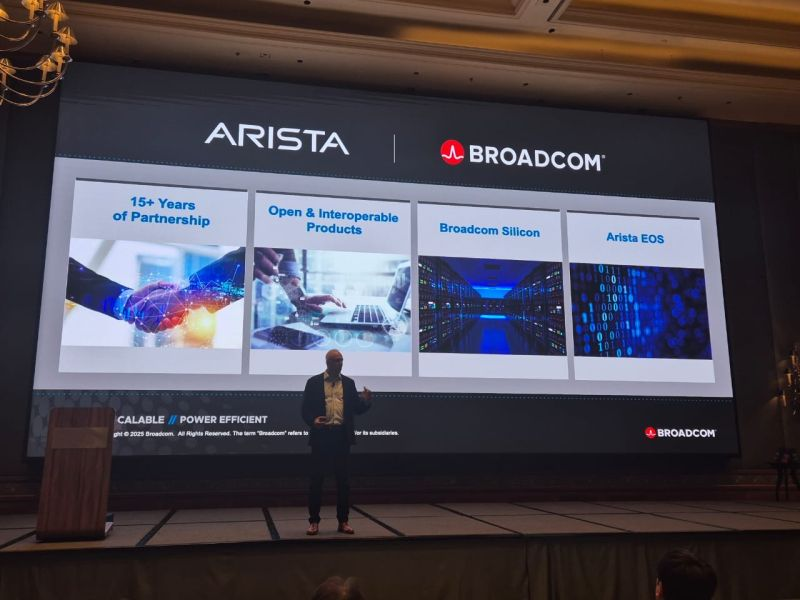
- Symbiotic relationship: While Broadcom mass-produces the world's best engines (like the Tomahawk 6), Arista adds its unique software, EOS (Extensible Operating System), to the 100% to maximize its potential.
- The secret to performance: Instead of developing chips directly, we focus all our R&D efforts on software optimization. This allows us to introduce the latest chipsets faster than our competitors, simultaneously satisfying the "simplicity" and "ultra-low latency" demands of hyperscalers.
- Current position: As of 2026, Arista is leading the 1.6T networking era beyond 800G, maintaining a strong foundation in the open Ethernet ecosystem.
The Empire Strikes Back: Cisco's 'silicon circle' and NvidiaStrategic collusion of
Traditional powerhouse Cisco takes the opposite path to Arista.
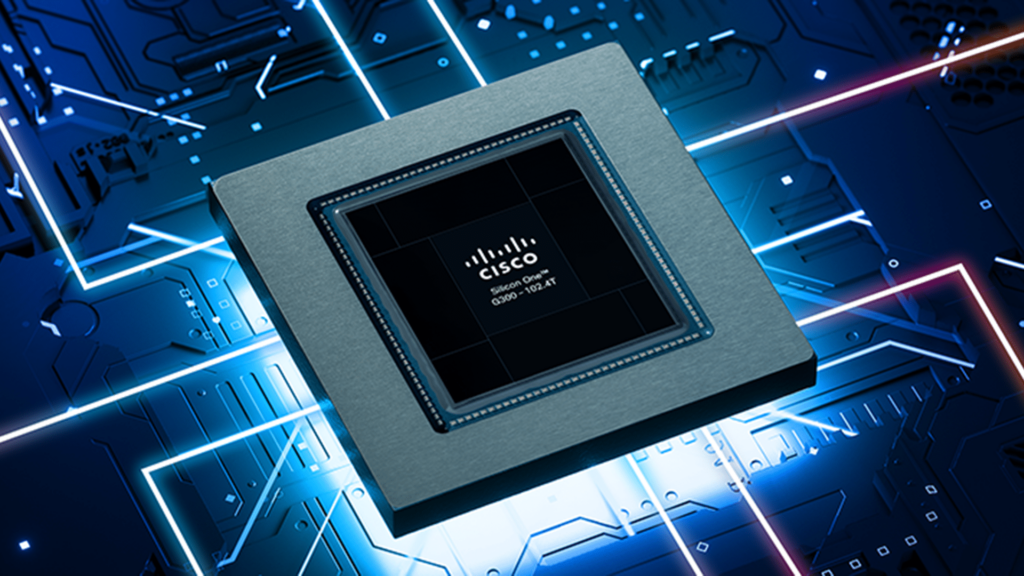
Full control from hardware to software through its own chipset, ‘Silicon One’ ‘Vertical integration’ We launched a counterattack with a strategy.
- The arrival of Silicon One G300: The recently announced G300 series delivers an overwhelming bandwidth of 102.4 Tbps and covers everything from AI training to inference with a single architecture.
- In partnership with NVIDIA Spectrum-X: Cisco joins hands with Nvidia Spectrum-X We've integrated the platform into our Nexus environment. We're targeting the enterprise market with the message, "Get the most out of NVIDIA GPU performance, while managing it from the familiar Cisco dashboard.".
- Strategic Goals: By closely integrating with the NVIDIA ecosystem, we are solidifying our position as a ‘proven standard.”.
Game Changer: HPE'Open Hyper-Gap' and Intelligent Orchestration
Of these three companies, the most interesting is HPE's move to acquire Juniper Networks.
If Arista focuses on 'speed' and Cisco on 'integration', HPE goes all-in on 'intelligence (AIOps)'I did.
“"Networks are no longer objects of management; they must think for themselves and optimize themselves."”
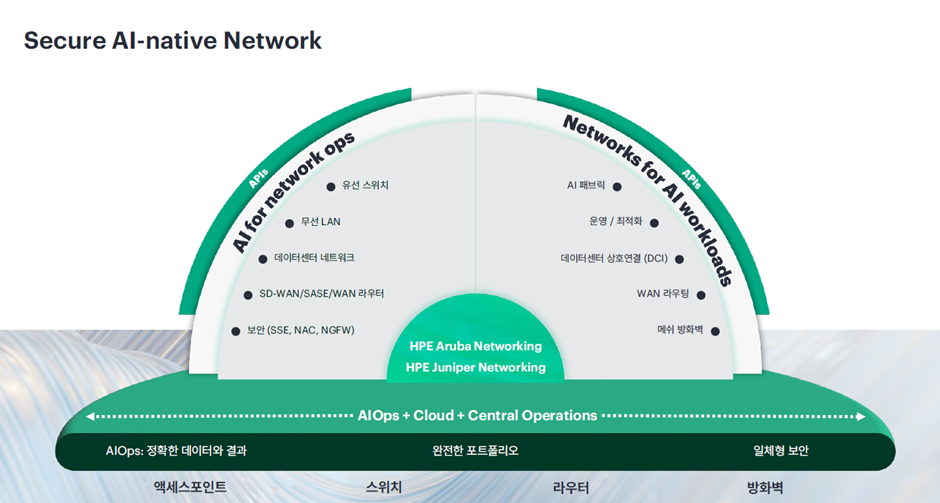
HPE is not dependent on any specific alliance, 'Open AI Factory' encompassing the entire AI lifecycle‘ We put strategy at the forefront.
① Freedom of GPU Choice: A Multi-Vendor Strategy Embracing NVIDIA and AMD
HPE is going one step further than Cisco, maximizing its collaboration not only with Nvidia but also with AMD.
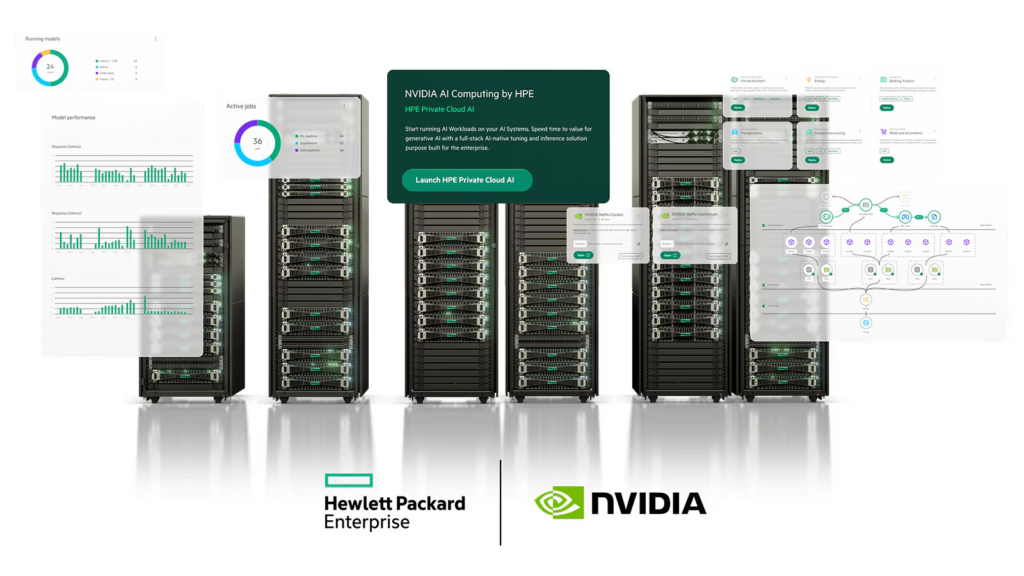
- NVIDIA AI Computing by HPE: We provide jointly engineered solutions that support NVIDIA's latest Blackwell architecture.
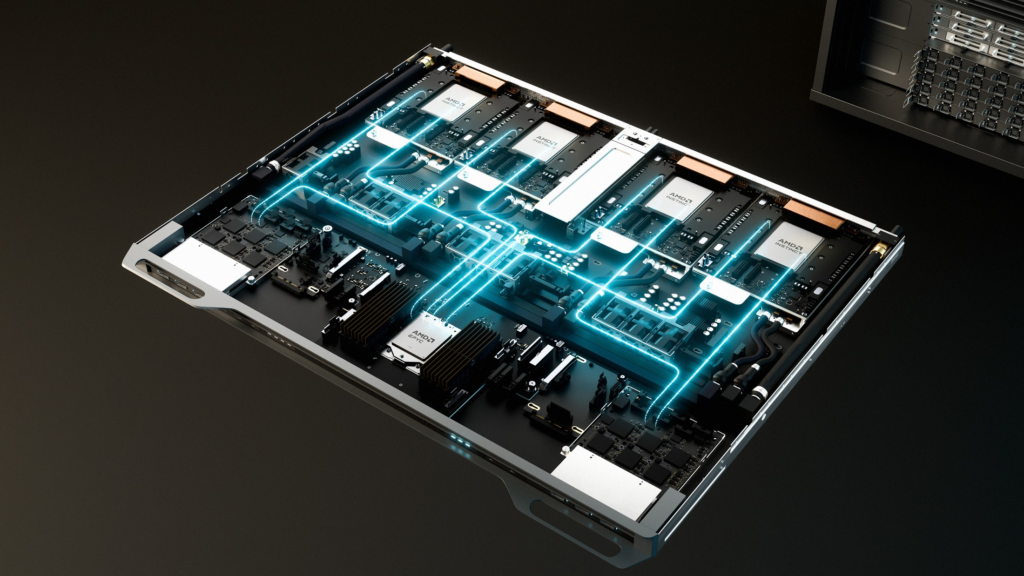
- AMD Helios & MI400 Support: For customers looking to counter NVIDIA's dominance, we've combined AMD Instinct GPUs with HPE's high-performance servers. ‘Helios’ We provide architecture and expand market choice.
② Technological Gap: Slingshot and Direct Liquid Cooling
- HPC DNA, Slingshot: Beyond tuning general Ethernet, it has been verified on supercomputers. Slingshot InterconnectIt fundamentally solves the inter-GPU communication bottleneck through Slingshot. Slingshot is Ethernet-based and hardware-level. Congestion Control와 Adaptive Routinghandles.
- Integrated cooling design: The thermal issues facing AI servers have reached their limits. HPE is the only vendor capable of designing the entire infrastructure, from switches to servers, with liquid cooling. QFX5250 switchThe ability to apply liquid cooling (DLC) to all systems is a powerful physical advantage that only HPE possesses.
③ Operational Intelligence: Autonomous Networking Based on Mist AI
- Agentic AI: Juniper's Mist AI (Marvis) now integrates with Aruba CentralIt predicts and automatically resolves network failures before they occur. AI infrastructure has extremely complex networking configurations. HPE Agentic AIBy automating complex fabric configurations with a single command, “Set up the optimal settings for AI learning,” HPE has drastically reduced the difficulty of operations. While third-party monitoring remains at the level of ‘visibility,” HPE ‘Autonomous driving’, thereby dramatically reducing operating costs.
Comparing the Strategic Advantages of Three AI Networking Companies
| Comparison items | Arista (Software King) | Cisco (Vertical Stack) | HPE (Open AI Factory) |
| Chipset strategy | Merchant Silicon (Broadcom) | Own chip (Silicon One) | Multi-vendor + Slingshot (HPC) |
| Operating system | EOS (single binary) | Nexus/IOS (standards-oriented) | Mist AI (autonomous driving/AIOps) |
| ecosystem | Cloud giant-centric | NVIDIA Spectrum-X Close-up | NVIDIA + AMD Comprehensive Collaboration |
| Business Strengths | Proven low-latency performance | Familiar management system | Full-Stack Integration and Flexibility |
| AI approach | The fastest Ethernet channel | Verified NVIDIA Partner | Self-managing AI factory |
“Who Eliminates Customer 'Uncertainty'?‘
If Cisco's strategy is stability through 'strong alliances,' HPE's strategy is 'super gap in performance' and 'freedom of choice.'.
The days of simply building a single piece of network equipment are over. Competing solely on hardware specifications is no longer enough.
To extract 100% GPU performance Slingshot Laying the same highway, Liquid coolingCooling down with heat, Mist AIA smart secretary named is in charge of operations. ‘Integrated AI Factory’ Solution.
Cloud giants may still love Arista's simplicity and performance.
Conservative companies may trust Cisco's brand and ecosystem.
But what if a company wants to efficiently operate a complex AI infrastructure?
It is not locked into a specific manufacturer, but rather moves between NVIDIA and AMD to produce the best results. HPE's modelIsn't this the real answer that companies have been longing for in the uncertain AI era?
Now, the second act of the networking war has begun.
Is your data center simply "connected" or "intelligently flowing"?