For years, artificial intelligence (AI) has been considered a vague, futuristic concept or an experimental technology, far removed from the world of networking.
But now that era is over.
AI is already being implemented in all industries and organizations of all sizes, and is no longer a novel technology. Essential elementsIt became.
And now, the next evolutionary step of AI is Agentic AIis appearing.
Network professionals should take note: This technology is no longer unfamiliar territory.
Agentic AI is autonomous decision-making, fundamentally changing the way networks are operated and optimized.
There's good reason for this.
IT teams are under pressure to deliver seamless digital experiences, support hybrid work environments, and secure increasingly complex environments. Legacy tools and reactive work methods simply can't keep up.
Agentic AITo meet these demands, we are moving towards intelligence that can make decisions and move on its own.
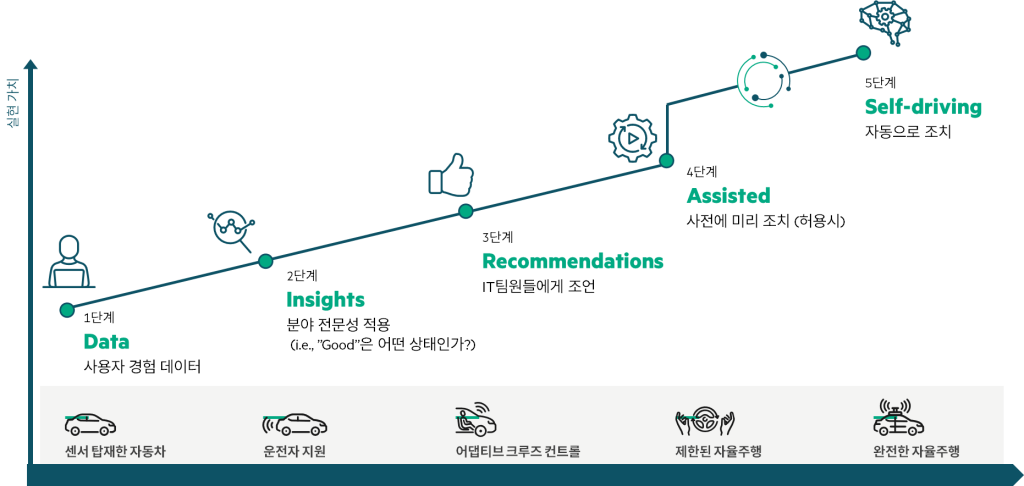
This is a crucial driver of the long-term journey toward a self-driving network that anticipates needs, continuously optimizes, and self-corrects errors with human oversight and approval. Agentic AI accelerates the transition from the "assisted" phase to the "self-driving" phase, redefining the possibilities of enterprise networking. Active and intelligent infrastructureWe are opening a new era.
What is Agentic AI?
Agentic AI는 without human intervention Towards a defined goal Reason, decide, and act on your ownI'm talking about a system that can do that.
Unlike traditional AI that relies on prompts or scripts, agentic AI applies structured logic to navigate complex scenarios and take proactive action.

While agentic AI can operate independently, it's designed to collaborate with humans for verification, further investigation, or escalation (reporting escalating issues to a higher level). In networking, it can actively engage operators to identify issues, coordinate solutions, and maintain smooth operation of the system.
To experience is to believe.
Amidst the numerous hype surrounding agentive AI, it can be difficult to distinguish between marketing and meaningful innovation.
HPE is reimagining networking from the ground up with AI at its core. GreenLake IntelligenceWe took a completely new approach with .

At the heart of this innovation is HPE Aruba Networking Central's Agentic Mesh.
HPE is coordinated by a multi-agent orchestrator. Specialized AI Agent Frameworkin the file.

These agents are trained to perform specific tasks such as root cause analysis, configuration validation, non-compliance handling, port reboots, VLAN reassignments, and Blast RADIUS (authentication failure propagation) detection.
When an issue arises, the orchestrator activates only the agents needed to resolve the issue, ensuring accuracy and speed.
For example, let's consider a scenario where intermittent latency starts occurring on a specific network segment.

Once permission is granted, Agentic MessiIt immediately detects anomalies, identifies affected devices, and analyzes traffic patterns to pinpoint the root cause (e.g., a misconfigured QoS policy). It then activates relevant agents to validate configurations, simulate remedial actions, and, Apply changes autonomouslyThis entire process takes place in real time, without human intervention.
The Internal Architecture of Agentic AI in HPE Aruba Networking Central
Complementing Agentic Mesh is Networking Copilot, a conversational AI assistant embedded within HPE Aruba Networking Central, a network management application. Networking Copilot serves as the front-end interface for Agentic Mesh.
Helps IT teams resolve issues faster and prevent outages early by providing a clearer view of complex situations.
For example, an IT operator might ask a networking copilot why application performance is poor for a specific group of users.
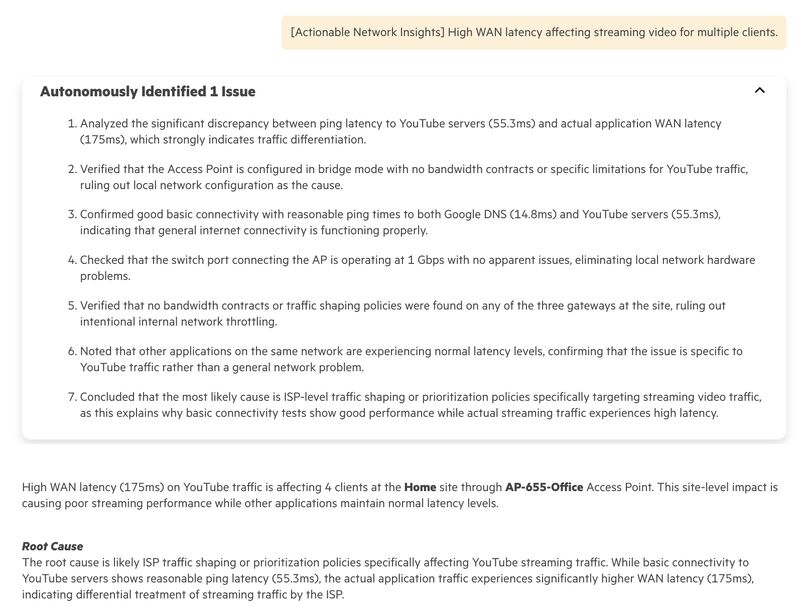
Instead of providing simple text-based answers, Copilot provides answers to problems like app lag or DNS outages. root causeand direct operators to the relevant screens within HPE Aruba Networking Central. Visual guidanceIt highlights the affected components, shows the actions taken or recommended, and allows operators to verify or escalate as needed.
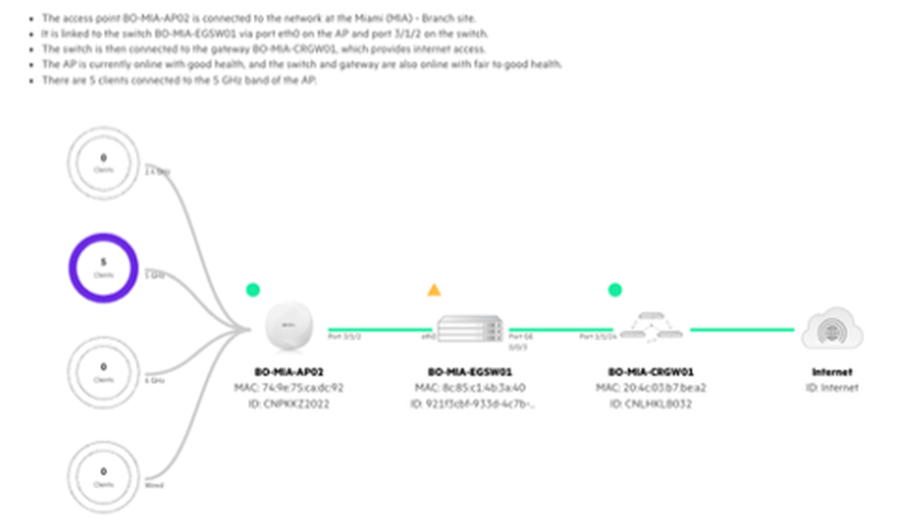
These interactions transform the problem-solving process into a collaborative conversation between humans and machines.
As another scenario, consider a wireless client experiencing authentication failures while roaming.
Agentic MessiIt works immediately to evaluate Blast RADIUS, audit compatibility, check configuration, and even Autonomously generate and apply solutionsThen, Networking Copilot explains what happened, why it happened, and how it was resolved.
This is not simple automation. Networks that sense, adapt, and drive themselvesno see.
Designed for real IT teams
One of the most compelling aspects of HPE's agentic approach is Human-centered designno see.
This system is not intended to replace IT staff. Reinforce their abilitiesIt is designed to be adaptable to different team sizes and skill levels. In a world where infrastructure teams are increasingly multi-disciplinary and lack the time to acquire deep expertise, Agentic Mesh is a solution for this. Intelligent team members It plays a role.
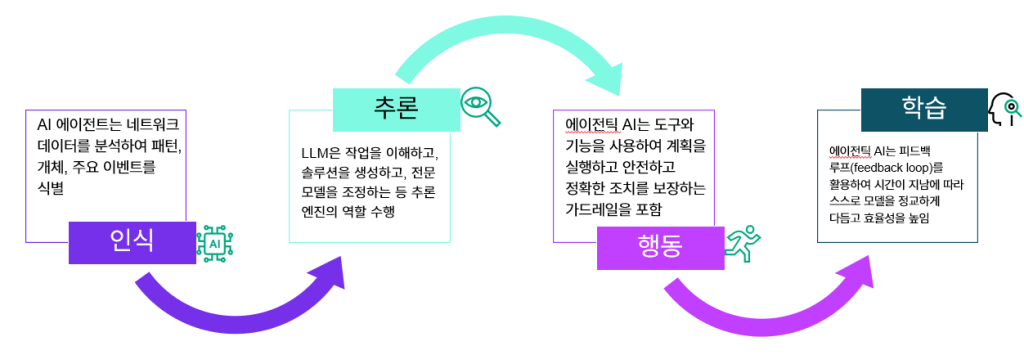
Agentic mesh is not just about providing data, it's about providing insights, actions and explanationIt provides.
All of this is done in an intuitive, interactive, and domain-specific way.
AI starts with data.
AI is only as good as the data it is trained on.
This is why HPE's AI approach is built on decades of networking experience. Massive security data lakeThat's why it starts from here.
This data lake is consuming data from millions of devices and billions of endpoints. Real-time telemetry datais continuously supplied.
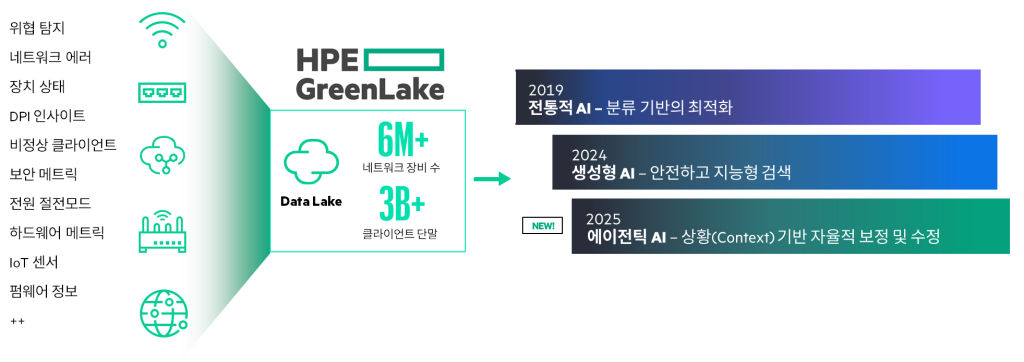
The important thing is that sensitive client information is collected before the data is collected. Thoroughly deleted, and strict privacy controls are in place to ensure that your data is used responsibly and securely. Additionally, this data is never exposed to the public internet.
HPE is not a startup trying to bootstrap an AI model from scratch.
HPE has been building and refining data for many years, which reflects real-world environments. Precise modeling, predictive analytics, and contextually rich recommendations.This enables more than just collecting data;, Correct dataCollect (from APs, switches, routers, servers, IoT devices, etc.), protect, and leverage for IT teams.
conclusion
Agentic AIis not a concept of the future.
It is already reconstructing the present.
Today, we explored the agentic mesh that is spreading across the HPE Networking portfolio.
This goes beyond simple autonomous decision-making to solve complex problems and fundamentally change the way networks are managed.
If you're still waiting for the future of networking, it's time to change your perspective. The future is already here.