
|

Are you IPv6 ready?

⏱️ Estimated reading time: Approx. 3 minutes (3 min read)

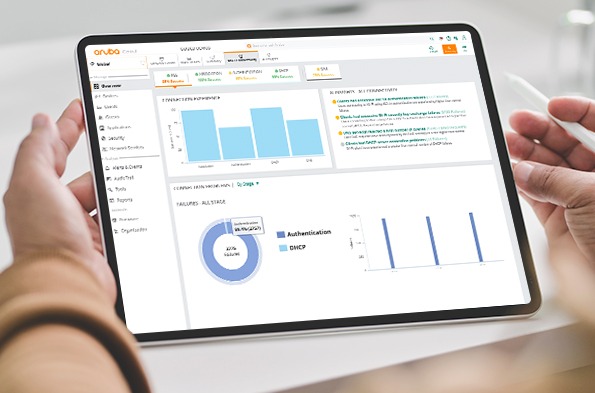
now Aruba UXI sensorProvides visibility into IPv6, showing DHCPv6, DNS64/NAT64 and SLAAC configuration, application performance, and more.

When we access a website over the Internet, we need an IP address.
IPv4 has been powering transactions on the Internet for over 40 years.

However, with the growing need for an efficient Internet, IPv4 address exhaustion scenarios, and interoperability of IPv6 endpoints, enterprises are transitioning their networks to support IPv6 strategies and are seeking the same control and visibility into their IPv6 networks as they do with IPv4.

As these demands grow, Aruba UXI provides visibility into accurate network performance in IPv6 environments.

The IPv6 capabilities of the Aruba UXI sensor enable you to:.

  • Test both IPv4 and IPv6 networks using the UXI sensor.
  • Measure and compare network and application performance
  • Accurately identify issues with IPv4 and IPv6 stacks
  • Check if your network is dual-stack or prepared for IPv6 only.

These IPv6 enhancements in UXI not only provide greater visibility into the IPv6 network stack, but also make it easier to compare and manage the transition from IPv4 to IPv6.

UXI provides network status and trend analysis capabilities, along with "custom reports" and "data push options," to ensure that your enterprise's IPv4 to IPv6 migration strategy is working properly.


To help you understand the above function, let's look at an example.

A US-based retail customer was noticing high DHCP response times in some of its stores worldwide, and users were complaining about network connectivity issues in the field.

To address this issue, the customer decided to set up a new DHCPv6 server for users using the problematic store's Wi-Fi network. With the help of the UXI sensor, the customer used the network alias feature to create two networks, one configured for IPv4 and the other for IPv6.

The customer performed stress testing on a newly deployed DHCPv6 server with UXI's new IPv6 feature support.
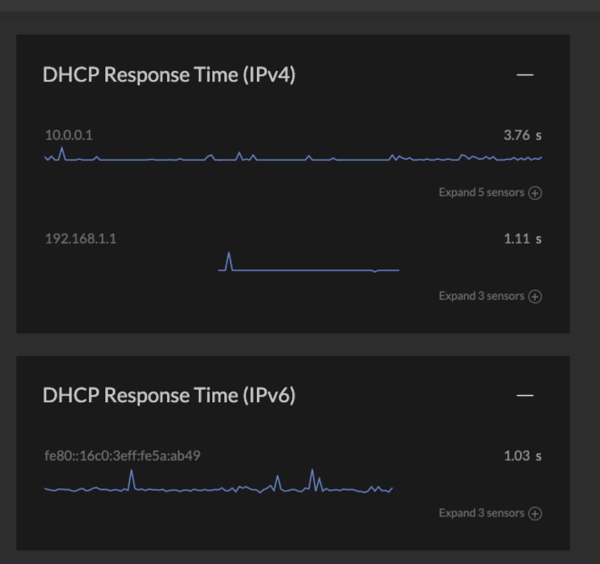
Aruba UXI sensors established performance baselines before and after network changes, allowing customers to compare the results of their DHCP servers over IPv4 versus DHCPv6.
여러분은 IPv6 준비되었나요? - image 6

The results showed that when new users receive IP addresses via DHCPv6, DHCP response times are reduced as expected.

This support for IPv6 allows customers to compare performance in dual-stack environments and take appropriate steps to transform the digital experience for real-world users.


If your IT strategy includes migrating some or all of your network services to support IPv6 operations, UXI can help you achieve this successfully.

For more information about configuration related to IPv6-related features of UXI, see Aruba UXI's Help CenterYou can check it out at .
Similar Posts

  • AI Grid Architecture and Token Economics from an HPE Networking Perspective

    ⏱️ Estimated reading time: Approx. 7 minutes (7 min read) At the recent HPE Discover keynote, Chairman Antonio Neri defined the paradigm of the infrastructure market in a single sentence: “The true beginning and end of AI innovation is ultimately the network.” While the market’s attention seems entirely focused on which GPU is faster or which Large Language Model (LLM) is smarter,…

  • Four Benefits of As-a-Service

    ⏱️ Estimated reading time: Approx. 4 minutes (4 min read) Moving to the cloud is not an easy task. However, for enterprises, moving to the cloud is becoming increasingly important. According to a recent report by Gartner, more than 951 TP3 T of new digital workloads will be deployed on cloud-native platforms by 2025. If this trend continues, the role of IT will also…

  • The Birth of Ultra Ethernet (UET) and Next-Generation AI Fabric

    ⏱️ Estimated read time: Approx. 6 minutes (6 min read) When training AI models, networks are no longer just simple pipes. In a collective communication environment where tens of thousands of GPUs exchange data, a single packet loss becomes a critical bottleneck that delays the entire Joint Training Completion (JCT). At last year's HPE Discover Barcelona, HPE and…

  • VPN Security Crisis: Why ZTNA Is the Future of Network Access

    ⏱️ Estimated reading time: Approx. 4 minutes (4 min read) While today's cybersecurity landscape is evolving remarkably, existing security models are still insufficient to keep up with the latest cyber threats, which are becoming increasingly sophisticated. One of the biggest recent trends in enterprise security is the transition from outdated VPN methods to Zero Trust Network Access (ZTNA). For years…

  • Next-Generation NAC: Zero Trust Security Without Complexity

    ⏱️ Estimated reading time: Approx. 5 minutes (5 min read) Over the past year, many companies have experienced 7 to 8 security breaches that resulted in data loss or downtime. In the “The 2025 Global Study on Closing the IT Security Gap” report recently published by the Ponemon Institute, the importance of closing the cybersecurity gap…

  • AI Networking: From the Age of Connectivity to the Age of Intelligence

    ⏱️ Estimated reading time: Approx. 3 minutes (3 min read) Recently, the paradigm of AI data centers has been rapidly shifting from a 'computing' focus to a 'network fabric' focus. This is because the importance of 'AI backend networks,' which combine tens of thousands of GPUs into one to process models with trillions of parameters, has grown. Today, the three giants leading this market —…