Since the advent of server virtualization in the 2000s, networks have been separated from general IT infrastructure such as servers and storage.
Since then, various approaches have been attempted to address networking requirements in virtualized environments, but none have been successful in comprehensively addressing the problem. Physical networks and the services they provide have always been relegated to second-tier application deployments.
Hypervisor vendors have typically been best positioned to provide solutions that most closely meet customer expectations.
This is because their presence is closest to the workload. However, if communication between virtualized workloads and workloads running on bare metal is required in a hybrid environment, additional resources, such as gateway functionality, are required to connect the two workloads, further complicating the solution.
Then, with Broadcom's acquisition of VMware, the licensing changes frustrated customers and forced them to look for alternatives.
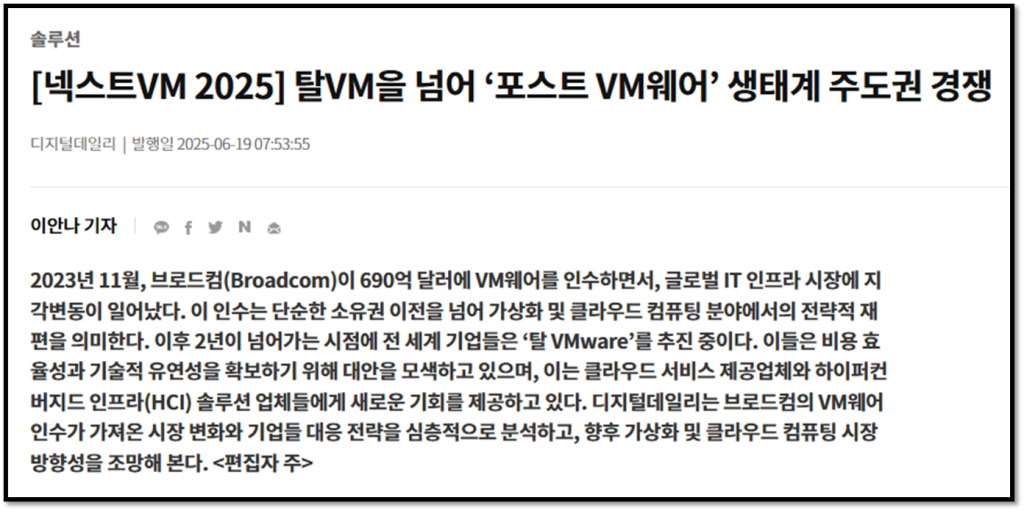
Many customers continue to hear about increasing VMware license costs (from 200% to 300% and beyond).
For their customers, the change in licensing model and pricing was sudden. Some have time to explore their options until the end of their current contracts.
Additionally, one of Broadcom's most controversial moves was replacing perpetual licenses with a subscription-only model.
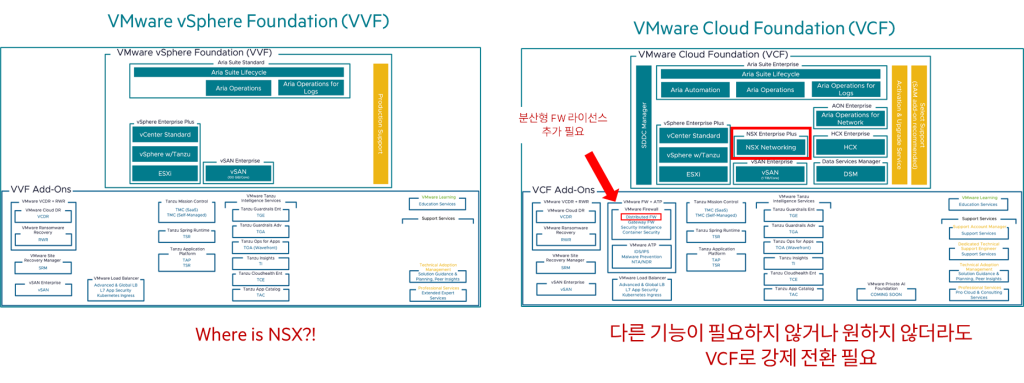
New bundle packages may simplify VMware's product structure, but they may require customers to purchase unwanted or unnecessary items.
This is because VMware products previously sold individually (such as NSX Networking and vSAN) are now available only as part of a more expensive full package. This change has forced enterprises to reconsider their reliance on VMware products.
Many organizations are exploring alternative virtualization solutions, including open source-based ones, to break free from vendor lock-in.
These open-source solutions reduce reliance on the VMware ecosystem and provide cost-effective virtualization management.
Rising costs and licensing restrictions are driving more and more enterprises to consider these alternatives as they migrate their virtual environments.
HPE Morpheus VM Essentials Software
HPE Morpheus VM Essentials software is an integrated solution that helps customers simplify existing VMware deployments while replatforming workloads to KVM to reduce cost, complexity, and dependencies.
HPE Morpheus VM Essentials is based on proven KVM cores and includes HPE's enterprise-level global support.
HPE is working with the ISV ecosystem to expand support for HPE VM Essentials hypervisor certification and data protection, VDI, ERP, and more.
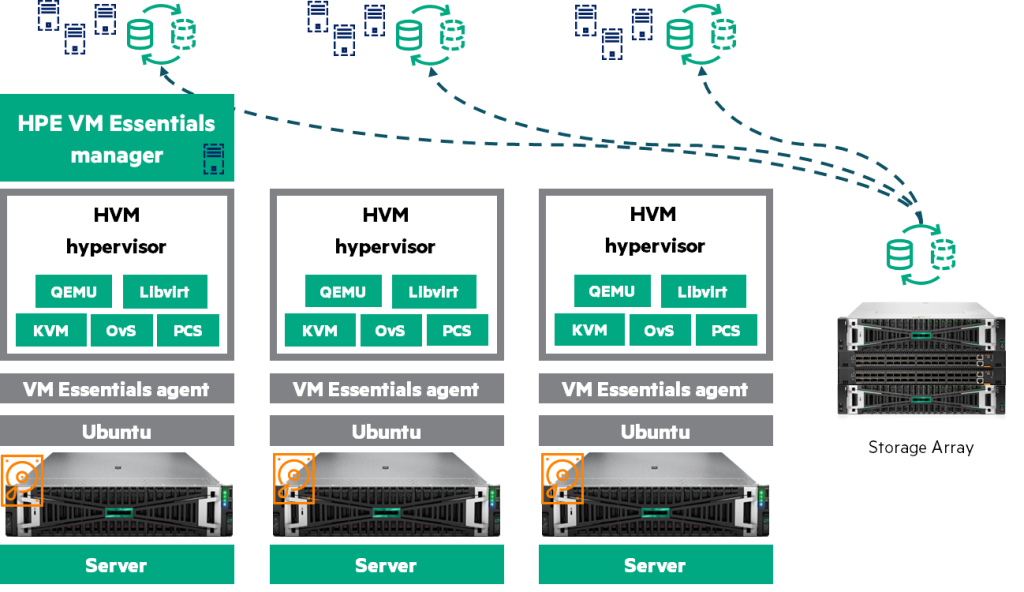
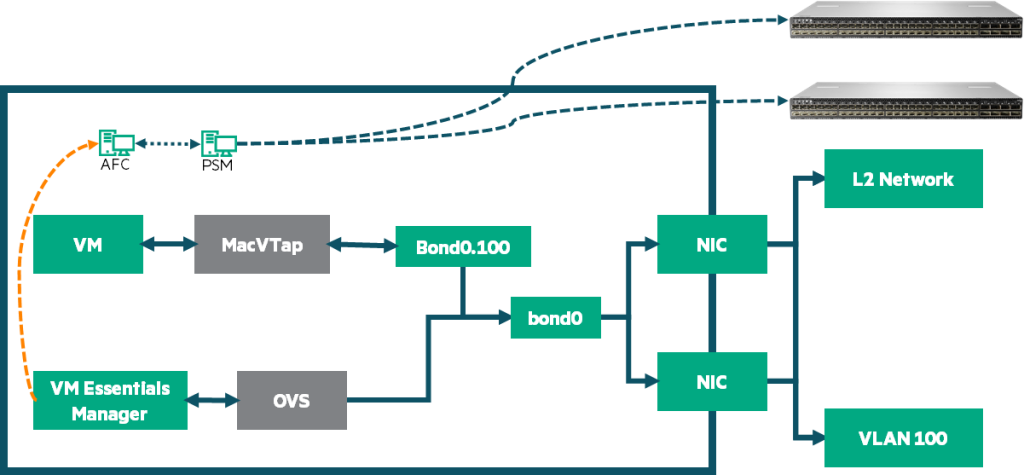
VM Essentials provides a plug-in that allows you to connect HPE Aruba Networking's CX switches and configure your virtualization environment.
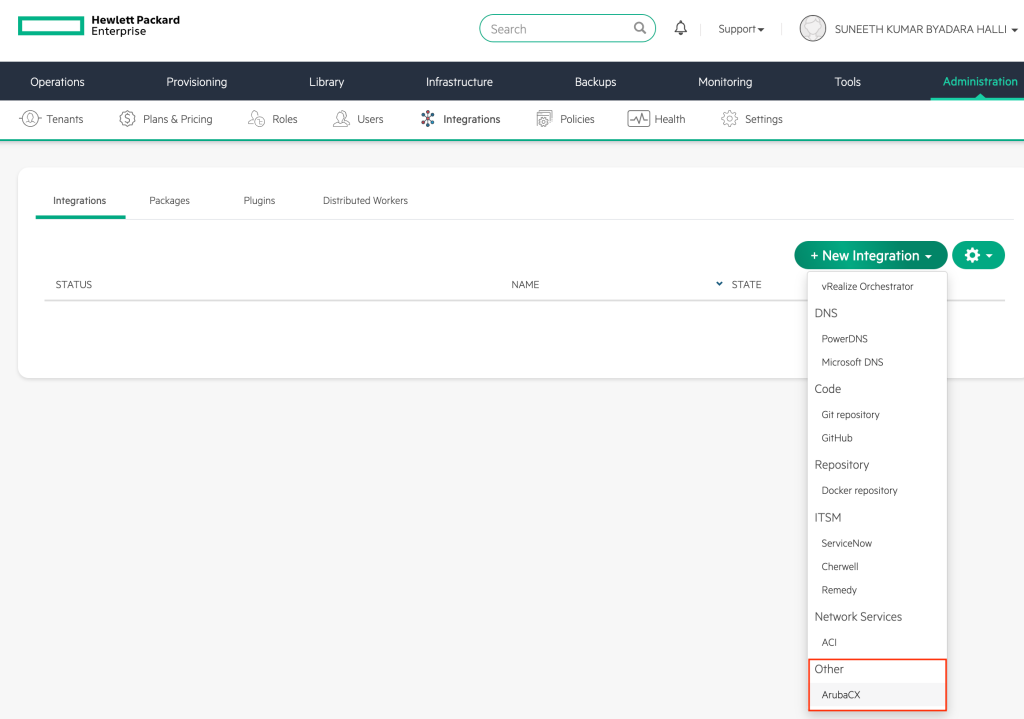
This plugin processes network and cluster events generated by VM Essentials and modifies the configuration of the AOS-CX switch based on the cabling between the affected servers and the switch. VM Essentials provides an integrated experience by directly connecting to the CX switch to create or delete networks for OVS port groups added or deleted within the configured cluster.
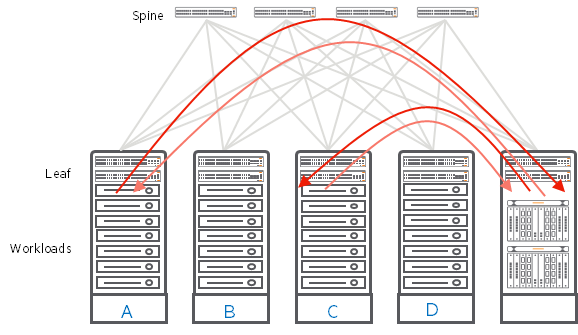
also, HPE Aruba Networking CX 10000Integration enables organizations to provide orchestration of network and security services similar to VMware NSX, including distributed firewall, ESXi, VM Essentials, and microsegmentation across bare metal hosts.
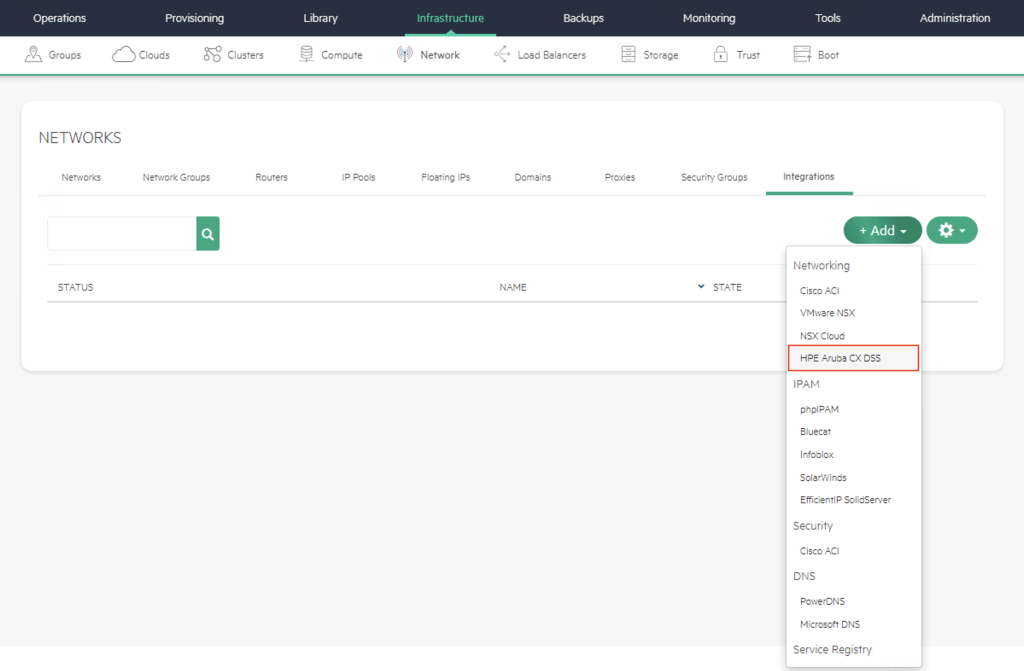
Support for the following features is provided through dedicated plugins for VM Essentials that provide enhanced networking integration and automation capabilities:.
- Automated interface creation, security group, network, and switch configuration
- Basic macro/micro segmentation
- Create/delete/modify related networks and automate tasks when creating/deleting/modifying VMs.
- Both Aruba Fabric Composer and PSM run as VMs within VM Essentials.
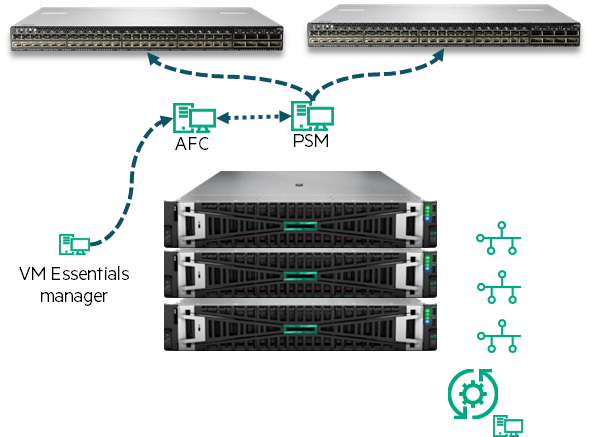
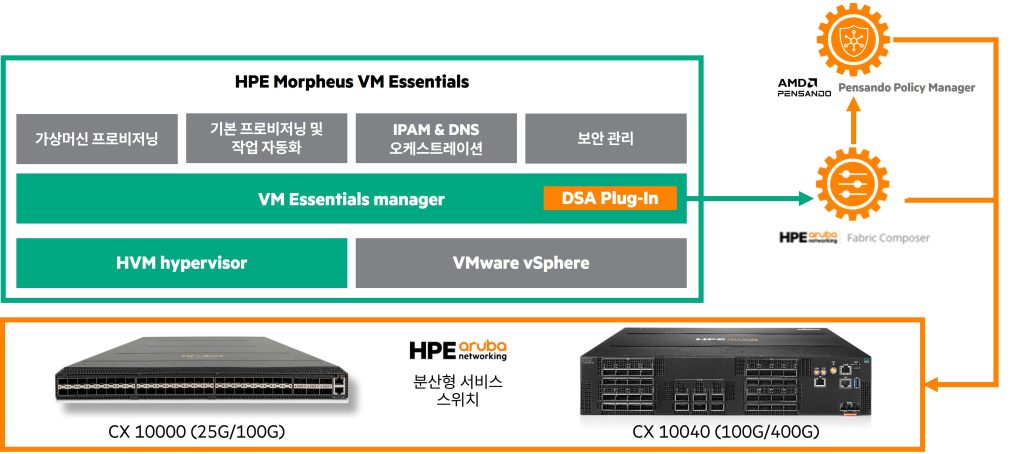
Integrating the CX 10000 with HPE Morpheus VM Essentials not only provides the added benefit of protecting your virtual and physical data center infrastructure, but also offers additional services such as 800G encryption, NAT, and high-resolution telemetry. This allows you to embed services into the network fabric without installing expensive, performance-degrading software agents on each server, delivering the same level of service.
Broadcom's recent issues with VMware have prompted customers to consider a new hypervisor.
And HPE has introduced a new virtualization solution to meet the needs of such customers.
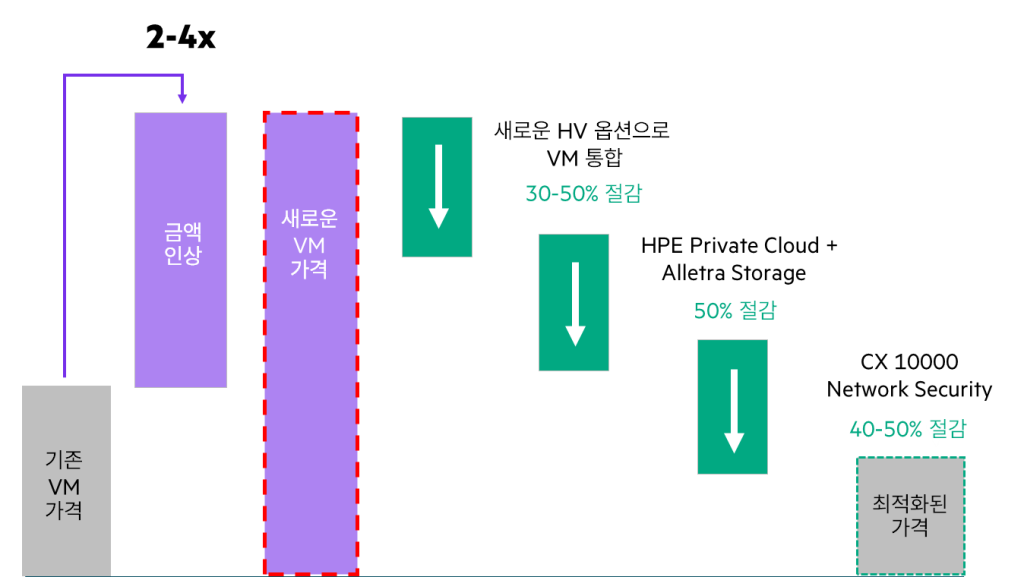
HPE's proven hardware and technology allows us to deliver virtualized environments at a much more competitive price.
And you can configure an all-in-one network and security system by utilizing HPE Aruba Networking switches.
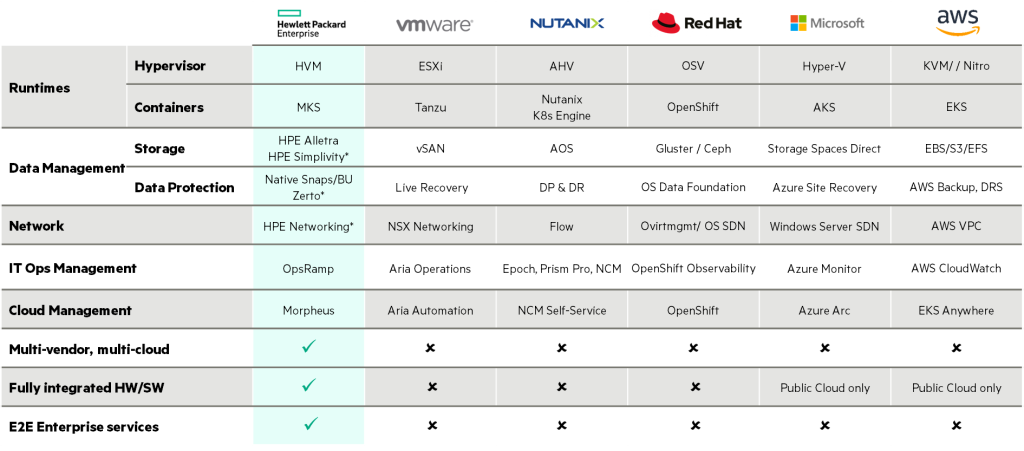
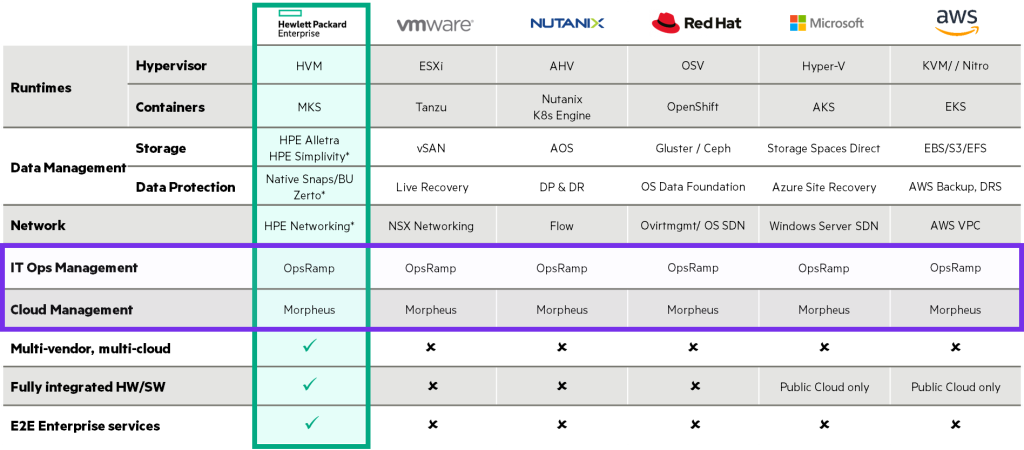
For many customers struggling with VMware, HPE's full-stack virtualization solution offers an alternative.